2015: The Year in Review – Part 2: Blogging

The less said about this the better probably; a year of infrequent and underwhelming posts, with only a couple of pieces that were anywhere near our past standards. (Even this post is half-baked; I’m not going to get it finished before I go out, but I want to post it tonight, so I’ll have to add the links tomorrow).

It’s not a lack of topics to write about – the Trump Presidential campaign alone should have been enough to keep me in material for months – but rather the opposite that has been the problem; the dizzying mass of immediately available information that is a constant distraction. Countless are the occasions when I’ve spotted the kernel of a promising story, only to be diverted from developing it by the next shiny thing on my timeline.

Anyway, here’s our top ten posts by views over the past twelve months, all from years gone by:

  1. Second Life demographics – a brief review
  2. Free Pussy Riot!
  3. On Second Life and addiction
  4. All Stars
  5. Watching the Okhrana
  6. Ferrisburg, Vermont
  7. 2010: The year in review
  8. What’s up
  9. Break On Through (To the Other Side)
  10. A Radical Game

Of the posts we did manage this year, there’s only two I would save for posterity; this one about the Battle of Waterloo, and this minor example of our signature nostalgic style.

Our global reach is much the same as last year, 92 countries in total, with perhaps a slightly greater skew towards the Americas and away from Europe. Top ten countries by visitors:

  1. United States
  2. Brazil
  3. United Kingdom
  4. France
  5. Italy
  6. Germany
  7. Canada
  8. Australia
  9. Portugal
  10. Russia

I’m not sure how to regain my enthusiasm for blogging, or indeed if such a thing is even desirable. I guess the first step would be to break my Facebook habit, which would free up time to engage with more stimulating cultural activities, with the added bonus of forcing me to get my news from a wider range of sources, and to actually think critically about stuff rather than just reading opinions I already agree with.

Politics always has potential; back in the early days of SLS we kicked off a good run by covering Obama’s path to the White House, so I might draw some inspiration from this year’s race, though I’m finding it hard to get excited about what looks to be a foregone conclusion. On this side of the Atlantic the main political event of the year is likely to be the EU referendum, the debate around which will probably turn quite ugly, so there should be plenty to write about that too.

And Second Life? I did renew my premium membership back in October, which prompted me to pay a rare visit to my virtual homestead, to see if it was still there (it is), but I haven’t been back since. I can’t really imagine investing time in it like I did back in the old days, but I might manage a post or two.

So, as ever, we start the new year with the best of intentions; we’ll see how far that takes us…

2015: The Year in Review – Part 1: Culture

Here we are at the end of another year; time for a quick run through what passed for cultural engagement in my life over the last twelve months. (As ever, the full list can be found on our Tumblr.)

Music first. I’m old-fashioned enough to still think of the album as the basic unit of music, and I’ve averaged about one new one a week, mainly stuff I’ve heard on Radio 6. Female, alt-rock, and singer-songwriter seem to be the predominant themes. Here’s my favourite ten, in the order that I bought them:

No Cities To Love – Sleater-Kinney
Play Along – The Sorry Kisses
Sometimes I Sit and Think… – Courtney Barnett
Foil Deer – Speedy Ortiz
Hinterland – LoneLady
Welcome Back To Milk – Du Blonde
My Love Is Cool – Wolf Alice
After – Lady Lamb
Divers – Joanna Newsom
Short Movie – Laura Marling

If I had to choose one as the best it would probably be Short Movie, though I think that Welcome Back To Milk is the one that I’ve listened to most.

There’s been a lot of talk this year about how we’re living through some kind of Golden Age of Television, but I must admit that I practically never watch the box these days. The closest I’ve come to seeing a drama series this year is to buy the box set of the first season of Fargo, but I’ve not got round to putting it on yet. Which is a shame, because I’m sure I’d love it, like I love the rest of the Coen brothers’ oeuvre, and it’s likely that I would be entertained by all the other shows that the critics rave about too, but the fact is that I just can’t face committing myself to a lengthy series. My attention span is obviously shot; I blame the internet.

That said, I can at least concentrate for the length of a film, and I have managed to catch a few movies this year, the best of which was the Thomas Pynchon adaptation Inherent Vice, exactly the sort of rambling stoner mystery that I like watching over and over. I did think about seeing the new Star Wars over the holidays, but in the end I didn’t bother. I guess I will go sometime in the new year, but I’m pretty sure it will be a disappointment.

I’ve been reading a bit more too; if there has been a common thread to my choice of books this year it’s been the subjective experience of time and memory. I finished another volume of Proust, The Guermantes Way, which I felt was the most entertaining of the series so far, though that might just be because I’m familiar now with the characters and the pace of the novel. Other highlights were The Savage Detectives by Roberto Bolaño, and this year’s literary sensation City on Fire by Garth Risk Hallberg. The latter was almost as good as the hype, particularly in its depiction of New York City in the mid-70s (an era in which I like to imagine I would have felt right at home), though the plot petered out towards the end.

Looking to the year ahead, I’m sure it will be more of the same; Proustian reverie and drug-imbued diversion set to a suitably stimulating soundtrack. That’s OK though; I’ve reached a point in my life where I’m reasonably comfortable with my taste in entertainment, which, all in all, I don’t think is too shabby…

Seriously though, don’t bomb Syria

As I write the debate in the House of Commons on the Syrian question is drawing to a close, and it looks like limited military action is going to be approved, though with a substantial bloc of opposition. To be fair, this outcome probably does represent the mood of the country; polls have shown a modest majority in support of bombing.

What’s interesting is that the doubters aren’t confined to usual left-leaning peaceniks; there are plenty of conservative voices questioning the wisdom of wading even further into a complex foreign conflict, with goals that are unclear and outcomes that are far from certain. Even on the left the opposition doesn’t stem entirely, or even mainly, from a pacifist outlook – pretty much everyone wants to see the back of ISIS – but rather from a conviction that the strategy proposed will only make things worse.

It would seem logical to wait until a better plan has been formulated, or at least to give less destructive options like diplomacy a bit more time to succeed. Unfortunately inaction isn’t an option our politicians feel comfortable embracing, which only reflects the anxiety prevalent in society at large; our inability to tolerate uncertainty and risk. Faced with a bad situation we want Something To Be Done, even if history tells us that it might be better to step back and let the belligerent parties sort things out themselves.

We in the West seem to think we have some special insight into conflict resolution, that we can engineer a solution that is beyond our erstwhile colonial subjects, but the evidence suggests that they would get along a lot better without our assistance, and the peace we bring is only the peace of the grave.

Don’t bomb Syria

It’s looking increasingly likely that British jets will soon be flying bombing sorties over Syria, a mission so senseless that even its proponents have largely avoided trying to make any coherent argument for it. We are invited to stand in solidarity with our French cousins, in the hope that our natural horror at the recent events in Paris will stop us asking awkward questions about why a strategy that so obviously failed in Iraq and Libya should be expected to work this time around.

It’s ironic that the almost unlimited access to information enjoyed by the digitally privileged of the developed world, which one might expect to arm citizens with the knowledge needed to stop this nonsense, appears rather to be paralyzing our critical faculties. The flood of text and images on various social media that invariably follows tragedies like Paris may feel intensely meaningful on a personal level, but, lacking wider context, it cannot guide a rational response. Instead it just seems to make us vulnerable to the fear-mongering of demagogues, of varying degrees of subtlety.

Perhaps I’m too pessimistic – there is plenty of opposition to this course of action, both online and in the real world, and our leaders’ drive towards a wider war may not yet be unstoppable, if we keep up the protests, and try to think about what is happening rather than just succumbing to a desire for instant reaction.

Memories of futures past

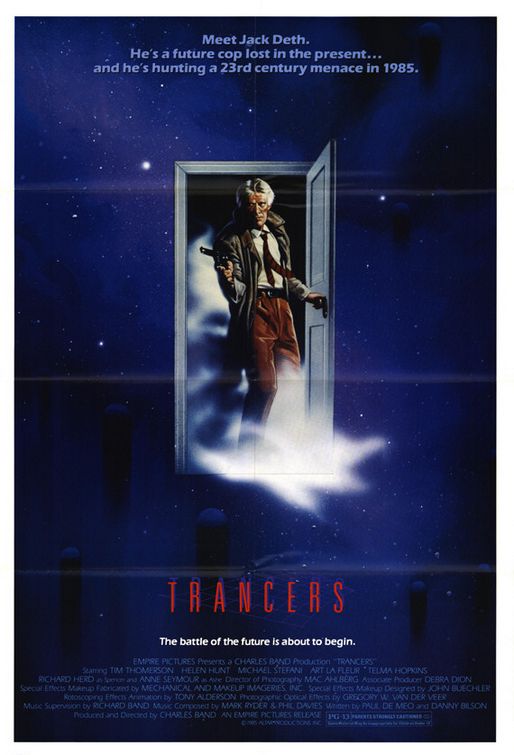
I’ve been trying all day to recall the first time I saw Back to the Future Part II, or indeed if I’ve ever watched it all the way through. I definitely didn’t see it in the cinema, but I can vaguely remember parts of the plot, so I guess I must have caught it on TV sometime. (I know when I saw the original movie; at an all-night sci-fi film festival when I was in college. Also on the bill: Terminator, Aliens, Blade Runner and one of my all-time favourites Trancers, so a pretty good night, especially since just about everyone there was completely baked.)

Predictably enough, a wave of nostalgia has been sweeping the internet today, as my fellow Gen-Xers, in characteristic fashion, use an 80s pop-culture reference as an excuse to look wistfully back at the hopes they used to have for the future. I’m tempted to join in, because I miss being in my 20s too, but there’s only so much that can be written lamenting the non-appearance of hoverboards before it all sounds a bit self-indulgent.

In any case I’m not particularly unhappy with how things have turned out in my life, though of course it hasn’t gone quite the way I imagined it would back in the 80s (not that I have a terribly clear memory of what my youthful hopes and plans actually were.) It would probably bother me more to think that everything had unfolded in a predictable way, without any randomness or serendipity.

Anyway, I’ve reached a point now where I no longer really look forward, or back, but just try to be in the moment, (which is, of course, the secret to happiness.) I like to think that this serenity is the result of a conscious effort on my part, but it probably owes more to my unconscious need to avoid acknowledging my many failures, and my ultimate mortality. Hopefully I’ll be able to keep it up for the next 30 years…

Underdogs have their day

No question about what was the big political story this weekend; Jeremy Corbyn’s triumph in the Labour leadership contest. That he would win hadn’t been in serious doubt for a while, but the margin of his victory was crushing, and has given him a clear mandate to reinvent the party along centre-left lines.

To some extent this is less surprising than it seems; in a European context the UK has been out of step over the last 20 years in having both main parties on the centre-right, and a leftward shift for Labour is really just a reversion to a longer-term status quo.

What is uncertain though is the effect that two decades of right-wing consensus has had on the outlook of the general electorate. The view among what can be broadly termed the political elite, which includes the newly-deposed Labour Party hierarchy, is that the ideas espoused by Corbyn and his allies, particularly on economic issues, may play well with existing Labour supporters, but leave the bulk of the population cold, rendering the party unelectable. The counter-argument is that there is a hidden majority in the country, currently alienated from mainstream politics, who have been waiting for someone like Corbyn to articulate a progressive agenda that they can support, and who will sweep a rejuvenated Labour to power. The last election produced some evidence for both positions; the SNP did well in Scotland by mobilising voters around a programme of limited social democracy, but the Conservatives did win overall with an unrepentant pro-austerity manifesto.

Time will tell I guess. The first electoral test for Corbyn’s Labour will be the Scottish Parliament poll next year, assuming they make it that far without splitting, but that campaign will be beset by all sorts of local issues, so it may be hard to draw many firm conclusions from the outcome. The local elections in England and Wales might be a better indicator of how far the Corbyn revolution can extend.

Meanwhile, across the Atlantic, there are signs that Bernie Sanders may be poised to pull off a similar upset. That seems like more of a long shot though, so I’m sticking with my prediction of Hillary Clinton for the nomination. Still, it’s looking more interesting than it did a few months ago. The real entertainment is in the Republican contest of course, but I can’t see that being more than a sideshow.

Long to reign over us

Around 5.30 this evening Queen Elizabeth II became the United Kingdom’s longest-reigning monarch, beating the 63-and-a-bit years managed by her great-great-grandmother Victoria. She shows no signs of flagging, so the second Elizabethan age is likely to run for a while longer, much to the chagrin of republicans like myself.

It’s easy to view British royalty as a quaint and essentially harmless anachronism, given that Elizabeth has largely refrained from directly interfering in politics, and the country is effectively a typical bourgeois democratic republic, but I think that underestimates the extent to which the institution of the monarchy underpins the conservative structure of our political culture. There is a big psychological difference between being a subject and being a citizen, and the deference to authority that is inherent in a monarchical system is a major barrier to progressive change.

Generations have grown up seeing Elizabeth on the throne as a fact of life, and her longevity has meant that the patent ridiculousness of choosing a head of state by bloodline hasn’t been a live political issue in recent years. Even queens are mortal though, and some day the country will have to consider whether the royal charade should go on. I can’t believe that the succession, when it comes, will be a smooth one; surely reason will prevail and Elizabeth will go down in history as not only our longest-serving monarch, but also our last one.

Summer torpor

So here we are at the end of August; another month past, another month where I’ve mentally composed posts on all sorts of interesting subjects, but not quite got around to writing them down. Pieces on politics, comparing and contrasting the Trump surge and Corbyn-mania, or weighing up Bernie‘s chances of upsetting Hillary. Articles on the interface of psychology and technology, referencing the APA paper on violence and video games, or considering what the Ashley Madison hack reveals about online identity. General philosophical musing on the nature of time, and how an instant can seem endless while weeks pass in a flash.

Alas, all this will be lost, unless I get my act together and start posting before I forget it all, a turn of events, which, in light of my recent history, seems highly unlikely. I guess the world might just get by without my thoughts on these matters, but I’d regret not saving them for posterity, so I’ll try to make September a little more fruitful.

Further thoughts on the Greek situation

I’ve sat down a few times this week intending to write something about what’s happening in Greece, but the situation has been so fluid it’s been hard to make much sense of it. Things do seem to have settled into some sort of pattern over the last couple of days though, so I’ll hazard some thoughts.

My suspicion that the Germans would stick to a hard line seems to have been right; what was more surprising was the speed with which the Syriza government caved in. Their capitulation has been met with bewilderment and not a little anger in left-wing circles, coming as it did only a few days after they had received a strong mandate from Greek workers in the referendum.

Accusations of selling-out are a little unfair I think; Tsipras and those around him seem to have expected the Germans to back down, and, when it became obvious that that wasn’t going to happen, to have calculated that it was better to remain in power, and try to offset the worst of the austerity, rather than walk away. There is some logic in this position, though, given that they have just signed away a big chunk of sovereignty, the scope for resistance may be limited.

Where Syriza can be criticicised is for allowing themselves to be boxed into such a position. They seem to have drastically underestimated the extent to which the Germans would be prepared to sacrifice their economic interests to maintain their political power. From what I have read of accounts of the negotiations it sounds as if the Greeks approached them like an academic debate, in which cold logic would win out, rather than the vicious political street fight that the Germans engaged in.

It is hard to understand why this was so; Syriza may be a broad coalition, but plenty of their senior members are experienced activists who should have seen this coming. There are reports that some in the Left Block of the party were arguing that more preparations should be made for the possibility of an exit from the Euro, but very few practical steps to this end seem to have been taken.

As things stand it is looking like a defeat for the left, but all is not lost. There will certainly be a realignment of anti-austerity forces, and while the bailout agreement has been passed by the Greek parliament it it far from clear that the Tsipras government will be able to push through the most unpopular provisions, given the level of politicisation and mobilisation of the Greek working class. There are splits emerging in the Troika too; the IMF, which is more interested in getting at least some of its money back than preserving German hegemony in Europe, may force Berlin to accept some write-off of the debt.

There are also some signs that pan-European solidarity with the Greeks may be stirring, most crucially in Germany. Even in the UK, which is always a bit detached from these things, there have been demonstrations and collections of cash for food banks and free clinics in Greece. This may not significantly alter the course of events, but might alleviate at least some of the pain.

If we have learned one thing from the last two weeks though, it’s that this crisis is far from settled, and there will undoubtedly be more unexpected developments before we can say that it is over.

Post-oxi

So the Greeks held their collective nerve and voted No on Sunday; now we wait to see whether Germany will follow through on the threat to throw Greece out of the Euro, and perhaps out of the EU altogether.

On the face of it, it makes no economic sense to take such drastic action over what, in the grand scheme of things, are relatively small sums of money, but this has always been as much a political crisis as an economic one, and, in political terms, allowing popular democracy to win out over neoliberal discipline is a much bigger threat to Europe’s rulers than even the worst shocks that might follow a Grexit from the Euro.

So my money (euro, not drachma) is on Merkel sticking to her hard line. Whatever happens, difficult times ahead for Greece.