Bin gone

So, nearly 10 years after 9/11, the US has finally caught up with Osama Bin Laden. It feels like some sort of closure, though since there had been no solid proof he was alive since 2002, he was reportedly discovered living in a quiet suburb of Abbottabad, next door to the Pakistan Army’s main training college, and his body has been quickly buried at sea, (not to mention that the timing of this seems very convenient for President Obama’s re-election campaign) there is little doubt that he will live on in the fevered minds of conspiracy theorists for years to come.

It is the end of a chapter of modern history though, one that began back in the 70s when the CIA first started undermining the Afghan government, with the intention of drawing the Soviet Union into a costly war. That part of the plan worked out, but, after the Soviet withdrawal, the jihadists that the US had nurtured needed a new enemy, and found one in their erstwhile sponsors.

It seems likely that Obama will use Bin Laden’s death to start winding down the unwinnable Afghan war ahead of the US Presidential election next year, which is clearly a good outcome, albeit one that has come far too late for that conflict-ravaged region. It would be nice to think some lessons had been learned from the whole debacle, but since the US government seems to be falling ever more under the influence of the military-industrial complex, and the generals need war like a junkie needs his fix, I’m guessing that we’ll be seeing history repeat itself sooner rather than later.

Apple stalk

Another day, another reason to be paranoid. It turns out that my seemingly trustworthy iPhone has been secretly recording my every move, for goodness knows what nefarious purpose.

I would be worried, were it not for the fact that, sadly, I haven’t been anywhere remotely compromising in longer than I care to remember.

The (Un)Freed Weed

This time last year we were celebrating International Marijuana Day and looking forward to political developments on both sides of the Atlantic that promised a brighter future for aficionados of the noble weed. Sadly, our hopes turned out to be as insubstantial as smoke in the breeze; in the UK the Liberals did end up in government, but have, as yet, failed to rationalise the drug laws, while in California Proposition 19 fell agonisingly short of success.

So, another year of furtiveness beckons. I guess the habit might lose some of its outlaw charm if it was legalised, but a more relaxed approach would reduce the risk of burning out.

Spaced Out

Talking of Yuri Gagarin’s historic space-flight prompted me to revisit a favourite spot in Second Life, the International Spaceflight Museum. They have nicely-rendered models of various rocket-ships from around the world, including the latest Indian and Chinese models:

The big rocket second from the right is a Soviet N1, designed to take cosmonauts to the moon; unfortunately all the test flights exploded shortly after take-off, and the programme was abandoned. Next to it is an American Ares V, which was set to be the launcher for the Moonbase and Mars expeditions, but that programme was cancelled last year.

More successful Soviet craft are featured too, from the Vostok and Voskhod boosters of Gagarin’s day, to the Soyuz workhorses, and the current Proton rocket which, now the Space Shuttle has retired, is the only way to get big things up into orbit:

The Museum also has an earth-orbit exhibit, featuring the International Space Station. I felt a little exposed in my normal clothes, so I quickly scored a nice retro-style space-suit (from Aurican’s Pyramid Store), before venturing into the vacuum:

Now I had the suit it seemed a shame not to do some more space exploration. Back at my little mountainside home I quickly build a mini launch pad, and picked up a cool little space-coupé (a PS-1 Dart by PlasmaStorm Industries at Port Clarke):

My original plan was to zoom around my neighbourhood (which, incidentally, seems to have gone completely to the dogs since last time I looked, abandoned land everywhere, but that’s a topic for another day), but after a few jarring collisions, presumably with the sim borders, I gave up on that and headed into deep space.

First stop was Tranquility Base on the Moon:

Then on to see the big starships at Talmont Space Port:

Finally, some chill-out time at Inspire Space Park, where one can meditate while tumbling through the celestial sphere:

and relax in front of a nice warm fire:

Recreating outer space is perhaps the perfect use for Second Life, since the relatively featureless terrain means it all renders nice and quickly, and the characteristic lack of other people adds to the verisimilitude. I would quite like to get into some space-based role-play, but I don’t really have the time to devote to that right now. Another project to add to my list for later in the year.

Red star shines on

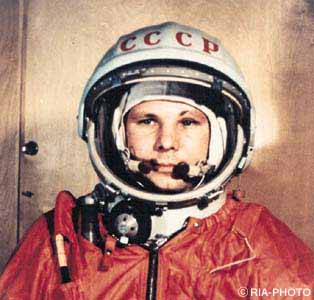
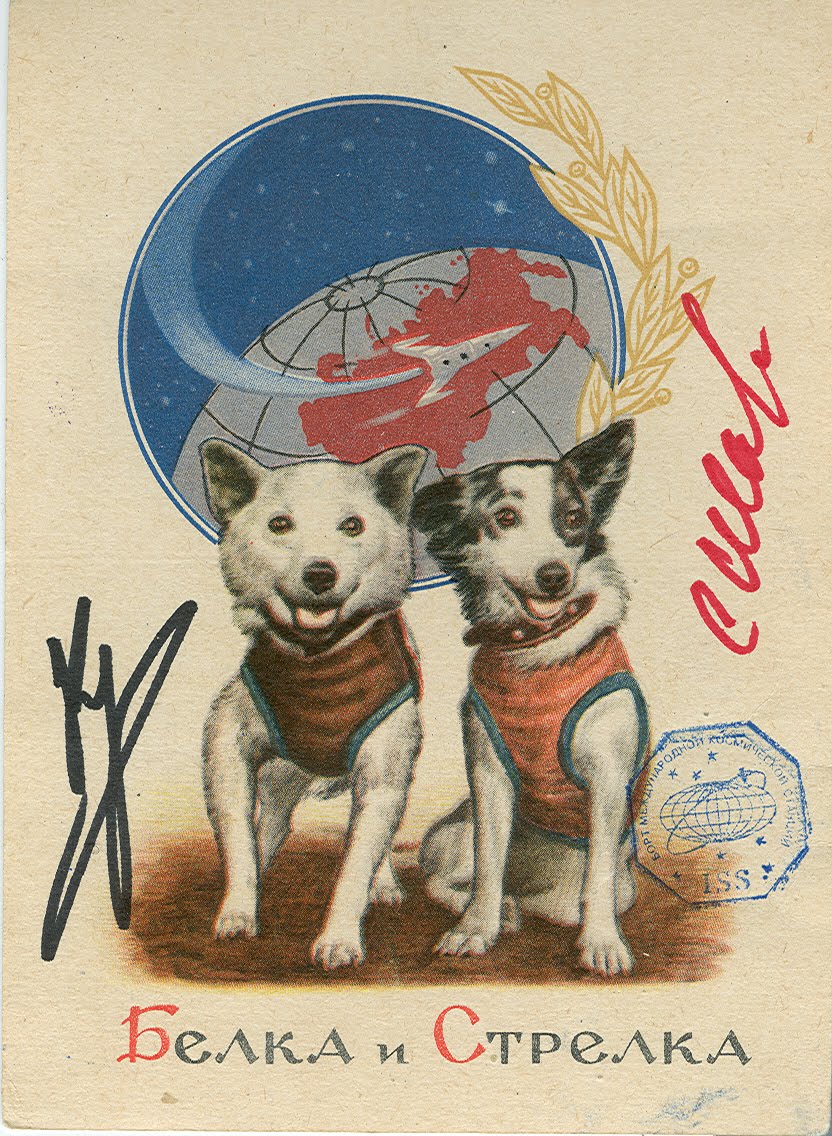
Fifty years ago today, Yuri Gagarin climbed into a small capsule atop a Vostok rocket and blasted off to become the first human in space. The Soviet programme had previously launched a few dogs into orbit, and had brought most of them back alive, but, even so, Gagarin must have known that his mission was insanely risky, and his courage is still inspiring today.

Gagarin’s historic flight resonated far beyond science, deep into general culture and Cold War politics. This wasn’t just a man going into space; it was the frontier of humanity being expanded by the son of a farmer from Smolensk, the technological triumph of a nation that just half a century before had been a pre-industrial backwater, the ultimate demonstration of the superiority of Soviet planning over the capitalist economies left struggling in its wake.

Of course we now know that this confidence was misplaced, for a number of reasons. The drawn-out failure of the Soviet experiment ushered in an era where it became accepted wisdom, even on much of the left, that inequality and injustice were the natural state of the world, and talk of building a new society freed from want by the application of human intellect was utopian. The best we could do, we were told, was to let the market run free, and trust to the charity of our rulers, with some light government regulation, to spare us from the worst excesses of unrestrained capital.

The financial crisis of the past few years has seriously undermined this theory, as living standards for the mass of the population have plummeted, while the rich have continued to get richer. People are again wondering whether there may be a more efficient way of organising society; the hope of a better future embodied by Gagarin and his fellow cosmonauts still has some life in it. The Soviet model of a planned economy may not have lived up to its initial promise, but the next iteration could still take us to the stars.

Reality intrudes

Regular readers will know that this blog oscillates between fairly frivolous virtual-world and cultural commentary and weightier posts about the state of the world. The former have been predominating recently, partly because I’ve not been too busy this last month or so, and thus have had more time to waste online, but mainly on account of events in the real world being just too depressing to think about. Still, we have pretensions of seriousness here, so I guess we should try to acknowledge that there are things going on beyond our immediate preoccupations.

When we last wrote about the Libyan situation it looked as if a lengthy civil war was brewing, which was tragic enough, but the subsequent intervention by NATO has made things even worse. Now that neither side has any motivation to negotiate, and the airstrikes have, unsurprisingly, failed to halt the fighting, the pressure for an escalation of Western involvement will only grow. Our own dear government have been the biggest cheerleaders for war so far, but I suspect even they know that the public won’t support an Iraq-style invasion, so it seems likely that some sort of covert-operations-plus-arming-local-forces strategy will be put in place. We’ve been down that road before of course, in Afghanistan in the 1980s, and look how well that worked out.

It’s surely more than a coincidence that this latest war has broken out just as a cut in the defence budget was on the cards, giving the generals another chance to warn us that we will all be murdered in our beds by rampaging [insert current focus of xenophobic paranoia here] unless we keep handing blank cheques to the military-industrial complex.

The defence cuts may end up being reversed, but the government shows no sign of backing down on its plans to slash other areas of public spending, despite half a million people turning up to register their opposition last weekend. (The event was rounded off by the now-customary police riot, allowing the cops call for an immediate reversal in police budget cuts, else we will all be murdered in our beds etc). Government ministers continue to tell us the cuts are regrettable, but necessary, as the public finances are totally shot, despite the growing body of opinion that says that the economy isn’t actually in such bad shape, and that in fact it looked worse for most of the last two centuries, during which Britain managed to build an Empire, defeat the Nazis and found the Welfare State. The Tories’ claim that the country will be bust unless all public employees take a pay cut, work to 75 and settle for a miserable pension is being exposed as a threadbare cover for their ideologically-driven agenda to privatise the whole public sector, for the benefit of their cronies, who will be given free rein to make us poor suffering citizens pay through the nose if we want the most basic of public services.

See? Pretty much a downer, huh? And I haven’t even touched on the nuclear catastrophe in Japan, the war in the Ivory Coast, the assault on organised labour in the US, or the myriad of other reasons to believe we are collectively headed to hell in a handcart.

Are there any reasons for optimism? I’d like to say that the left is resurgent as people wake up to the reality of the system, but it doesn’t seem that that is true. There is a lot of anger about the cuts for sure, but not much organisation, and there is a sort of learned helplessness around, a feeling that our opponents are just too strong, and we can only keep our heads down and try to ride out the storm.

I might be too pessimistic. I’m just a tired old man in a tired old country; the young comrades seem more up for the fight. The London demo was encouraging, as is the pro-union campaign in Wisconsin, and of course the masses in the developing world are already showing us the way. I guess I’ll keep doing what I can, but I suspect I’ll feel the need to escape to a peaceful fantasy world more often than ever.

Win some, lose some, it’s all the same to me

The New York Times had an interesting piece this week profiling top online poker player Daniel Cates, and seeking to identify the secret of his success. The short answer seems to be “Asperger Syndrome“, but the details of how hours spent playing resource-management games like Command and Conquer sharpen the skills needed to triumph at the virtual card tables are certainly fascinating.

The key message though is that even a good player is at the mercy of fortune, and skill will only out over the course of thousands of hands, with many a losing streak along the way. It evidently helps to be able to see money as just an abstract way of keeping score rather than something actually valuable, especially when one can lose over $4 million in a few hours.

My own poker habit is nowhere near that level thankfully; I don’t win, but I lose slowly enough that it qualifies as cheap entertainment. Even when the cards don’t fall my way it can still be fun – just the other day I went all-in with a King-high flush only to see my opponent turn over the Ace, but I was able to smile at the thought of him gathering in my cash while whistling the greatest song about gambling ever written.

Won’t you please be my friend?

In an effort to win back the confidence of the government, I have redoubled my efforts in the social media sphere by setting up a Facebook page unashamedly in the identity of my avatar. This clearly breaches the rules of the social networking site, but I have heard that they are turning a blind eye to SL-related profiles, so hopefully I won’t be deleted.

I currently have a grand total of zero friends, and I’m not exactly sure how I should go about remedying this problem. I guess the Lab would like me to invite all my non-virtual acquaintances over, so that I could introduce them to the joys of the grid, but, in common with most other residents I’m sure, I have a real-life reputation that I don’t want associated with Johnny Staccato, thank you very much. (It’s called Second Life for a reason.)

So I’m reduced to trawling the internet, forlornly appealing for attention. Perhaps not the best way of dispelling the notion that Second Life residents are needy, socially-challenged losers.

I think the problem is that Facebook and Second Life are functional in diametrically opposite ways; the former is useful for integrating our diverse social networks, but the latter is attractive because it allows us to dis-integrate the different strands of our personality. That the Lindens don’t seem to understand this (if they did they wouldn’t be pushing a Facebook strategy, and would have been much quicker to ban alt-linking products like Redzone) is just one more reason to be pessimistic about the future of Second Life.

The Solution

In other news, Hamlet Au at New World Notes has discovered what is wrong with Second Life; it’s the residents. His answer to this problem? We should all get lost, and let the Lindens recruit a better class of customer by befriending people on Facebook.

It puts me in mind of Bertolt Brecht’s famous poem The Solution:

After the uprising of the 17th June
The Secretary of the Writer’s Union
Had leaflets distributed in the Stalinallee
Stating that the people
Had forfeited the confidence of the government
And could win it back only
By redoubled efforts. Would it not be easier
In that case for the government
To dissolve the people
And elect another?

A few months ago I joked that New World Notes was the virtual equivalent of Soviet Weekly – perhaps I was closer to the truth than I knew.

Zoned out

We’ve not had much in the way of Second Life content recently; for one reason or another I’ve not had time to log on to the grid in ages, and I’ve just been glancing at the SL blogosphere in passing.

So what’s been happening? Let’s see… The main action seems to have been the Redzone imbroglio (actually an old story, which came to a head this month for some reason). Playing on the characteristic paranoia and narcissism of SL residents, virtual entrepreneur zFire Xue scared people with stories of how their “security” was under threat from some shadowy villains. In the real world Xue would be a political demagogue, but, this being the free-market utopia of Second Life he instead cashed in by selling an expensive technological “solution” to the “problem”. There was a backlash of course, ironically driven by the same paranoia Xue had exploited in the first place, and the Lindens belatedly lumbered into action to ban Xue and his system from the grid, though apparently without closing the loophole he was using to violate residents’ privacy.

Paranoia, narcissism, management incompetence… good to see that not much has changed in Second Life in my absence.

I’m not sure that this episode tells us anything about the psychology of SL residents that we didn’t know already after the events of “Emeraldgate“, but it does add weight the general impression that Linden Lab are not a serious company. Do they have a corporate risk-management department? Do they employ lawyers? Do they read the newspapers? If so, how did they miss that Xue’s system clearly breached EU data protection law, and that the Lab, as platform hosts, were placing themselves at risk of prosecution for failing to safeguard their customers’ information? They may have calculated that the risk was minimal, but, with practically no upside in letting Xue continue to operate, why take a chance? The situation called for decisive action, not months of dithering followed by a half-baked intervention. If I was a potential investor I wouldn’t be particularly impressed.