The Leopard

This week saw the sesquicentennial of the foundation of the unified Italian state. This notable anniversary inspired me to snack on some antipasti and quaff a glass or three of Valpolicella; thus refreshed, I pulled my old copy of Giuseppe Tomasi di Lampedusa’s The Leopard from the shelf, and settled down to reread one of the classic works of European literature.

The Leopard has in fact been called “Perhaps the greatest novel of the century”, though that was by L.P. Hartley, whose admiration is understandable when one considers that his best-known work, The Go-Between is very similar thematically.

The praise is not too hyperbolic though; Lampedusa’s tale of the twilight of the aristocratic order and the rise of the bourgeoisie in the days of the Risorgimento is a compact masterpiece. It works powerfully on several levels; as a vivid description of the political events of the time, as a portrait of individuals struggling with the conflicting pulls of love and duty, but perhaps most affectingly as an examination of mortality, and the perpetual impermanence that is an inevitable part of the human condition.

That feeling of loss that pervades the book makes it a very conservative work; it is an elegy for the lost nobility, and the picture it paints of the bourgeoisie who succeeded them is decidedly unflattering. This interpretation of the events of the 1860s couldn’t be further from my own, but the novel’s melancholic tone is sufficiently sympathetic to my general outlook on life that such political differences seem irrelevant.

I may be making The Leopard sound rather depressing, and in some ways it is, but it is one of those sad stories that is so beautifully told that the overall effect is uplifting. The events it portrays may now be distant history, but the message that destruction is the unavoidable cost of progress is as relevant as ever.

Be thankful for a dull life

I often complain about life in my home country, but in reality we have it fairly easy here. The nearest we come to anything like a civil emergency is a bit of snow, moderately strong winds, or occasional minor flooding; certainly nothing like a massive earthquake, a devastating tsunami, or a nuclear plant meltdown, let alone all three in the same weekend.

I can’t really imagine then what the people of Japan must be going through; the only way things could get worse for them would be if Godzilla rose from the ocean and started stomping Tokyo.

I guess it’s a reminder of how precarious life is, even for citizens of advanced industrial countries like Japan; Mother Nature can always throw something unexpected our way. Another reason, if one were needed, to stop grumbling and appreciate the brief time we have in this world.

Donate to the Japan relief effort.

International Women’s Day

Today is International Women’s Day. It was first marked one hundred years ago, in Germany, following a proposal by famous German socialist Clara Zetkin, and is now celebrated all over the world. I’m hoping to make it along to a local event later today; check the IWD website for activities in your area.

In the virtual world, the Instituto Espanol in Second Life has an interesting-looking program of IWD-related talks and music which I may try to catch too. I couldn’t see any other events in SL advertised, but I only did a quick search, so I’m sure there are more out there.

As the IWD website says, “International Women’s Day is a global day celebrating the economic, political and social achievements of women past, present and future.”. These days it sometimes seems that our ruling elite are determined to roll back every progressive gain the working class has made in the last century, so it’s important to pause and reflect upon the victories our sisters have won, and look forward to a better, more egalitarian, future.

Thoughts on the Libyan situation

The tide of revolution sweeping the Arab world had looked as if it was going to wash away long-serving dictator Muammar Gaddafi, but as I write it appears that Libya is poised on the brink of all-out civil war. The situation is fluid of course, but it seems that Gaddafi has been able to consolidate his position around Tripoli and other strongholds, while the rebels are not showing much sign of advancing from the territory they have won in the east of the country.

The outlook looks grim in the short term, though at least there seems to be little appetite in the West for military intervention, so the Libyans should be allowed to fight it out on their own. I hope the rebels will prevail in the end, and usher in a more peaceful and democratic future for the country, but that outcome is far from certain.

Gaddafi’s reputation has come full circle in the last thirty years. Back in the ’80s he was a “mad dog”, and Ronald Reagan was trying to kill him; by 2009 his rehabilitation was so complete that Reagan’s successor could greet him like a long-lost friend. Now he has returned to the doghouse, and it seems unlikely that history will remember him kindly. Gaddafi’s popularity, or lack thereof, in the West always had more to do with global power relations than his personal attributes anyway; when he stood in opposition to imperialist designs in the region he was demonised, and when he was willing to sign deals with our oil corporations he was lauded. The views of the Libyan people, who actually had to live with him, were never factored into this of course.

I think that the Libyan revolution illustrates the reality of what it takes to challenge established power, and seriously undermines the idea that there is some new social media-related paradigm that allows us to overthrow the government by tweeting and posting videos on YouTube. The Guardian had a piece on this last week; here’s the comment I left in the discussion:

I think that the points about how Twitter, Facebook, etc have facilitated communication are valid, but I don’t buy the idea that social media have been the main factor, or even a major factor, in this wave of revolution – that honour belongs to the courage and initiative of the working masses, as expressed through their own forms of organisation, such as (in Egypt especially) labour unions.

I think that the tendency to reduce the complexity of these events to simple labels like “Twitter Revolution” betrays an essential ignorance in the West about the degree of development of Arab society, and represents an attempt to appropriate the energy of the revolutions in a way that portrays the West as a liberating force – “Aren’t these people lucky we set them free by giving them Facebook?” The truth is of course that we have maintained these repressive regimes over decades, and it is despite us, rather than thanks to us, that the people of the region are finally freeing themselves.

No doubt this debate will run and run, but the Libyan people, like their Egyptian and Tunisian counterparts before them, are teaching us a lesson about the courage and commitment that is needed to bring about true change.

The Great Gonzo

On this day back in 2005 the great Hunter S. Thompson signed off for the last time, with a gunshot to the head. He had his reasons for such a dramatic exit, but it seemed like a tremendous loss at the time, a feeling that has deepened in the intervening years as the authoritarian shift in US politics has cried out for the sort of biting social commentary that was Thompson’s speciality.

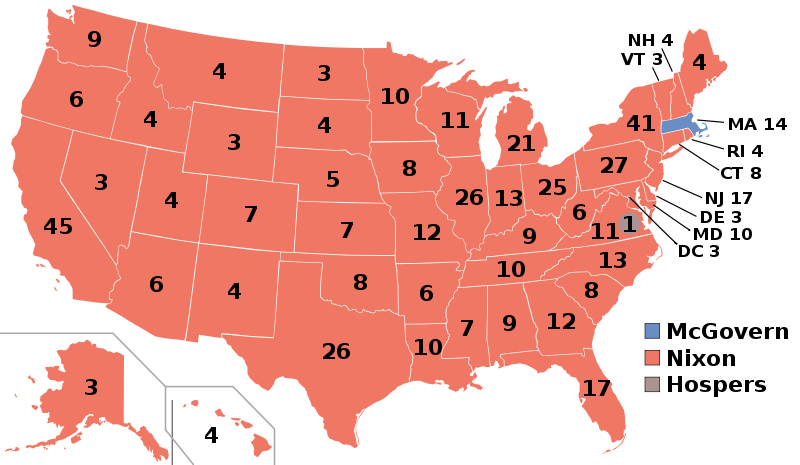
Thompson is best known for Fear and Loathing in Las Vegas, his 1971 account of a drug-fuelled trip to Nevada, but I think his finest work is Fear and Loathing on the Campaign Trail ’72, a collection of his reports on the 1972 US Presidential elections. …Vegas is a great book, but ultimately rather downbeat, charting as it does the defeat of 60’s counterculture at the hands of the Man. …Campaign Trail is much more optimistic, as Thompson gets caught in the tide of the McGovern campaign and starts to believe that progressive politics might just have a chance. It ends in disappointment of course, when Nixon wins with a landslide, but at least Thompson didn’t have to wait too long to see Tricky Dicky’s downfall. (Years later Thompson would write the definitive Nixon obituary, He Was a Crook.) …Campaign Trail‘s depiction of the youthful energy of McGovern’s supporters is still inspirational today, and should be required reading for community organisers and political activists everywhere.

To mark the anniversary of Thompson’s death The Quietus has a previously unpublished interview, along with a brief but useful biography. The BBC produced a fine documentary on Thompson’s life and work a couple of years ago, and Terry Gilliams’ film version of Fear and Loathing in Las Vegas, with Johnny Depp as Thompson, is worth seeing too.

The style of journalism that Thompson pioneered has become so commonplace now that it’s almost a cliche, but out of his many imitators none have come close to the man himself. I’m going to settle down tonight with my dog-eared copy of Fear and Loathing on the Campaign Trail ’72, and have a few drinks in his memory.

The wrong move at the right time

Regular readers will know that I have an interest in internet addiction, but I came to that via impulse control disorders in general, and pathological gambling in particular.

The BBC reported this week on the release of the British Gambling Prevalence Survey 2010, produced by the National Centre for Social Research for the Gambling Commission. It’s a fairly hefty document, and I’ve only managed to read the executive summary, but even that contains plenty of food for thought.

The headline figures are that 73% of the adult population gambled in the last year, up from 63% the last time the survey was done in 2007. Problem gambling, as measured by the DSM-IV criteria, was up from 0.6% to 0.9% in the same period, though it hadn’t risen significantly on the Problem Gambling Severity Index (0.5% in 2007 and 0.7% in 2010). These numbers are similar to the rest of Europe, but lower than the US and Australia.

One thing that surprised me was that the prevalence of online betting hadn’t increased much in the last three years. Excluding online purchase of lottery tickets, which they didn’t measure last time, the rate was 7%, up from 6% in 2007; 81% of gamblers place their wagers exclusively offline. Within this certain types of online betting are more popular though; 39% of casino gamers play on the internet.

The betting landscape has certainly changed a lot since I was a child. My grandfather liked to play the horses, which back then involved visiting the local bookie, a sinister establishment next to the pub, with blacked-out windows and a permanently smoky atmosphere, frequented by the shadiest-looking characters in the neighbourhood. He used to take home the little pens to give to me, which my mother would immediately confiscate, lest I take them to school and shame our family with the association of vice. I take after my grandfather in a lot of ways, but I must have internalised some of his daughter’s disapproval, because to this day I have never set foot inside a betting shop. I’m rather ashamed of this, as it feels like I’m betraying my working-class roots in favour of a notion of bourgeois respectability, but my mother’s scruples have probably saved me a lot of money over the years.

My grandfather’s other flutter of choice was the football pools; a sacred ritual in our family was gathering around the television at about ten to five on a Saturday to listen to the classified results. As eldest grandchild I had the responsibility of recording the scores as they were announced; the mention of lower-league English teams like Huddersfield or Gillingham still takes me back to cosy teatimes all those years ago. I was sad to see that the explosion of alternative gambling opportunities in recent times has all but killed off the pools; only 4% of the population put on a coupon now.

The change in social attitudes to gambling can be traced back to the introduction of the National Lottery in 1994; overnight gambling became a government-approved leisure activity rather than a disreputable habit looked down upon by polite society. The whole industry was deregulated, with bookies allowed to put signs in their windows advertising what went on inside, and to install seats to encourage their customers to linger; a far cry from the dens of ill-repute my grandfather used to frequent.

Card gaming, poker in particular, has had quite a makeover too. It used to be a game associated with cowboys and gangsters, or at best the idle super-rich in places like Monte Carlo. I do remember, in my youth, being quite taken by Steve McQueen’s character in The Cincinnati Kid, but “professional poker player” was never going to be among my career choices. The advent of internet and televised poker tournaments has changed all that, and now the game is played by a whole host of perfectly respectable, and decidedly unglamorous, doctors, lawyers, accountants and the like.

A year or so ago I was seeing a client who had a bit of an issue with internet poker, and, out of curiosity, I registered with one of the online casinos and tried playing for a while. I’d like to say that this plunged me into a House of Games-style maelstrom of underworld intrigue, but since a) I limited myself to a $10 roll and nickel-and-dime tables and b) I am a dreadful poker player and lost all my money in short order, nothing nearly so interesting happened.

Every so often, usually when I am bored at work and daydreaming about alternative income streams, I return to the virtual tables, generally with the same result. This last month was different though; despite playing my usual ham-fisted game I went on a pretty good run, boosting my $10 stake up to over $60, before enduring an equally persistent losing streak, which had, by yesterday, reduced my stack to $15.30.

This experience has given me a bit of insight into some of the psychological phenomena associated with gambling that I had previously only read about. Simple arithmetic tells me that my latest session has been much more successful than previous forays, since I have ended up 53% ahead rather than 100% behind, but that’s not how it feels, and the temptation to chase my “losses” by playing more, or moving to a higher-stakes table has been pretty strong. It’s also been interesting to note how my feeling for the game mechanics, particularly the balance between luck and skill, has changed as my fortunes have varied; when I was hot I was convinced that I was playing masterfully, but as the money ebbed away I found myself cursing the bad cards I had been dealt.

I guess I should be happy that I’ve received some valuable professional education, and been paid $5.30 into the bargain, but I can’t help thinking about the $45 that got away, and how, if I just kept playing a little longer, the law of averages would throw a few good hands my way again…

Victory to the Egyptian people

So it turned out that my Egyptian friends’ predictions were right on the money, and Mubarak is gone.

This was my reaction to hearing the news:

Having had a bit more time to think about it, I’m going to temper my celebration to a “Half-Hooray!!”, since the fact that the army is taking over must put the prospect of a swift transition to democracy in some doubt. It was interesting that CIA director Leon Panetta told a Congressional Committee that Mubarak was going to stand down yesterday, suggesting that the agency has inside information from the new regime, though clearly it is not entirely accurate. Vice-President Omar Suleiman is widely identified as the CIA’s main man in Cairo, and the US may be looking to him to deliver the sort of “orderly transition” that will protect Western interests in the region.

But whatever we in the West think, the final word will lie with the Egyptian people. Al Jazeera is reporting that the crowds in Tahrir Square are “hugely disappointed” with the army seizing control, and are vowing to take their protests to “a last and final stage”. Their courage and solidarity has carried them this far; it can surely lead them to victory.

Egypt in revolt

I’ve not had much time for blogging so far this month, as I’ve been caught up with various more pressing concerns, not least following the momentous events in Tunisia and Egypt.

I know a couple of guys from Egypt, and, unsurprisingly, they have been glued to Al Jazeera, as well as getting updates from friends and family in the country. At the start of this week I was feeling a bit discouraged, as it looked like the momentum of the revolution was slowing, but my friends, on the strength of what they were hearing, were still confident that change was on the way. They tell me that the demonstrations tomorrow are set to be the biggest yet, and, now that strikes are spreading and the army is wavering, time seems to be running out for Mubarak’s regime (though he must have missed that memo). A full-scale democratic revolution may still take some time, but even modest progressive change will be a first step.

The events in Egypt have again brought up the question of the degree to which social media have changed the dynamic of such movements – there’s a useful round-up of opinion here. I’m still unconvinced – while the internet may have helped spread word of what was happening around the world, I think the organising within Egypt must have been based mainly on more personal contacts. People may hear about demonstrations via Twitter or whatever, but the decision on whether to join in or not will depend on what family, friends, neighbours and workmates are doing, and any large-scale mobilisation needs the sort of guidance that comes from an organisational structure if it is going to be persistent and effective. That structure may come from a pre-existing political party, or it may arise more spontaneously, but I think it has to be based on something more concrete than the weak ties of social media.

What social media does have to offer, I think, is more in the way of creating a record of what has been happening from the level of the streets, an immediate and intimate history that will serve as a template for future movements.

The situation as I write tonight is still uncertain. My thoughts, for what they’re worth, are with the people of Egypt; I hope I’ll be able to celebrate their victory in the not too distant future.

Everybody’s Happy Nowadays

There was an interesting article in the Harvard Gazette this week, reporting on research into the secret of happiness.

In a study published in Science, Harvard psychologists Matthew A. Killingsworth and Daniel T. Gilbert recruited subjects from all over the world, then used a specially-designed iPhone app to contact them at random times, asking what they were doing and what they were thinking about, and prompting them to complete a happiness rating scale.

The results showed that maximum contentment was reported by those who were concentrating on what they were doing at that moment, rather than recalling the past or anticipating the future. This was true even if the immediate task was dull, and they were dwelling on pleasant memories, or looking forward to some enjoyable diversion. The researchers conclude that “a wandering mind is an unhappy mind” and that the key to happiness is to stay in the moment.

I think this is true as far as it goes, but it does rather assume that immediate gratification is the only outcome worth bothering about. Reflecting on past experience, or planning for the future, may not be so instantly pleasing, but I think they are still worthwhile in their own way.

That said, I have found that, as I have advanced in years, I have tended more to appreciate what is going on in the present, rather than dwelling on days gone by, or thinking about what tomorrow might bring. This is counterintuitive to some degree; I have a lot more past behind me than I did when I was younger, and many more responsibilities that should make me pay more attention to the future.

I guess this might be a cultural thing, reflecting modern society’s limited attention span and preoccupation with sensation, but I think it is mainly due to my growing realisation of my mortality, which makes the past too loaded with feelings of loss to contemplate, and renders my hopes for the future rather pointless.

Well, that’s a rather downbeat ending for a post about happiness. Here’s something to cheer you up.

Martian Chronical

I imagine that there has been more than a little schadenfreude circulating in the Linden Lab offices this week, as they digest the news that yet another pretender to the virtual world crown has hit the skids. Blue Mars, with its superior graphics and scalability, was hailed as the future of the 3D web, but, having reportedly never managed to attract more than a few thousand subscribers, now seems set for an uncertain future as an iPhone app.

It’s interesting to note that, despite all the flak they take from Second Life bloggers, the Lindens are still running the only profitable corner of the metaverse in existence. Could it be that they actually know what they are doing?

Maybe it’s just that chilled west-coast vibe