Be thankful for a dull life

I often complain about life in my home country, but in reality we have it fairly easy here. The nearest we come to anything like a civil emergency is a bit of snow, moderately strong winds, or occasional minor flooding; certainly nothing like a massive earthquake, a devastating tsunami, or a nuclear plant meltdown, let alone all three in the same weekend.

I can’t really imagine then what the people of Japan must be going through; the only way things could get worse for them would be if Godzilla rose from the ocean and started stomping Tokyo.

I guess it’s a reminder of how precarious life is, even for citizens of advanced industrial countries like Japan; Mother Nature can always throw something unexpected our way. Another reason, if one were needed, to stop grumbling and appreciate the brief time we have in this world.

Donate to the Japan relief effort.

International Women’s Day

Today is International Women’s Day. It was first marked one hundred years ago, in Germany, following a proposal by famous German socialist Clara Zetkin, and is now celebrated all over the world. I’m hoping to make it along to a local event later today; check the IWD website for activities in your area.

In the virtual world, the Instituto Espanol in Second Life has an interesting-looking program of IWD-related talks and music which I may try to catch too. I couldn’t see any other events in SL advertised, but I only did a quick search, so I’m sure there are more out there.

As the IWD website says, “International Women’s Day is a global day celebrating the economic, political and social achievements of women past, present and future.”. These days it sometimes seems that our ruling elite are determined to roll back every progressive gain the working class has made in the last century, so it’s important to pause and reflect upon the victories our sisters have won, and look forward to a better, more egalitarian, future.

The Great Gonzo

On this day back in 2005 the great Hunter S. Thompson signed off for the last time, with a gunshot to the head. He had his reasons for such a dramatic exit, but it seemed like a tremendous loss at the time, a feeling that has deepened in the intervening years as the authoritarian shift in US politics has cried out for the sort of biting social commentary that was Thompson’s speciality.

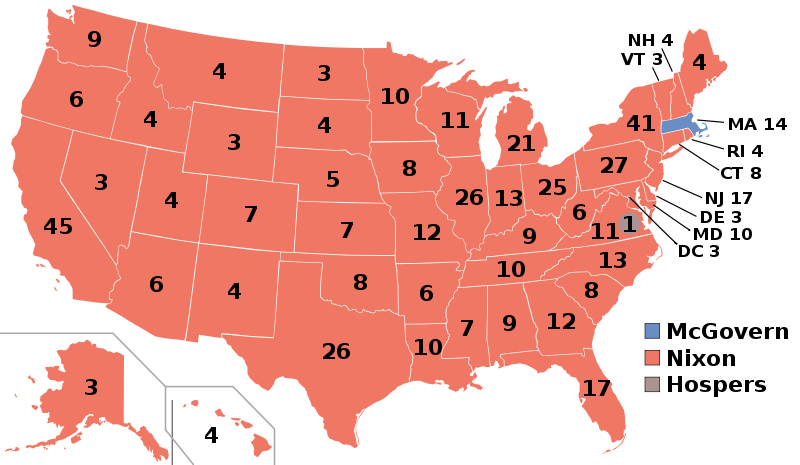
Thompson is best known for Fear and Loathing in Las Vegas, his 1971 account of a drug-fuelled trip to Nevada, but I think his finest work is Fear and Loathing on the Campaign Trail ’72, a collection of his reports on the 1972 US Presidential elections. …Vegas is a great book, but ultimately rather downbeat, charting as it does the defeat of 60’s counterculture at the hands of the Man. …Campaign Trail is much more optimistic, as Thompson gets caught in the tide of the McGovern campaign and starts to believe that progressive politics might just have a chance. It ends in disappointment of course, when Nixon wins with a landslide, but at least Thompson didn’t have to wait too long to see Tricky Dicky’s downfall. (Years later Thompson would write the definitive Nixon obituary, He Was a Crook.) …Campaign Trail‘s depiction of the youthful energy of McGovern’s supporters is still inspirational today, and should be required reading for community organisers and political activists everywhere.

To mark the anniversary of Thompson’s death The Quietus has a previously unpublished interview, along with a brief but useful biography. The BBC produced a fine documentary on Thompson’s life and work a couple of years ago, and Terry Gilliams’ film version of Fear and Loathing in Las Vegas, with Johnny Depp as Thompson, is worth seeing too.

The style of journalism that Thompson pioneered has become so commonplace now that it’s almost a cliche, but out of his many imitators none have come close to the man himself. I’m going to settle down tonight with my dog-eared copy of Fear and Loathing on the Campaign Trail ’72, and have a few drinks in his memory.

The wrong move at the right time

Regular readers will know that I have an interest in internet addiction, but I came to that via impulse control disorders in general, and pathological gambling in particular.

The BBC reported this week on the release of the British Gambling Prevalence Survey 2010, produced by the National Centre for Social Research for the Gambling Commission. It’s a fairly hefty document, and I’ve only managed to read the executive summary, but even that contains plenty of food for thought.

The headline figures are that 73% of the adult population gambled in the last year, up from 63% the last time the survey was done in 2007. Problem gambling, as measured by the DSM-IV criteria, was up from 0.6% to 0.9% in the same period, though it hadn’t risen significantly on the Problem Gambling Severity Index (0.5% in 2007 and 0.7% in 2010). These numbers are similar to the rest of Europe, but lower than the US and Australia.

One thing that surprised me was that the prevalence of online betting hadn’t increased much in the last three years. Excluding online purchase of lottery tickets, which they didn’t measure last time, the rate was 7%, up from 6% in 2007; 81% of gamblers place their wagers exclusively offline. Within this certain types of online betting are more popular though; 39% of casino gamers play on the internet.

The betting landscape has certainly changed a lot since I was a child. My grandfather liked to play the horses, which back then involved visiting the local bookie, a sinister establishment next to the pub, with blacked-out windows and a permanently smoky atmosphere, frequented by the shadiest-looking characters in the neighbourhood. He used to take home the little pens to give to me, which my mother would immediately confiscate, lest I take them to school and shame our family with the association of vice. I take after my grandfather in a lot of ways, but I must have internalised some of his daughter’s disapproval, because to this day I have never set foot inside a betting shop. I’m rather ashamed of this, as it feels like I’m betraying my working-class roots in favour of a notion of bourgeois respectability, but my mother’s scruples have probably saved me a lot of money over the years.

My grandfather’s other flutter of choice was the football pools; a sacred ritual in our family was gathering around the television at about ten to five on a Saturday to listen to the classified results. As eldest grandchild I had the responsibility of recording the scores as they were announced; the mention of lower-league English teams like Huddersfield or Gillingham still takes me back to cosy teatimes all those years ago. I was sad to see that the explosion of alternative gambling opportunities in recent times has all but killed off the pools; only 4% of the population put on a coupon now.

The change in social attitudes to gambling can be traced back to the introduction of the National Lottery in 1994; overnight gambling became a government-approved leisure activity rather than a disreputable habit looked down upon by polite society. The whole industry was deregulated, with bookies allowed to put signs in their windows advertising what went on inside, and to install seats to encourage their customers to linger; a far cry from the dens of ill-repute my grandfather used to frequent.

Card gaming, poker in particular, has had quite a makeover too. It used to be a game associated with cowboys and gangsters, or at best the idle super-rich in places like Monte Carlo. I do remember, in my youth, being quite taken by Steve McQueen’s character in The Cincinnati Kid, but “professional poker player” was never going to be among my career choices. The advent of internet and televised poker tournaments has changed all that, and now the game is played by a whole host of perfectly respectable, and decidedly unglamorous, doctors, lawyers, accountants and the like.

A year or so ago I was seeing a client who had a bit of an issue with internet poker, and, out of curiosity, I registered with one of the online casinos and tried playing for a while. I’d like to say that this plunged me into a House of Games-style maelstrom of underworld intrigue, but since a) I limited myself to a $10 roll and nickel-and-dime tables and b) I am a dreadful poker player and lost all my money in short order, nothing nearly so interesting happened.

Every so often, usually when I am bored at work and daydreaming about alternative income streams, I return to the virtual tables, generally with the same result. This last month was different though; despite playing my usual ham-fisted game I went on a pretty good run, boosting my $10 stake up to over $60, before enduring an equally persistent losing streak, which had, by yesterday, reduced my stack to $15.30.

This experience has given me a bit of insight into some of the psychological phenomena associated with gambling that I had previously only read about. Simple arithmetic tells me that my latest session has been much more successful than previous forays, since I have ended up 53% ahead rather than 100% behind, but that’s not how it feels, and the temptation to chase my “losses” by playing more, or moving to a higher-stakes table has been pretty strong. It’s also been interesting to note how my feeling for the game mechanics, particularly the balance between luck and skill, has changed as my fortunes have varied; when I was hot I was convinced that I was playing masterfully, but as the money ebbed away I found myself cursing the bad cards I had been dealt.

I guess I should be happy that I’ve received some valuable professional education, and been paid $5.30 into the bargain, but I can’t help thinking about the $45 that got away, and how, if I just kept playing a little longer, the law of averages would throw a few good hands my way again…

Everybody’s Happy Nowadays

There was an interesting article in the Harvard Gazette this week, reporting on research into the secret of happiness.

In a study published in Science, Harvard psychologists Matthew A. Killingsworth and Daniel T. Gilbert recruited subjects from all over the world, then used a specially-designed iPhone app to contact them at random times, asking what they were doing and what they were thinking about, and prompting them to complete a happiness rating scale.

The results showed that maximum contentment was reported by those who were concentrating on what they were doing at that moment, rather than recalling the past or anticipating the future. This was true even if the immediate task was dull, and they were dwelling on pleasant memories, or looking forward to some enjoyable diversion. The researchers conclude that “a wandering mind is an unhappy mind” and that the key to happiness is to stay in the moment.

I think this is true as far as it goes, but it does rather assume that immediate gratification is the only outcome worth bothering about. Reflecting on past experience, or planning for the future, may not be so instantly pleasing, but I think they are still worthwhile in their own way.

That said, I have found that, as I have advanced in years, I have tended more to appreciate what is going on in the present, rather than dwelling on days gone by, or thinking about what tomorrow might bring. This is counterintuitive to some degree; I have a lot more past behind me than I did when I was younger, and many more responsibilities that should make me pay more attention to the future.

I guess this might be a cultural thing, reflecting modern society’s limited attention span and preoccupation with sensation, but I think it is mainly due to my growing realisation of my mortality, which makes the past too loaded with feelings of loss to contemplate, and renders my hopes for the future rather pointless.

Well, that’s a rather downbeat ending for a post about happiness. Here’s something to cheer you up.

Martian Chronical

I imagine that there has been more than a little schadenfreude circulating in the Linden Lab offices this week, as they digest the news that yet another pretender to the virtual world crown has hit the skids. Blue Mars, with its superior graphics and scalability, was hailed as the future of the 3D web, but, having reportedly never managed to attract more than a few thousand subscribers, now seems set for an uncertain future as an iPhone app.

It’s interesting to note that, despite all the flak they take from Second Life bloggers, the Lindens are still running the only profitable corner of the metaverse in existence. Could it be that they actually know what they are doing?

Maybe it’s just that chilled west-coast vibe

The Social Network

[Some spoilers ahead.]

The big winner at the Golden Globes this week (apart from Ricky Gervais), was Facebook biopic The Social Network, which picked up four awards, including best director and best picture. I caught the movie on a rare trip to the cinema back in October, and it got my vote for film of the year too.

What I liked about The Social Network was that it wasn’t really about the internet, or social media, or anything new-fangled like that, but instead was an examination of that timeless theme, the outsider’s quest to break down the barriers of class that stand in the way of his destiny.

This wasn’t exactly a subtext; the message was pretty clearly spelled out in the very first scene, where Mark Zuckerberg lists the advantages of belonging to one of Harvard’s elite final clubs to his unimpressed, soon-to-be-ex-girlfriend. This initial interchange establishes our hero’s less than charming character, but we gradually realise that he isn’t such a bad guy, as we are introduced to some of his even more unlikable associates.

Chief among these are the Winklevoss twins, scions of privilege with a sense of entitlement so broad that they literally cannot believe that Zuckerberg might breach the social code by presuming to rip them off. In one of their many comic scenes they use their connections to arrange a meeting with the President of Harvard, to whom they complain that Zuckerberg has behaved in an ungentlemanly fashion; their reaction on being told they should adjust themselves to the real world is an amusing mixture of bafflement and outrage.

(As an aside, I thought the filmmakers might have exaggerated the boorishness of Ivy League fraternities, until I read this. These are our future rulers.)

Zuckerberg subsequently falls under the mephistophelian influence of flawed Napster guru Sean Parker, and after a series of sharp business manoeuvres and steely confrontations in lawyers’ offices, finally gets the better of his adversaries.

But does it make him happy? The final scene shows Zuckerberg alone in an office, forlornly clicking on the Facebook profile of his lost girlfriend. All his billions are worth nothing, the film suggests, without the simple gift of friendship.

Which is nonsense of course, a fable we poor folks tell ourselves to temper our resentment at the good fortune of the rich. I’m sure that Zuckerberg (who in reality has been with his current partner since his pre-Facebook days) is perfectly content with his life, having learned what the likes of the Winklevosses have always known – money really can buy you happiness.

The overall moral of the film is more egalitarian though; the idea that the old structures of wealth and class can be undermined by a new technological paradigm, in much the way that Facebook itself morphed from an exclusive Harvard club into a tool for the masses. I’m not sure that I entirely buy that – the investors who stand to make the big money from Facebook were rich to start with, and the circles of real power are as closed to outsiders as ever – but the story is so engagingly told that one can’t help rooting for plucky underdog billionaire Zuckerberg as he strives to make the world a better place by letting us all be “friends”.

Where Is My Mind?

Wikipedia is 10 years old today. As an early adopter and regular user, I can honestly say that I can’t remember how I managed before the invaluable, and mostly reliable, reference source was available.

In fact there is a lot I don’t remember these days, stuff I used to be able to recall instantly that now lurks frustratingly beyond the borders of my conscious memory, like the date of the Paris Commune, or the title of the Pixies’ second album, or the name of that guy I stood next to in anatomy class. I’m sure this is mostly attributable to my advancing years, but I do wonder how much the smartphone/Wikipedia combination has encouraged me to transfer knowledge from my brain to my pocket. This should, theoretically, free up my neurones for higher pursuits, though all I actually do with my liberated intellectual capacity is write this blog, so maybe it’s not such a great trade-off after all.

Mutsugoto gone

Readers may remember that a couple of years ago we reported on a project to create Mutsugoto, a virtual intimacy device, which promised to allow couples to caress one another even if they were geographically separated. Moray-based Distance Lab used a combination of cameras and lights to let partners virtually “touch” each other while lying on their beds miles apart, which, we commented at the time, seemed a much more promising way of communicating real feelings than interacting in Second Life, as it was directly sensual and avoided all the cerebral processing inherent in text-based liasons.

Sadly, this week we heard the news that the company had been wound up, though not before burning through £3 million of taxpayers money. It seems that the gentle and relaxing Mutsugoto wasn’t what people were thinking of when they heard the words “virtual intimacy”. More surprisingly, Distance Lab’s other product, Remote Impact, which allowed far-flung combatants to viciously beat one another, also bombed. In today’s world, where one finds anger and aggression simmering at every turn, I would have thought that that would have been a winner.

2011: The year in preview

So, the New Year is here, time to think about the future, and make plans for what we want to do with this blog over the next twelve months.

Looking back over the last year, there are a few things that I planned to do but never got round to; organising some political activity within SL, delineating the psychological profile of a typical Second Life resident, and posting more general cultural commentary, in the form of book, film and music reviews.

I failed to complete, or even seriously start, the first two of these tasks for more or less the same reason; they are big projects, that would demand an investment of time and attention that couldn’t possibly be justified by the results, and thus seem rather self-indulgent. This is particularly true of the political organisation idea; virtual agitation isn’t going to have any practical effect, whereas spending even a fraction of the time on real-world activity would probably have some positive consequences. (Of course I can do the Second Life work from the comfort of my own home, rather than having to go out and stand on cold street corners, but that’s not quite enough to tip the balance.)

One can make more of a case for the SL psychological investigation plan; not because the final result would be particularly earth-shattering, but rather because there would be some likelihood that I would find the process educational in a generalisable way. Again though, utilising the time to study something more immediately applicable to my day-to-day work is likely to be more profitable.

So I’ll probably quietly forget about the political activity thing, though I do have a vague idea about doing a series of posts on the various political groups that already exist on the grid, and I’ll definitely be commenting on real world politics a bit more. As far as psychological comment goes, I suppose I’ll have to keep that going, since it is the ostensible raison d’être of this blog, but I’ll stick to small scale stuff rather then any more ambitious projects. Sherry Turkle has a new book just out – Alone Together, which “describes new, unsettling relationships between friends, lovers, parents, and children, and new instabilities in how we understand privacy and community, intimacy and solitude”; I expect I’ll have something to say about that once I get round to reading it. I may also try to do more about the psychosexual aspects of virtual interaction; I have written a little about this in the past, but mostly in the form of comments on other blogs.

I am going to start writing some more cultural reviews; the problem hitherto has been my rather obsessive nature, and my consequent inability to keep posts down to a manageable length. What I need to do is pick out a couple of aspects of the work in question and restrict myself to a few succinct comments.

I’ll have to do some basic blog housekeeping too; update the links, tidy up the tags, create a custom graphic for the header. The domain is due for renewal soon, and I’m going to pay WordPress a bit extra so they stop putting adverts on my pages, which should make things look a bit neater.

So there we are; a handy list of my aspirations, which will double up as a reminder of my shortcomings come December.