The value of application

I’m middle-aged, and sensible, and a bit dull, so of course I have a monthly contract for my cellphone, with unlimited minutes and texts (not that I ever use many of either, since I don’t have much of a social life to speak of). Anyway, I guess that means that I’m well outside the target demographic for WhatsApp, and not really in a position to even begin to understand why it might be popular among the youth, or what its revenue model might be.

Even if I did comprehend how money can be made by facilitating gossip among teenagers, I’m still not sure that I would be able to get my head around the fact that Facebook just paid $19 billion for the app. How did they come up with that valuation? Why not $12 billion, or $25 billion, or some other random figure? For $19 billion they could have got a proper, profit-generating, corporation like ConEdison, and still had some change left. I know that the deal was mainly financed with Facebook stock, which may or may not hold its value, but reportedly there was about $4 billion in actual real cash involved too. The guy who sold them Instagram must be feeling he left some money on the table.

I probably shouldn’t care what Silicon Valley venture capitalists choose to waste their money on, but it’s impossible to read about these astronomical sums being thrown around and not wonder if some more productive use might have been found for the cash, like, you know, fighting world hunger or something.

No doubt such naive sentiment would earn me a stern lecture from today’s tech entrepreneurs, about how enriching the wealth-creators is the true road to global prosperity, just like Ayn Rand said, but even if I was a hard-headed capitalist rather than a soft-hearted communist the WhatsApp deal might raise a few concerns. If the rate of profit in traditional industries has declined to the point where capital is forced to find a home at the risky edge of new technology, then it doesn’t auger well for the economy as a whole. Of course tech enthusiasts will argue that we’re talking about a new, disruptive paradigm, and that the old rules don’t apply, and that the sky-high valuations of internet stocks are completely justified and not at all based on any sort of irrational exuberance, but that’s what they’ve said about every bubble since the days of tulip mania.

At least us poor folks can look forward to the whole edifice collapsing at some point in the future, though the Googles and Facebooks are probably already preparing plans to lobby the Government for a bailout when the crash comes, because these arch-objectivists do tend to embrace corporate socialism when times turn hard (for them). In the meantime I guess we just have to keep organising, and resisting where we can.

Pete Seeger RIP

I have to admit that I’m not a huge fan of folk music, (though I did enjoy Inside Llewyn Davis on a rare trip to the cinema this weekend) but I was sad to hear that Pete Seeger had passed away today, at the grand old age of 94. His songs seemed to soundtrack much of US radical politics in the last 70 years, from pre-war labour struggles, through McCarthy witch-hunts, civil rights marches and anti-war movements, right up to the Occupy protests of the last few years.

I’m not sure that the protest ballad as a cultural form is quite so popular on this side of the Atlantic, but hearing Seeger deliver a fine old union song like Which Side Are You On? certainly still rouses some revolutionary fervour.

All power to the Soviets!

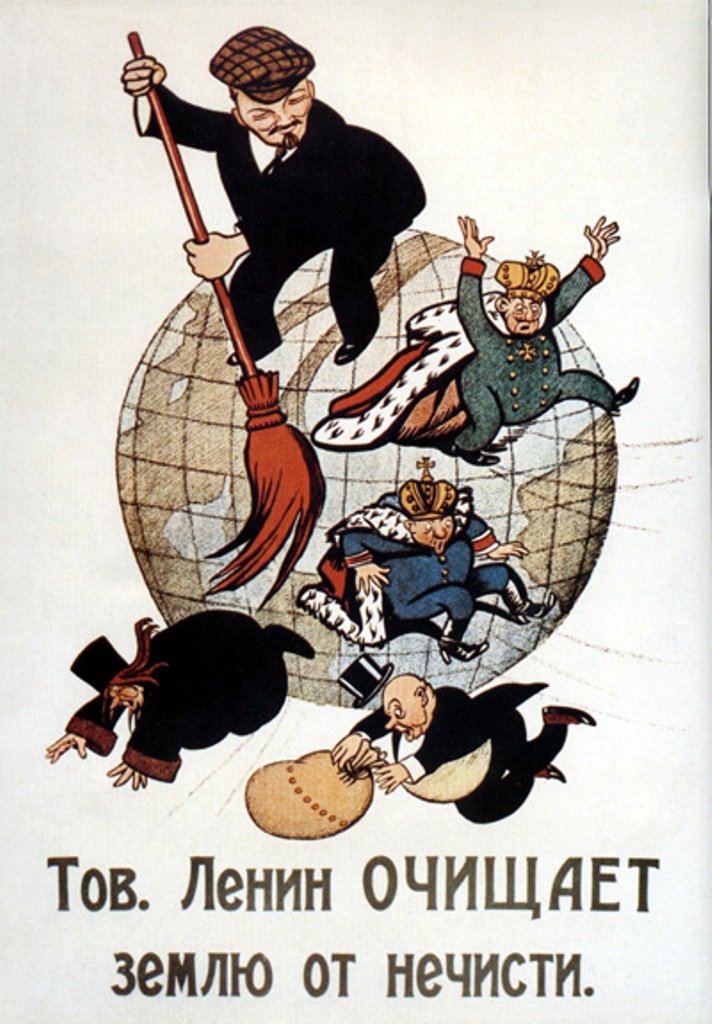
Today was the 90th anniversary of the death of Vladimir Ilyich Lenin, Bolshevik revolutionary and first Premier of the Soviet Union.

Regular readers will know that I count myself a committed communist, so it will be no surprise to learn that Lenin is one of my political heroes. What he had – and what is missing from much of radical scene today – was an understanding that the central questions in any political struggle concern power – who has it, and what they do with it. “Who, whom?”, as Lenin succinctly put it.

This insight was given practical form in Lenin’s famous April Theses, delivered to the Bolsheviks on his return to Petrograd from exile in 1917. These few paragraphs, outlining a programme for action in the tumultuous days following the fall of tsarism, form one of the most influential documents in history – without them the October Revolution would not have happened, events in the 20th century would have taken a dramatically different course, and the world we know today would never have come into being.

I know from experience that my enthusiasm for Leninism is not widely shared, even on the left, which is perhaps understandable in light of how the Soviet Union developed in the years after Lenin’s death. It’s a shame though, because the key question that faces those of us trying to change the world today is the same one that the Bolsheviks grappled with a century ago – what force can we mobilise to counter the power of capital, which keeps us in subjugation? The answer, now as it was then, involves the organisation of the working class through a revolutionary party, a task that Lenin successfully accomplished. We could do worse than try to follow his example.

The Spy in the Cab

As if we denizens of Second Life were not paranoid enough already, we learned today that US and UK intelligence agencies have been covertly recording our in-world activity over the last few years.

In reports published in the Guardian and the New York Times, drawing on files provided by whistleblower Edward Snowden, it was revealed that the spooks viewed virtual worlds like SL and World of Warcraft as a “target-rich communication network”, which could be used by terrorists and subversives as a tool to plot the overthrow of Western civilisation. At one point “so many C.I.A., F.B.I. and Pentagon spies were hunting around in Second Life … that a “deconfliction” group was needed to avoid collisions”, and “while GCHQ was testing its ability to spy on Second Life in real time, British intelligence officers vacuumed up three days’ worth of Second Life chat, instant message and financial transaction data, totaling 176,677 lines of data, which included the content of the communications”.

Interestingly, while Blizzard have denied they were aware of the WoW snooping, both Philip Rosedale and the current Linden Lab management declined to do likewise when invited to comment by the NYT, which also reported that Cory Ondrejka, then Chief Technology Officer at LL (and also apparently “a former Navy officer who had worked at the N.S.A. with a top-secret security clearance”) had “visited the [NSA’s] headquarters at Fort Meade, Md., in May 2007 to speak to staff members”.

I used to believe that no one would ever bother to trawl through the minutiae of SL interaction looking for subversion, but it seems that my faith in the anonymity of the virtual crowd has been badly misplaced. It’s certainly made me think about some of the political conversations I’ve had with people in SL over the years, which, for all I know, may have triggered all sorts of automated warning bells, and landed me on some agency’s watch list. Scary stuff. I’ll certainly be more circumspect in the future.

Nelson Mandela RIP

I’m not going to try to summarise Nelson Mandela’s many contributions to the progress of humanity; that’s been well covered elsewhere, though it should be noted that much of the mainstream media have presented a rather toned-down take on Mandela’s politics, glossing over his more radical side. More than a few of the world leaders now rushing to eulogise Mandela have more in common with his oppressors than the man whose legacy they seek to appropriate.

Mandela’s passing has reminded me once again what a long time ago the 1980s were; looking back at some of the political questions that seemed so important to me in those days – the fight against apartheid, the Cold War, the war in Ireland, and no doubt others I’ve long forgotten – it seems like another planet. On the other hand, the fundamental injustices that underlay the struggles we were involved in back then are still around today; some of them in new forms, but others depressingly familiar.

It can seem that the fight to make a better world is endless, and that our foes hold all the advantages, but the greatest lesson that Mandela taught us was the necessity of taking the long view; it may take decades, and at times things might seem hopeless, but history is on the side of progress, and we will win in the end.

September 11th 1973

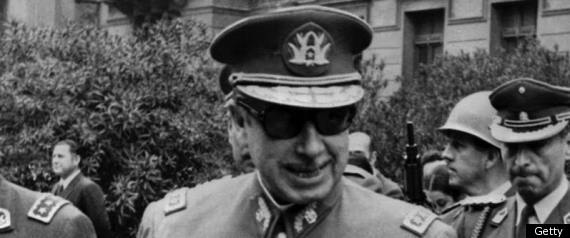
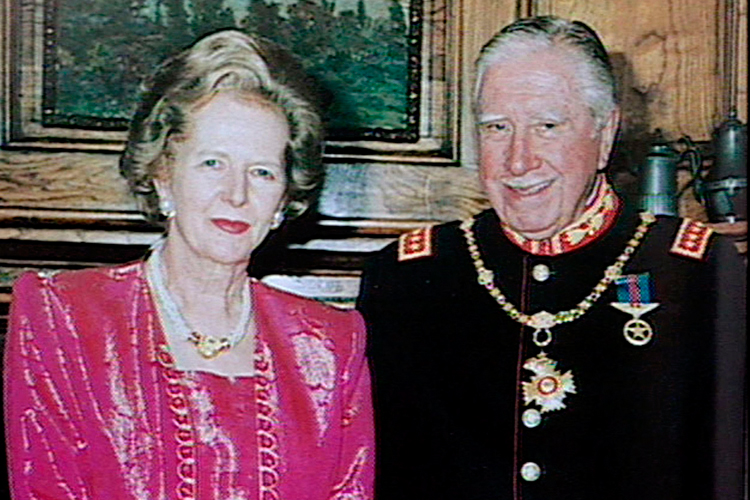
Today is the fortieth anniversary of the US-backed military coup in Chile, which overthrew the left-leaning government of Salvador Allende and ushered in the brutal rule of General Augusto Pinochet. The suffering endured by opponents of the junta in the years that followed has been well documented, but despite this Pinochet escaped justice, thanks to his friends in the West.

Still, it’s heartening to know that workers in this country were on the right side, even if the government was not; while Pinochet was praised by the powerful for his early adoption of monetarist policies, weapons shipments to his regime were stopped by union action. Many Chilean refugees were welcomed into working-class communities and some remain here to this day – I count their children among my friends. The memory of that solidarity will continue to inspire long after the dictators are forgotten.

Green Typewriters

And we’re back… Slightly longer summer break than usual this year, for various reasons, not all connected to idleness. Mostly connected to idleness though.

But who can blame us for staying away from the internet? What with twitterised death threats, cyber-bullying, extreme porn everywhere, topped off by the NSA snooping on us all, browsing the web these days feels less like strolling around a virtual utopia, and more like dodging the cops in the town’s sleaziest neighbourhood.

It’s hard to believe that only a couple of years ago everyone was saying that social media was going to save the world, and even nominating the internet for the Nobel Peace Prize. One might almost suspect that these scare stories (mostly concerning phenomena which, while obviously serious, have been around for years) were being hyped up by the authorities, and their allies in the old media, to convince us that we should steer clear of any online content that isn’t government-approved.

Anyway, I’m thinking that we should take a tip from the Russians, and start producing SLS on paper, with typewriters. We could hand out hard copies in the street, to anyone who looked vaguely interested. Our productivity and readership couldn’t be any worse than they are now…

Constitutional scepticism

In our usual slacker style we’re a day late with this, but I thought we should do our small part to publicise the Stop Watching Us petition, which calls on the US Government to respect the Constitution’s 4th Amendment prohibition of unreasonable surveillance.

I haven’t actually signed it myself, partly because I’m not convinced it will achieve anything other than providing the authorities with a handy list of self-identified subversives, but mainly because I’m a hard-core communist who views with disdain the naive liberal notion that the constitution of a bourgeois republic is anything other than a fig-leaf of legality designed to distract us from the reality of capitalist power relations. As of this morning there were 552,411 people with a more optimistic view of citizens’ rights under constitutional government though, so if, like them, you are less cynical than I, you should probably sign up.

The blogging dead

I should have known that our obsession with the undead would end up turning us into a zombie blog – devoid of fresh content, but lurching on, in a grotesque parody of life.

The funny thing is we still get a respectable amount of traffic – a steady background buzz, with occasional inexplicable spikes. If I sold out my principles and put some advertising on the site I could just sit back and watch the fractions of a cent roll in.

Anyway, I’m feeling sorry what whichever low-level NSA analyst has been assigned the thankless task of trawling through our output looking for subversion, so I’ll try to make things a bit more interesting in the weeks ahead. Unless of course the sun appears, in which case we’ll be staying out for the summer….

Ha Ha Thatcher is dead

I know that dancing on the graves of the newly deceased isn’t very classy, but I’d be lying if I told you that my reaction to hearing today’s news was anything other than a broad smile.

I’m actually a little dismayed by this – not due to any respect I had for the woman, but rather because I’m sure she would have seen the fact that her demise is being celebrated by the likes of me as a badge of honour. My brain wants to rate this event as a footnote in history, to condemn her to the obscurity she deserves, but my heart is saying otherwise.

Oh well, I guess the cool rationalism will win out over the next few days, but tonight we party…