International Women’s Day 2013

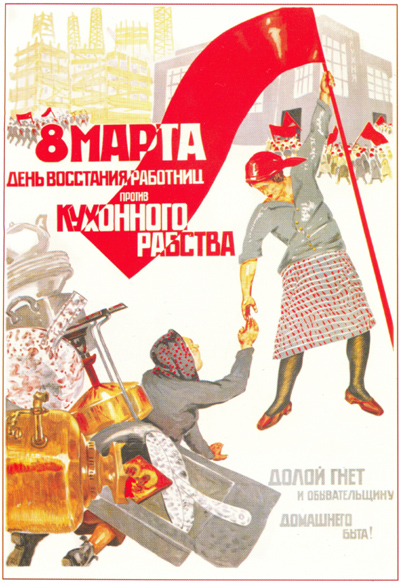
When Luise Zietz and Clara Zetkin proposed the observance of an International Women’s Day back in 1910, I wonder if they imagined that over a century later their sisters would still be campaigning against gender-based violence and in defence of reproductive rights. In some ways it’s depressing that so much remains to be done, but the history of struggle over the years is never less than inspiring.

Viva la Revolución Bolivariana!

I woke to sad news today; Hugo Chavez, President of Venezuela, had lost his final battle against illness. It seems like only yesterday we were celebrating his reelection; now we mourn his passing.

Hugo Chavez will undoubtedly be remembered as a great figure in left politics; his legacy not just the vast improvement in living standards he brought to the people of Venezuela, but also the movement he built that will carry on his work, and the inspiration he gave to others fighting poverty and injustice in neighbouring countries and around the world.

That inspiration is captured in the documentary The Revolution Will Not Be Televised, which covers the abortive 2002 coup against Chavez, and the popular uprising that defeated it. It’s available in full on YouTube, and well worth watching.

There is no land beyond the Volga

Today is the 70th anniversary of the final surrender of the German 6th Army at Stalingrad, the last act in the most significant battle of the Second World War. It marked the end of the Nazi dream of eastward expansion, and the beginning of the Soviet counteroffensive which would end two years later with the Red flag flying over the Reichstag in the ruins of Berlin.

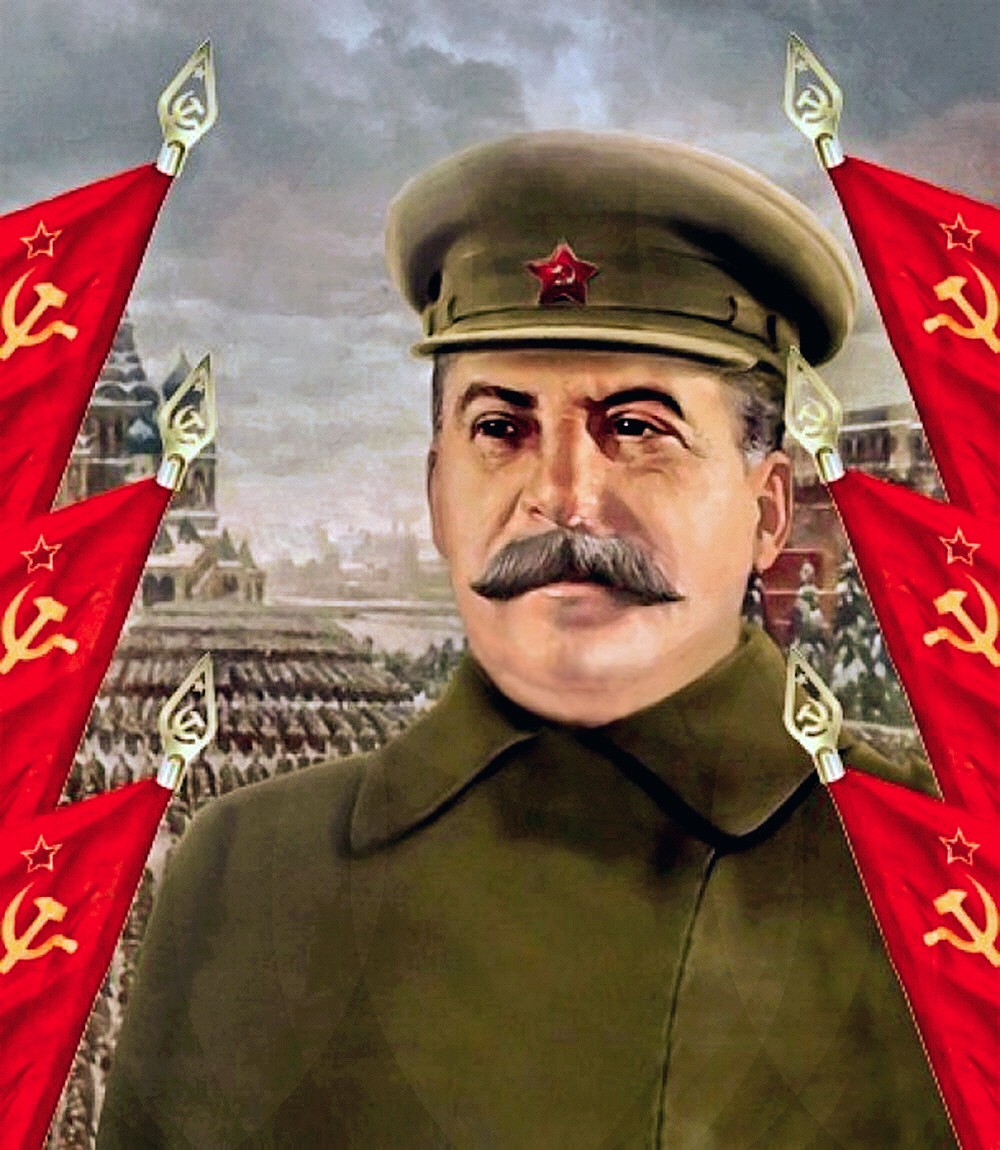
Whatever one thinks of the wartime Soviet regime (and even a committed communist like myself has some serious reservations about Uncle Joe) it’s impossible to read the story of the struggle for the city without being inspired by the remarkable courage and tenacity of the troops who fought and died to turn the tide of fascism on the Eastern Front. Units like the young women of the 1077th AA Regiment, who stood against the advancing Panzers to the last shot, or Rodimtsev’s 13th Guards Rifle Division, 10,000 strong at the start of the campaign, of whom barely 300 lived to see the German surrender. The battle made heroes of Vasily Zaytsev and Yakov Pavlov, among many more of the thousands of soldiers who crossed the burning Volga to defend the last Soviet enclaves on the west bank of the river, knowing that their life expectancy could be measured in hours. Their sacrifice stalled the Nazis while Soviet forces built up on the German flanks, ultimately springing the pincer movement that trapped and destroyed the once-mighty 6th Army.

The resolve of the Soviet troops was undoubtedly bolstered by harsh discipline – Stalin himself commented that it took a brave man to be a coward in the Red Army – but it’s clear from contemporary accounts that the soldiers on the front line were well motivated to fight the invaders, partly by ideology, but mostly by a desire to protect their homeland.

Although with hindsight the Soviet victory at Stalingrad seems as if it was inevitable, given their ability to replace losses in a way that the overstretched Germans never could, at the time it must have been much less certain. The decisive factor may have been that communism, even in the distorted form of Stalinism, is essentially rational – coldly and brutally rational at times, but always more effective than the half-baked mysticism of Nazi ideology. Hitler may have believed that Aryan destiny and fighting spirit could substitute for food, ammunition and winter uniforms, but Stalin knew that the war would be won by the side which could bring the most force to bear on the enemy, and at Stalingrad the Soviet armies proved that with ruthless efficiency.

Four more years

So Obama won fairly comfortably in the end, though Romney turned out to be a much better candidate than I had expected, especially after he quietly dumped most of the wingnut baggage he had been obliged to pick up to get through the primaries.

It’ll be interesting to see what lessons Republicans learn from this defeat, and their failure to dent Democrat control of the Senate, which was at least partly thanks to the blunders of Tea Party favourites Todd Akin and Richard Mourdock. The obvious, sensible, conclusion would be that they have to move towards the centre, but that’s the obvious, sensible conclusion they have repeatedly failed to appreciate in the last four years.

Other results approving same-sex marriage and legalising marijuana made it a good night for the progressively-minded. Obama will probably end up disappointing us again, but let’s enjoy this while it lasts.

Another message to my friends in the US of A

I haven’t written as much about the US Presidential race as I did back in 2008, even though, or perhaps because, it has been much closer and more exciting this time around. The late polls seem to show Obama drawing ahead in the swing states, but just in case it does go to the wire, and the exclusive demographic of SLS readers proves to be the decisive factor, I’ll repeat my plea of four years ago:

[Thanks again to Matt Groening.]

It’s an ill wind…

It seems that the Good Lord Himself has decided to intervene in the final week of the US Presidential race, as Hurricane Sandy threatens to disrupt campaigning in several swing states.

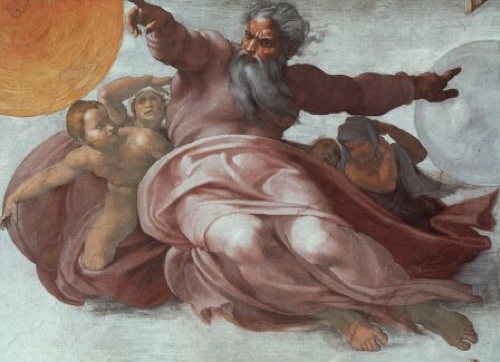
Opinion is divided as to whether the influence of the ultimate super PAC will favour Obama or Romney. My feeling is that God is a Republican; judging by the actions of the men who run his earthly franchise He clearly sides with the wealthy, the powerful and the status quo.

Power and ideology on the internet: thoughts on the Violentacrez case

I guess anyone reading this will already be familiar with the story of Gawker’s exposé of notorious Reddit mod Violentacrez; if not, the short version is something like this: Violentacrez was well known on the social media site as the éminence grise behind various unsavoury subreddits, like “Jailbait”, which featured pictures of young girls culled from their Facebook pages, and “Creepshots”, a collection of leering photos of unsuspecting women; writer Adrian Chen, feeling that Violentacrez should accept responsibility for his actions rather than hide behind a pseudonym, did a little detective work which revealed Violentacrez’s real identity, one Michael Brutsch, a programmer from Texas; following the Gawker article Brutsch lost his job, and presumably has had some awkward conversations with friends and neighbours.

What are we to make of this? Gawker and Chen have been heavily criticised by the Reddit community for supposedly limiting Brutsch’s right to free speech by violating his privacy and exposing him to intimidation. On the other hand, Brutsch was happy to get his kicks by trespassing on the personal space of countless girls and women without their knowledge or consent, so he can hardly claim that his own boundaries should be sacrosanct.

So three cheers then for Chen and his righteous take-down of a sleazy douchebag. But isn’t there a nagging problem? Like, who elected Chen to be sheriff of the interwebs? How is he accountable? What if tomorrow he, or someone like him, decides that bloggers I agree with, like critics of repressive governments, deserve to be stripped of their anonymity too? What if he thinks I need to be exposed for my serial offences against good literary style?

There are two issues to consider here. The first is the liberal notion of Free Speech, as summed up in Voltaire’s (misattributed) dictum “I disapprove of what you say, but I will defend to the death your right to say it.”. I fundamentally disagree with this. Not all opinions are equally valid, and there are some that are so toxic that they need to be suppressed. I may get upset when viewpoints which have my sympathy are censored, but I’m not so bothered, in principle, when the likes of Brutsch are marginalised in the public discourse.

(That’s the theory anyway; in practice it’s a little more complicated. The second thing we have to think about is who actually has the power to regulate the promotion of ideas. The people who run the world are not, by and large, fans of my leftist ideology, so if there was an effective mechanism for controlling what appears on the internet, most of the time it would be employed to squash things I am in favour of. Thus I generally find myself campaigning against web censorship, though on pragmatic rather than principled grounds.)

The underlying point is that society is divided between classes whose ideas are incompatible; the liberal ideal of a society where all points of view are given equal respect, presided over by a benign state that sits above the class conflict, is an illusion. The dominant ideology of the ruling class finds its expression in many ways, from the high politics of a presidential debate to the low culture of Reddit’s misogynist underbelly. We can fight this as it presents itself, but we will never fully defeat it until we build up our forces to a point where we have the power to eradicate the ideology of our class enemies; a dictatorship of the proletariat for the information age. This will solve the problems of democracy and accountablity, for, as Lenin put it:

…proletarian dictatorship is the forcible oppression of the resistance of the exploiters, i.e. an insignificant minority of the population, the landowners and capitalists. It follows that proletarian dictatorship must inevitably entail not only a change in democratic forms and institutions, generally speaking, but precisely such a change as provides an unparalleled extension of the enjoyment of democracy by those oppressed by capitalism…

As ever, the problems that arise in the course of online life turn out to have their roots in more fundamental aspects of society; the solutions lie in the offline world too.

Hooray for Hugo

After giving last year’s award to worthy women’s rights activists, the Nobel Peace Prize Committee seem to have rediscovered their sense of ironic black humour. They haven’t quite managed to top their 2009 masterstroke, when Barack Obama got the nod for his work in spreading goodwill and understanding by escalating wars and terrorising whole populations with killer drones, but giving the medal to the European Union, at a time when EU macroeconomic policy is spreading fear and despair through much of the continent, does come a close second.

It’s been rather a depressing week all round, from a left point of view, what with Romney making up ground in the US and our own Tory government promising all-out class warfare. There was a bright spot though; Hugo Chavez and the Bolivarian Revolution marches on in Venezuela. Chavez has his critics on the left round here – proletarian bonapartism is a phrase one sometimes hears – but his record of improving the lot of the poor beats anything we’ve managed in the last half century, so more power to his elbow I say.

Mitt of Pandaria

Republicans in Maine have launched a series of attacks on Democratic State Senate candidate Colleen Lachowicz, over her love for playing World of Warcraft; apparently they feel that it is unbecoming for a serious politician to spend time in a fantasy world. Perhaps they should tell that to their Presidential nominee

Republican Mitt-fortune

Well, it looks like my worries about the Democrats losing the White House may have been misplaced. Obama has hit on the perfect strategy – sit back, look presidential and wait for the Romney campaign to implode.