California Über Alles

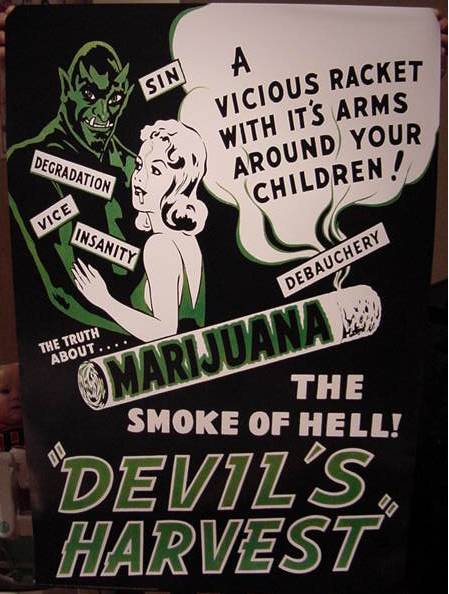
Sadly, Proposition 19 didn’t make it over the victory line yesterday, causing intense disappointment to weed aficionados worldwide. The Federal Government had promised to vigorously enforce the US anti-dope statutes in the event of Prop 19 passing (the DEA built its power during the marijuana scares of the 30’s), so victory would probably have been more symbolic than immediately practical, but it would have moved the issue a few more steps towards a rational solution. The problem seems to have been the inexplicable failure of the stoner youth vote to turn out. Let’s hope they get their act together for 2012.

The night in general turned out just about as well for the right as had been predicted, with big Republican gains across the nation, though they narrowly missed out on gaining control of the Senate, thanks to the failure of Sharron Angle and Christine O’Donnell to win in Nevada and Delaware respectively.

The defeat of the Tea Party candidates in these races is obviously cheering, but in the long term it may prove to be a mixed blessing for the Obama administration. The 21st-century Know-Nothings may be on a roll at the moment, but I wonder if 2010 may turn out to be the high-water mark of the Tea Party, as GOP strategists assimilate the lessons of the debacle in Delaware especially, and conclude that they need to steer more to the centre if they want to win the big prize in 2012. A lot depends on how the economy goes, but Obama’s best shot at a second term must lie with the Republicans going with a wing-nut candidate rather than the sort of fiscally conservative but socially liberal mix that worked so well for the Tories here.

Meanwhile, back in California, Jerry Brown is heading for the Governor’s mansion once again, which gives me an excuse to spin this classic number by the Dead Kennedys.

A Message for the Voting Public of California

I don’t know how many of you, my dear readers, are registered to vote in the Golden State, and I would imagine that those of you who are are already thinking along these lines anyway, but if you are still undecided, can I ask you to please, please, please vote in favour of Proposition 19? As well as making life much better for yourselves, the example of your fine state taking a rational stance on the marijuana question would be a much-needed injection of sanity into the debate, and would surely hasten progressive change worldwide.

As for the rest of the ballot, again you’ve undoubtedly worked this out already, but if I were eligible I’d be voting against Proposition 23. For Governor, and the US Senate seat I favour the Peace and Freedom Party candidates Carlos Alvarez and Marsha Feinland.

There are lots of other good socialist candidates standing nationwide; a partial list can be found here. In general, if you’ll excuse my presumption, I’ll just repeat my plea from two years ago, which is still sadly relevant.

Red Ties

Back at the start of this month I posted a piece about the limitations of social media as tools for political action. It has subsequently come to my attention that Malcolm Gladwell had published an article in the New Yorker the previous month which makes substantially the same points, though much more eloquently of course. We even used the same Gil Scott-Heron reference as a tagline.

Unsurprisingly, Gladwell’s piece generated rather more response than mine, from, among others, Alexis Madrigal at The Atlantic, David Dobbs at Wired and Zeynep Tufekci at technosociology. All make good points, mostly focusing on Gladwell’s juxtaposition of weak and strong social ties, but I don’t think that any of them really address the central strand of his (and my) argument; effecting meaningful social change is a difficult thing to do, because it requires directed activity sustained over a long period of time, something that calls for a centralised and hierarchical organisation of the kind which social media is ill-suited to foster.

Having thought about this a bit more, I’m starting to wonder if scepticism about the revolutionary potential of social media is a generational thing. All my political experience has been in movements based around the sort of strong ties that are implied by the word “comrade”, with people, some of whom I have known for decades, that I have worked, lived, studied and socialised with, and who I would trust with my life. Of course these days we communicate by email, Twitter and especially SMS, and conduct our agitation through the web as much as on the street, but our relationships are still founded on those personal bonds. I can’t imagine the same thing developing from contacts that are exclusively internet-based, but maybe that’s just because I haven’t grown up in a landscape where electronically-mediated communication has become the dominant form of social discourse.

Perhaps for future generations “Facebook Friend” will have the same resonance as “Comrade” has for us old Bolsheviks, but I doubt I’ll ever come round to that way of thinking.

Subterranean Hope

I’m sure I’m not the only one for whom the story of the trapped Chilean copper miners has called to mind the classic novel Germinal.

A vividly-drawn tale of the struggle for survival in the coalfields of northern France in the mid-nineteenth century, Zola’s naturalistic masterpiece is one of my favourite books, but it is rather grim. I had to stop reading it for a day or two at several points, to take a break from the relentless tide of misfortune that befalls the central characters, who are pictured so realistically that it is impossible not to empathise with their suffering. It does end on a note of optimism though, with one of the most rousing passages in literature:

“Beneath the blazing of the sun, in that morning of new growth, the countryside rang with song, as its belly swelled with a black and avenging army of men, germinating slowly in its furrows, growing upwards in readiness for harvests to come, until one day soon their ripening would burst open the earth itself.”

Nearly two centuries have passed since the period portrayed in Germinal, but it’s worth remembering that mining remains one of the most hazardous professions in the world, with more than twelve thousand workers losing their lives every year. Even in safety-conscious Switzerland eight men died during the construction of the Gotthard tunnel.

Let’s hope the discipline and solidarity shown by the 33 miners of San Jose inspires workers the world over to unite, organise and demand an improvement in their conditions.

Give Peace a Tweet

The 2010 Nobel Peace Prize was awarded this week; it went to Chinese human-rights activist Liu Xiaobo, who is currently languishing in jail for his efforts. It’s hard to argue with the committee’s decision (unlike last year), but part of me was rooting for one of the other nominees, the Internet.

Riccardo Luna, editor-in-chief of the Italian edition of Wired, is one of the proponents of the Internet for Peace Manifesto, and writes persuasively of the Net as “the first weapon of mass construction … day after day, search after search, tweet after tweet, it is laying the foundation of a new era where sharing, common knowledge and mutual respect will prevail”.

Regular readers will know that we have previously noted the Internet’s capacity to bring out the worst in human nature, and it’s hard to see the network as an unimpeachable force for good when one reads about things like this. We’ve also been sceptical about the Net’s much-touted ability to galvanise social and political movements, and pointed out that it is just as likely to further ignorance and division by allowing people to receive only the information that they want to hear.

Despite all this, I do think that the Internet can live up to the vision that Luna outlines. The key thing to recognise is that the Net, like any other medium of communication, does not exist in isolation from the social relations that produce it. As long as we live in a system that is based on the exploitation of the masses by a ruling elite the Internet will reflect the power imbalances, along lines of class, gender and race, that exist in our society, with all the ills that accompany them.

Once we reach a form of social organisation that eliminates all these injustices – in other words, once we have world communism – then the Internet, like humanity itself, will be able to attain its true potential. Until then I think the accolades will have to wait.

Universal Gloom

The Tory Party Conference is under way, and the headline news today is George Osborne’s plan to abolish child benefit payments to higher rate taxpayers.

This is a smart political move, as the fuss the cut will generate among the middle classes will dominate the media, and provide cover for the even harsher cuts he has in store for poorer sections of society (the full horror of which we probably won’t know until the conclusion of the spending review at the end of this month), promoting the fallacy that “We are all in this together”.

The attack on child benefit isn’t just about saving money though, it is a strike at one of the central pillars of the Welfare State, the concept of Universality. The idea that all children have the same entitlement, whatever their background, is a powerful statement of social equality, and eroding it is part of the Tories’ plan to turn back the last 60 years of progress and return us to the divided society of the pre-war era.

There is already a two-tier education system, which will be extended by the plans to allow Universities to charge what they like for tuition, effectively reserving higher learning, and the economic advantages it bestows, for the rich. The NHS in England is going to be dismantled in favour of a patchwork of privatised provision, and the general benefits system is threatened with huge cuts. All this while a double-dip recession looms, and millions face joblessness. The wealth gap may have grown massively over the last decade, but it looks like it may get mediaeval in the years ahead.

Grim times. It would be nice to think that things were looking brighter on the other side of the Atlantic, but it seems that the right is set for an unlikely resurgence there too. This month’s Rolling Stone has an excellent article on the Tea Party, their regressive politics (summed up succinctly by writer Matt Taibbi; “After lengthy study of the phenomenon, I’ve concluded that the whole miserable narrative boils down to one stark fact: They’re full of shit”), and how, ironically, their incoherent populist anger is being co-opted by the Republican Party to serve the interests of the financial elites that the TP-ers supposedly despise. The Democrats, meanwhile, seem to have been stunned into inaction by the disappointment that has been the Obama administration.

Grim, grim times. We can only keep working away, and hope that the cold winds of change blow some life into the embers of revolt.

The Revolution Will Not Be Twitterised

4chan seems to have been in the news a lot recently, and the /b/tards have been presented in a rather more sympathetic light than hitherto. I’m used to thinking of 4chan in terms of Lolcats and trolls, a place I’m aware of but would never admit familiarity with, at least in polite company. (Though naturally I’ve always had a soft spot for their war on Scientology). It jars a little then to see the Anonymous masses described as “internet activists” who have apparently developed some sort of social conscience.

The immediate cause of this rehabilitation, around here at least, seems to have been 4chan’s role in tracking down the infamous kitty-binner, a popular move in our pet-loving nation. They followed this up with something more substantial; going after ACS:Law, the UK lawyers notorious for their intimidation of alleged file-sharers. (Ars Technica has an excellent dissection of ACS’s reprehensible shakedown scheme). 4chan’s “Operation Payback” looks like it may put the final nail in the coffin of aggressive copyright enforcement, in the UK anyway, which can only be a good thing for both consumers and content creators, if not for lawyers.

Any romanticisation of the 4chan crowd as mischievous scamps who stand up for the little guy and stick it to the Man is obviously absurd, but it does tie in with a more general idea that the internet, and social media in particular, have levelled the political playing field, and given the ordinary citizen a weapon to wield against the power elites who run the world. One hears this from all sides; Peter Ludlow had an article in the The Nation this month on “Hacktivism”, specifically referencing Wikileaks and 4chan, over at World Affairs they think that Twitter will bring down the Chinese government, and Tea Party organisers laud the power of Facebook.

Perhaps I am just too wedded to old Bolshevik notions of the vanguard party, but I am very sceptical about all of this. While the web may be able to facilitate ad hoc attacks like “Operation Payback”, the sort of sustained campaign that would be needed to really change society requires a central organisation to give operational and, more importantly, political direction to the movement.

Substituting diffuse social media links for a more traditional party structure seems attractive, but I think it may be counterproductive. It might feel like one is part of a collaborative enterprise, but it is more atomised than it looks, and there is little opportunity to develop a collective consciousness. The Twitterverse has no effective memory, and there is no mechanism for a social media movement to learn from its experience. These things – pooling knowledge and experience, remembering mistakes and lessons, passing it all on to new generations – are the functions of a revolutionary party, and I can’t see that there is any way to replicate them virtually.

Internet activism can burn bright, and it has the potential to score transient victories, but I think it lacks the stamina for the long, hard slog that is the struggle to challenge entrenched power. If you want to change the world you have to face the truth:

You will not be able to stay home, brother.
You will not be able to plug in, turn on and cop out.

The rest is silence

Back in the days of my youth there existed a publication called Soviet Weekly, which one could buy from old tankies on demonstrations, or pick up from big piles that were left in the foyers of certain union offices. It carried uplifting stories about grain surpluses in the Ukraine, or record tractor production in Minsk, along with pictures of heroic cosmonauts, and smiling orphans enjoying free holidays on the Black Sea, all painting a picture of the workers’ paradise that was the Soviet Union. It was always detached from reality of course, and by the late 1980’s it had become completely surreal. Not long before the USSR finally fell apart Soviet Weekly disappeared, and even a few weeks later it was hard to imagine that it had ever existed at all. (It has vanished so completely there is hardly a trace of it on the internet; all I could find were a couple of scans and some old copies for sale on eBay).

I always imagined that the end came for Soviet Weekly when the strain of reconciling what was actually happening with the Party line plunged the editors into some sort of existential crisis, but actually it seems unlikely that anyone took an active decision to kill it off, such was the ossification of the Soviet bureaucracy by that time. The final blow was probably struck by something mundane, like the embassy running out of money to pay the printers, or the old Telex machine breaking down.

Anyway, I was thinking of this when I read that Hamlet Au was throwing in the towel at New World Notes and decamping to perennial next-big-thing Blue Mars.

I don’t want to suggest that Hamlet’s essentially harmless SL-boosting was ever the equivalent of glossing over the legacy of Stalinism, but I do wonder if, like the editors of Soviet Weekly, he eventually found the continuous demand to find positive things to write about a world that was crumbling around him just to difficult to sustain.

Upon the dismal shore of Acheron

While browsing at the AV Club the other day I came across a review of the film The Dungeon Masters, a documentary following the lives of three devoted D&D and LARP fans. It sounds fairly interesting, though the director’s main theme – “people in control of their fantasy lives aren’t in control of their real ones” – won’t win any prizes for originality.

More intriguing was a link I found in the comment section of the review, leading to this cautionary tale. Who knew that D&D could be so exciting? I played for years, and I never once got invited to join a coven of witches.

Looking around the Chick Publications site reminded me of when I was about 6 or 7. There was an old lady who stood outside the gate of our primary school at break time, handing out similar illustrated tracts. One story sticks in my mind to this day; a young boy has the temerity to question his pastor about the truth of the Bible, and the very next day he is hit by a speeding truck, sent to Hell and tortured by demons, all depicted in graphic detail. I guess she was sincere in her belief that it was necessary to put the fear of eternal damnation into the minds of young children in order to save them from evil doctrines like communism or evolution (not to mention Catholicism, Islam and, of course, homosexuality), but even at that tender age my reaction was to think that her religion was pretty messed up.

I sometimes wonder if this early experience was what put me off religion for life, but if memory serves (which it probably doesn’t) I was a confirmed unbeliever even before that. In fact I can’t remember a time when I ever had any sort of faith, which I’m not sure how to explain. I did grow up in a basically secular household, but my parents weren’t militant atheists or anything, and Christianity was part of the fabric of our community. I repeated the prayers at school assembly, went to church at Easter and Christmas and was generally exposed to the idea that being a Christian was the normal thing to do, but none of it ever clicked with me. In the years that have followed I have learned about many other religions and belief-systems, ancient and modern, but my interest has always been cultural rather than spiritual. I’ve never felt that there was any sort of void in me that yearned to be filled by religion, or that my lack of faith meant I was missing something. Perhaps I just don’t have the religious gene.

(I have been politically active most of my adult life, and pious types have often told me that I am sublimating my religious impulses in radicalism, that The Communist Manifesto is my bible, but I don’t think that’s the case at all. I don’t see politics as a moral issue, but more a technical question of how to efficiently organise society. I certainly don’t think that being a communist makes me a better person than anyone else, and I’m not expecting any eternal reward for my labours).

I don’t really have a point here; I’m just musing nostalgically. I’m definitely not suggesting that all Christians are hate-filled bigots; I’ve known plenty over the years and hardly any have been like Fred Phelps. Indeed one of the saving graces of the Christian faith is the fact that its adherents are mostly content to be fuzzy about the details of doctrine. Even the Pope thinks that non-believers can go to heaven, which, to my mind, seems hard to reconcile with John 14:6, but I guess that resolving such contradictions is what keeps theologians busy. (Personally, I’d probably pass on Paradise; I’ve always thought that the first circle of the Inferno sounded much more interesting). I imagine that the followers of other religions behave in a similar way; none of the Jews, Muslims, Hindus or Buddhists that I know are particularly devout, though I’d have to admit that my deadbeat friends may not be entirely representative examples of their respective faiths.

I used to be more actively anti-religious in my younger days, and I would argue with people about how clearly nonsensical their beliefs were, but with age I have mellowed into a position of liberal secularism; I don’t care what people think or do in their homes and places of worship (or where they build those places of worship), as long as they keep their dogma out of the schoolroom, and don’t try to tell me who I can or cannot marry.

I still think that, on balance, religion is a pernicious influence on society, but no amount of reasoned discourse is going to make it disappear as long as the material conditions that underpin it persist. Everyone knows Marx’s comment about religion being “the opium of the people”, but the full quote is more illuminating:

Religious distress is at the same time the expression of real distress and the protest against real distress. Religion is the sigh of the oppressed creature, the heart of a heartless world, just as it is the spirit of a spiritless situation. It is the opium of the people. The abolition of religion as the illusory happiness of the people is required for their real happiness. The demand to give up the illusion about its condition is the demand to give up a condition which needs illusions.

Karl Marx, Critique of Hegel’s Philosophy of Right

If we ever make it to a society that is free of inequality and injustice, the illusion of religion will no longer be necessary, and it will fade into history. We will look upon Christianity and other modern faiths in the same way we regard the pantheons of the Greeks and Romans; interesting cultural phenomena that have no direct significance in our everyday lives. Whether I’ll be around to see that day is another question, but I can always live in hope.

Bloody Sunday

I marched on more than a few Bloody Sunday commemoration parades back in the day, when the war in Ireland was still very active. I remember how angry we were on those occasions, but for most of us it was a political rage rather than anger born out of personal experience, and as such it faded as the political situation changed and the grievances that had driven the protests were largely resolved.

Even so, Bloody Sunday was always a nagging memory, an injustice that wouldn’t fade away. The Saville Inquiry had dragged on for over a decade, but it has finally delivered confirmation of what we had always said; the killings on that day were an unjustifiable act of state terror.

Twenty years ago this result might have felt like a victory, but now, for me, it just seems like a piece of history. It’s good that the truth has come out of course, and important for the families of those who died, but it has happened much too late to make any difference to how the conflict unfolded.