The Avatars United will never be defeated

I was busy with some real life issues over the last week or so, and hadn’t been paying attention to all the various SL-related blogs and tweets that I usually monitor in a sadly obsessive way, so when I finally got round to looking at them I thought I might have missed a big story. Everyone seemed to be going on about “Avatars United“, and for one terrible moment I feared that someone had stolen a march on my plans to start up a virtual revolutionary movement by launching their own grassroots organisation.

The truth turned out to be a bit less exciting; AU is a two-year old social networking site that had been more or less moribund until Linden Lab unexpectedly bought it over at the end of last month. This prompted a flurry of interest from the SL community and a rush to take advantage of the site’s USP; the ability to collect all your virtual identities in one place and associate them with one another and, if you want, with your real one (though not many people were taking that option up). Amusingly, they don’t seem to have any system to verify that users actually own the avatars they are claiming, which has led to a rash of virtual identity theft.

Why the Lab has bothered with this is not entirely clear, since I thought they were trying to promote SL itself as a social networking service with benefits, and I can’t see the advantage for them in encouraging people to take their chatting off the grid and on to some other site. I imagine that they are more interested in harnessing the development skills of the AU staff to improve the SL experience than running a virtual Facebook.

From a user’s point of view the appeal of AU is even more opaque; the main attraction (for me anyhow) of having multiple online identities is that they are separate, and thus able to reflect different aspects of my personality. (Shelly Turkle wrote about this years ago.) If I need to integrate my avatars for any purpose I already have a perfectly good place to do so; it’s called “inside my head”.

I’m not the only person to have doubts; in what must be one of the shortest hype-cycles ever the AU backlash has already started.

The Death of Hope

OK Barack, I didn’t lose the faith when you bailed out the banks or escalated the war in Afghanistan. I had some doubts when you let Congress stall meaningful healthcare reform, and failed to provide any leadership on climate change, but I still believed that you were on the side of progress.

But cancelling the Moonbase? That’s the final straw…

Injustice Unlimited

If our report that the Lindens were running a secret surveillance program wasn’t enough to convince you that Second Life is a virtual banana republic, we now hear, via the Herald, that they have also been covertly sponsoring vigilante goon squad the Justice League Unlimited.

So far the self-styled JLU have mainly confined themselves to low-level harrassment of residents they deem to have breached community standards (with no regard for pinko concepts like “due process” of course), as well as maintaining a Nixon-style enemies list, but the Lab no doubt finds it useful to have a plausibly deniable gang of thugs on hand, ready to help disrupt any organised political opposition that might arise.

Comrade Obama

Well, let no one tell you that we’re not influential here at SLS. Just one day after we called on President Obama to move to the left he has finally started showing his true red colours by declaring war on the banking system.

Next week: Obama orders Secretary Clinton to put the Middle East peace process on hold and concentrate on bringing democracy to Second Life

And the lights all went out in Massachusetts…

Almost unbelievably – or actually all too believably – the Democrats have managed to lose Ted Kennedy’s Massachusetts Senate seat, and with it their fillibuster-proof majority in Congress, severely denting the chances of meaningful healthcare reform, and putting a significant obstacle in the way of President Obama’s legislative programme.

The result suggests that the Republicans are beginning to realise that moving further to the right is not a viable strategy. Scott Brown, their successful candidate, may be a fiscal conservative, but he’s more liberal on social issues (though he may want to rethink his pro-choice position if he harbours any ambitions to be on the GOP ticket in 2012).

While Republicans mistakenly interpreted their defeat in 2008 as a sign that they needed to be more radically right-wing, it looks like Obama may draw the opposite, but equally wrong-headed, conclusion from the disaster in Massachusetts; that he is unpopular with the voters because he has been too left-wing.

In reality, Obama’s quest for bipartisan solutions has been his biggest problem. He has bailed out Wall Street, watered down his health bill and sent more troops to fight in foreign wars, all as a sop to the right, but has seen his ratings slide as he disappoints and alienates his core support. To regain his momentum he needs to start getting more radical not less, but I don’t hold out much hope that he’ll go down that road; it’s more likely that he’ll throw more bones to the conservative dogs as the mid-term elections approach.

It’s all a bit of a disaster for working-class Americans, and shows that trusting a party of the ruling class, even a “progressive” one like the Democrats, is bound to end in tears. It highlights the need for an independent proletarian party in the US; I’m sure that our American comrades are working on that right now.

Just what is it that we want to do?

The answer to that is fairly straightforward – no need to formulate complicated transitional demands, or debate maximum and minimum programmes. We only need to think about the things that SL residents (or SL bloggers at any rate) are always moaning about.

A major gripe is the Lindens’ propensity to change fundamental aspects of the resident experience without involving the user base in the decision process, or at best engaging in some token consultation exercise. A second, and not unrelated, complaint is the belief that the Lab privileges some residents and businesses over everyone else, by uneven application of the Terms of Service, or commercial favouritism, aggravated by their reluctance to adequately regulate commercial relations between residents, most contentiously in the realm of intellectual property rights.

The steps needed to resolve these issues broadly correspond to two features usually associated with western liberal democracy; executive accountability and the rule of law. We can therefore formulate two central demands that, one might expect, would be supported by a majority of SL residents.

  1. An elected forum with the power of veto over major changes in Second Life.
  2. A robust judicial system operating independently of Linden Lab.

Obviously some of the finer details, like suffrage, will have to be worked out, but I think the basic concepts are enough to get the SL democracy ball rolling.

And when we’re done? Then we’ll get loaded.

You say you want a revolution

Woody Allan, in his indispensable Brief Yet Helpful Guide To Civil Disobedience gives the following advice to would-be revolutionaries:

In perpetrating a revolution, there are two requirements: someone or something to revolt against and someone to actually show up and do the revolting.

In the case of Second Life it’s fairly clear what needs to be overthrown – the tyrannical rule of the Linden clique – but much less obvious who might be capable of carrying this out.

In the real world much ink has been spilt – indeed much blood has been spilt – in the debate over the revolutionary potential of the various social classes. Any account of this I give here is bound to be hopelessly reductive, but I’ll try to summarise.

The bourgeoisie may initially take the lead in a movement for democratic change, either in the context of a struggle against feudal social relations – the prime example being the French Revolution – or, more relevant to the modern world, in the fight for national self-determination of colonies dominated by foreign imperialism. However history has shown that, once in power, the bourgeoisie will not carry through the revolution to its conclusion, for fear that extending full democratic rights to the masses will undermine the dominance of capital, but will instead come to an accommodation with the old regime that maintains the conditions for capitalist class rule.

A classic Marxist position would hold that the only class with true revolutionary potential is the proletariat. This is uncontroversial in advanced capitalist countries like Britain or Germany, but less clear in places where the proletariat is relatively small in comparison to the peasantry – pre-revolutionary Russia for example, or economically underdeveloped colonies.

This has led to the idea that communists should support the bourgeois revolution, then wait until the development of capitalism has produced a numerically significant working class, before moving on to the next step of proletarian revolution. Counterposed to this stagist position is the concept of Permanent Revolution, summed up by Trotsky thus:

The perspective of permanent revolution may be summarized in the following way: the complete victory of the democratic revolution in Russia is conceivable only in the form of the dictatorship of the proletariat, leaning on the peasantry. The dictatorship of the proletariat, which would inevitably place on the order of the day not only democratic but socialistic tasks as well, would at the same time give a powerful impetus to the international socialist revolution. Only the victory of the proletariat in the West could protect Russia from bourgeois resoration and assure it the possibility of rounding out the establishment of socialism.

The important points here are that the proletarian party must maintain its organisational independence, and be at the head of the revolutionary movement, and that the survival of the socialist revolution in a country where capitalism is relatively underdeveloped is dependent on successful revolutions in more advanced countries.

In the Russian context the latter hope receded after the defeat of the German revolution in 1923. In the wake of this the Russian Communist Party under Stalin came to follow a position of “socialism in one country”, and the Comintern accordingly adopted a more stagist outlook, notably in China. The Communist Party of China was encouraged to cooperate with the nationalist Kuomintang, a policy which ended badly for the CPC with the Shanghai massacre of 1927. Following this setback Mao developed the the view that the peasantry, as opposed to the urban proletariat, was key to the revolutionary struggle, a perspective which has been hugely influential in anti-colonialist movements in the developing world ever since, and which does have a good record in military terms, though perhaps less so in advancing the socialist development of post-revolutionary societies.

Does any of this illuminate the situation in Second Life? Not exactly, since the class identity of SL residents will depend on their real life situation, rather than their status on the grid. By this reckoning I would think that most residents would be proletarians, though I’m sure that not many would consciously see themselves as such. However I think that it is possible to broadly map out virtual class divisions in SL, and I would propose the following taxonomy:

  • Feudal aristocracy –  The Lindens
  • Bourgeoisie – Business-owning premium account residents
  • Proletariat – Non-business-owning premium account residents
  • Peasantry – Basic account residents

The latter three classes would clearly benefit from an increase in SL democracy, but, in line with the real world experience, I think that only the virtual proletariat are likely to see the process through. The entrepreneurial classes are likely to want to limit any reform that may threaten their economic interests, and while the peasants might provide the numbers, they lack the developed class consciousness required to give leadership to a revolutionary movement.

So in practical terms I think we need to agitate widely around democratic demands, work with the bourgeoisie as far as they will go while maintaining an independent proletarian party, and providing leadership to the peasantry. The immediate task is to work out how to start spreading these ideas around the grid. I’ve a few thoughts on that, which I’ll outline next time.

What’s up

M Linden has a “What’s ahead in 2010?” post over at the official SL blog site, and, as one might expect, it’s the usual “bigger, better, faster, more” stuff. What’s interesting is that amongst the questionable self-congratulation (the adult content changes were a big success apparently) and the borderline-delusional optimism (“Second Life [will become] a standard in business, education and government”) there isn’t a single word about introducing more democracy into the user experience.

This seems a strange omission, given that the Lindens are always keen to make out that the Second Life grid is just like a real country, with lots of landmass, millions of residents, and the GDP of Guinea-Bissau. They’re content to impose taxation, in the form of subscription charges, tier payments and the cut they take from L$ transactions, but representation is clearly not on the agenda.

Are we going to let them get away with this? Or are we going to draw up our own revolutionary roadmap? Watch this space.

[When I was composing this post in my head I was thinking that Bigger, Better, Faster, More! was the title of an album by The Sugarcubes, but I had it mixed up with Here Today, Tomorrow Next Week!; BBFM! is by the rather lamer 4 Non Blondes. Yet another sign that my brain is slowing up as the years pass by. Still, the lyrics of 4NB’s big hit are at least tangentially relevant.]

History needs a push

Back in April I received an email inviting me to participate in a beta test of Metaplace, the “next-generation virtual world platform”, that, its designers hoped, would make it easy for anyone to create their own little metaverse.

“Lonely?” the invite inquired enticingly, before promising that I could “meet new friends to chat and build with.” I can’t say that I wasn’t tempted, but I figured that wasting my time in one virtual world was enough to be going on with, and gave it a pass.

I kept meaning to go back and have a proper look in the months that followed, but never quite got round to it. I was interested in what their monetisation strategy might be, and this week I found out; they didn’t have one, and are shutting down their operations early next month.

Metaplace isn’t the only player in the virtual world business to hit trouble recently; Forterra have laid off half of their staff, and are rumoured to be up for sale.

I hope there isn’t going to be a virtual rerun of the real world financial crisis, with relatively small outfits going to the wall first, to be followed by the big operations that everyone thought were solid. It would be vexing, to say the least, if Second Life were to disappear just as I have finally worked out something fun to do with it, though perhaps an atmosphere of impending crisis will help my plans.

Here’s me in my new outfit, in a bar in Steelhead, a steampunk community in the Pacific Northwest:

I’m trying my best to look like a Wobbly, though I’m perhaps a little too smart. Clothes for the common man are hard to get hold of in SL; the best I could do was this Victorian worker’s suit by Eladrienne Laval. At least the neckerchief is deepest red. I’m going to try to get some radical agitating started in the new year, once I’ve worked out what our demands should be, and had some flyers and red cards printed up.

Virtual Bakumatsu

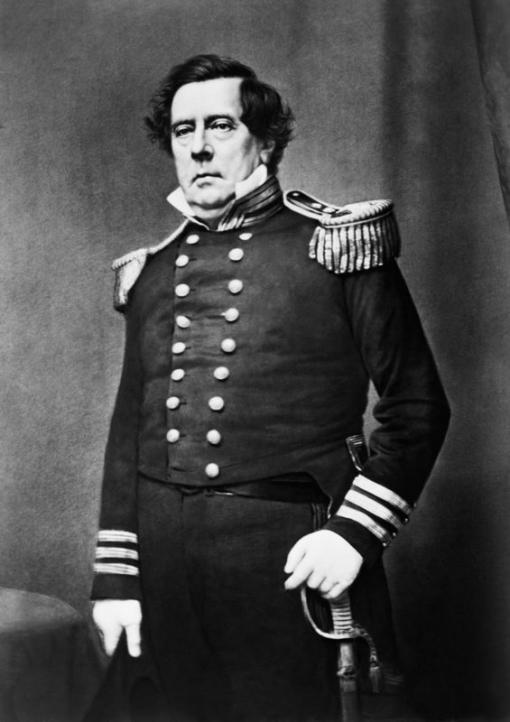
On the 8th of July 1853 US Navy Commodore Matthew C. Perry anchored at Uraga Harbour near Edo (modern-day Tokyo) and presented officials with a letter from President Millard Fillmore, which demanded that Japan, which had been largely closed to foreigners for two centuries, open its borders to US trade. To show that he was serious Perry bombarded the harbour with explosive shells, and when he returned a few months later he found the locals willing to sign up to the Convention of Kanagawa, which established, among other things, minimal import taxes for foreign goods.

In the years that followed Japan was obliged to conclude similar treaties with other Western powers, and the influx of cheap imports plunged the country into economic chaos. The feudal order of the 250 year old Tokugawa Shogunate collapsed under the pressure, its demise speeded by military intervention by the US, France and Britain. It was followed by the Meiji Restoration, which laid the foundations for the modern industrialised Japanese state, though the remnants of feudalism were not entirely swept away until the defeat of the Satsuma Rebellion in 1877 (an event portrayed, with considerable artistic licence, in the film The Last Samurai).

I mention this because I can see parallels between the hierarchical society of sakoku-era Japan and the regime we know in Second Life. What commerce there is with the outside world is strictly regulated by the ruling caste, who either directly control the marketplaces, or take a hefty cut of transactions. In-world manufacturing is dominated by small-scale craft producers, and success in this field is dependent on acquiring mastery of relatively low-tech but somewhat esoteric skills. Borders are closed, there is no democracy, and the population lives and dies at the whim of their masters.

Like feudal Japan Second Life is threatened by a tsunami that may sweep away the present economic certainties. This peril does not come in the shape of a warship, but in the seemingly harmless form of mesh imports.

The plan to allow import of content created using professional 3D design tools like Maya or Blender was first announced back in August, and recent reports have suggested that it will become reality soon. The Second Life design market is currently protected by the fact that there is little incentive for professional digital designers to learn how to build with prims, since there is no application for the skill outside of SL. Once they are able to create virtual objects using the knowledge they already have it’s more likely that they (or the companies that they work for) will see SL as a way of making some easy cash. Existing SL designers will find themselves exposed to competition from a well-established industry, whose advanced products will make their painstakingly sculpted prim creations look hopelessly primitive, and their businesses will be unable to survive.

Will this opening of the market to outside competition be a bad thing for the average non-entrepreneurial resident? The quality of virtual items will rise, and they will probably be cheaper too, since production will be more efficient. The grid as a whole will survive, as the Lindens are sure to impose a healthy tax on mesh uploads to keep their revenue stream flowing. There may be less circulation of L$ within the world, as the dominant businesses are less likely to be resident-owned concerns, and would be extracting their profits rather than spending them on the grid, but this would just mean more real money would have to be transferred in to allow residents to buy stuff, which would also boost the Lab’s bottom line.

What might change is the nature of the SL experience. The idea that all residents have the tools at hand to create their own reality will fade, to be replaced by a culture where our avatars exist only to consume the products that are manufactured for us. Second Life, which seemed to offer an antidote to the alienation of capitalist society, will have become just one more expression of it. I guess this is progress though, and we can no more resist it than the Samurai could halt the march of modernity and expel the barbarians. We can only hope that this is just the first step in a process of proletarianisation of the SL population that will one day create the conditions for more progressive social change.