Watching the Okhrana

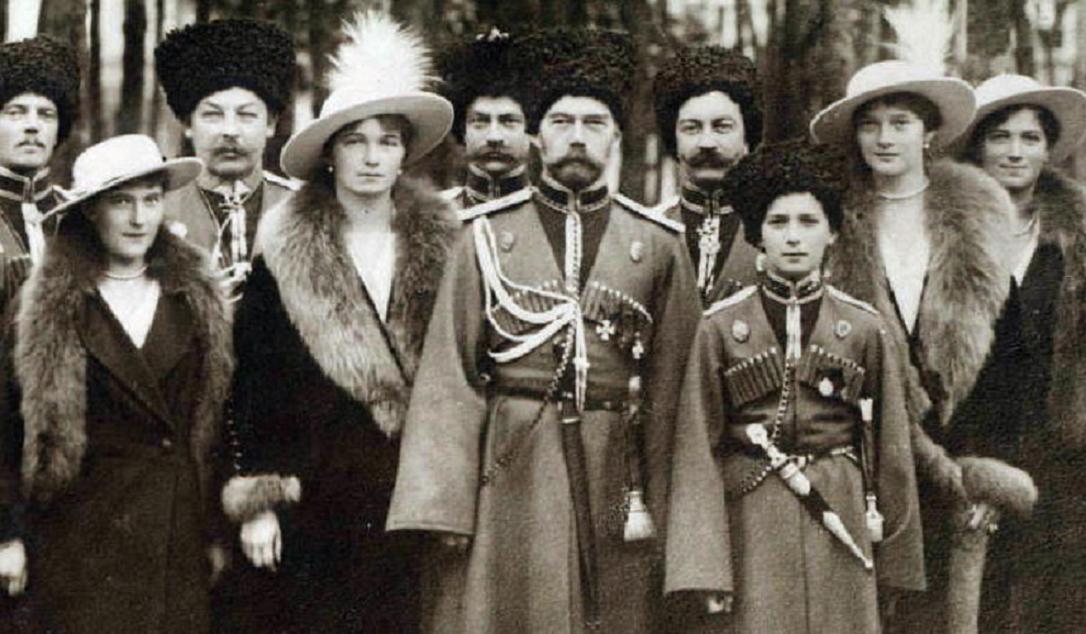
Anyone who harbours doubts about my theory that the Lindens are the Romanovs of the virtual world should read this report of their secret police at work, snooping on the chat of those well-known subversives the Elf Clan Social Network.

Liberté, Egalité, Virtualité

There was an interesting story in the Herald this week, concerning Greg Drayman, a well-known figure around the SL auto-racing circuit I’m told, who found himself on the wrong end of a permanent banning order earlier this month, as a result of conviction on what seem like trumped-up charges. As one might expect Mr Drayman is not best pleased at this turn of events, especially since the penalty extended to the confiscation of all his virtual land and property, including the popular Kokopelli Raceway Park.

This act of Linden absolutism backs up my theory that social relations in Second Life are essentially feudal in nature, and that the conflicts that arise are analogous to those which drove the transformation of western society in the late Eighteenth and early Nineteenth centuries, culminating in the triumph of bourgeois liberal democracy. (An excellent overview of this period is provided by E. J. Hobsbawm in The Age of Revolution: Europe, 1789-1848).

What are the demands that must be met before we could be confident that injustices like those inflicted on Mr Drayman could happen no more? What concessions must be wrung from the Lindens to bring the political culture of Second Life into the Nineteenth century, never mind the Twenty-first?

If we take our cue from the liberal revolutionaries of the past we would campaign for basic democratic rights: universal suffrage, civil liberties and the rule of law. The Terms of Service should be replaced by a written Constitution (approved by referendum), a Legislature should be elected to write new laws as necessary, and day-to-day policy should be directed by an elected Executive, all overseen by an independent Judiciary. Some sort of land reform would seem to be essential too. As we have noted before SL land is distributed under a leasehold system; for capitalist social relations to really take hold there would have to be the possibility of owning freehold land.

These rights might seem unobtainable, since it is difficult to see how any leverage could be exerted on Linden Lab as long as they own and control the physical infrastructure of the grid. Any assault on the virtual Bastille could be repulsed by the flick of a switch, and cyber-insurrectionists liquidated just as easily.

There may be a technical solution to this though; it would involve engineering interoperability between the main grid and OpenSims running on non-Linden hardware. The key thing would be to allow SL residents to import into their inventories items created on external systems, preferably without the Lindens being aware of this. (I have no idea if this is feasible; I imagine it would involve hacking into the asset servers in some way.) Political dissidents could reside on democratically constituted OpenSim servers, storing their virtual lives safely beyond the reach of the SL authorities, ready to be transferred to an alt when they needed to visit SL proper. Nobody would need to have a premium account, unless they particularly wanted to lease land on the main grid, though there would be no real reason to do that if land could be bought outright on a non-Linden grid. Merchants could set up in the free zones, attracted by the lower tax rates and superior governance, which would give a them a competitive edge over businesses still paying dues to the Linden empire.

If enough people got on board with this, and if the rebels were able to stay one step ahead of the Lindens’ attempts to secure their borders, the Lab’s revenue from subscription and tier payments would dwindle, to the point where they would be forced to concede to democratic demands, as the ancien régimes of Europe were obliged to cede power to a triumphant bourgeoisie in the Nineteenth century.

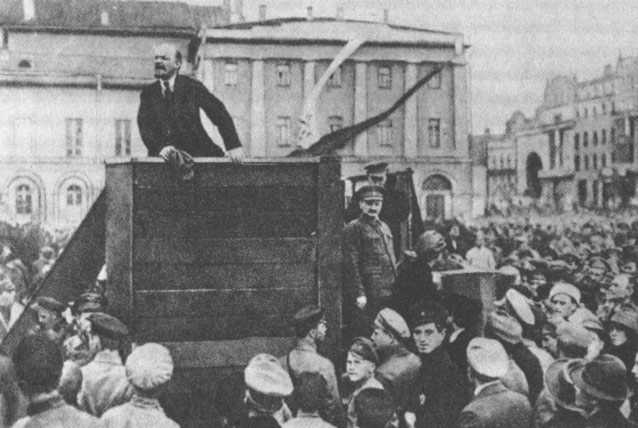
Would this be enough to satisfy those of us with more radical aspirations? The situation might be akin to that in Russia after the February Revolution, with Liberals and Mensheviks trusting the bourgeoisie to complete the process of democratic reform, and Bolsheviks arguing that only a dictatorship of the proletariat could truly achieve the goals of the revolution.

It seems clear that a campaign for democratic rights in Second Life is long overdue, and that communists should play a leading part in such a movement (though in organisational terms we would have to maintain a separate identity within the anti-Linden struggle, to ensure we were in a position to oppose the liberal tendency to compromise with counter-revolutionary forces). It would be a big task, but I don’t think that it’s impossible. I have some more detailed thoughts on Party structure, programme, propaganda and tactics, but I’ll save them for another post.

Scenes from the Class Struggle in Second Life

Anyone who felt that my suggestion that all property in Second Life should be collectively owned was overly fanciful should perhaps direct their attention towards a couple of recent developments in the area of SL commerce.

First up: the changes to the structure of XStreet listing fees and commission charges. The exact ins and outs of this are detailed elsewhere; the main thing is that the service has become much less friendly for small-scale vendors, and more orientated towards big operations.

Secondly, Pink Linden recently sent out a questionnaire to a sample of SL merchants, canvassing their opinion on various hypothetical developments, including setting up an official Linden-sponsored shopping mall. Again the pricing and commission structure would favour large, established businesses over their smaller or newer competition. (It may be relevant that Pink used to work for eBay, who have also been accused of squeezing small sellers off their platform).

This initially reminded me of the concept of State Monopoly Capitalism. The intricacies of this theory are too complicated to go into here, but it can be roughly summed up as the idea that in the late stages of capitalism the state becomes increasingly identified with the interests of a particular section of capital, specifically the big monopolies, to the detriment not only of the proletariat, but also the smaller capitalist enterprises.

The thesis is not without its problems, though a full discussion of these is beyond the scope of this column, and it has been rather discredited by its association with the Popular Front orientation of Stalinist Communist Parties in post-war Europe. The question of the power of monopoly capital and its relationship with the state is more interesting than ever these days though, and it’s still worth reading Lenin on Imperialism, the Highest Stage of Capitalism, and Mandel on The Economics of Neo-Capitalism.

To transfer the concept of SMC to Second Life, one would have to see the Lindens as the equivalent of the state, and the big merchants as monopoly capitalists. Are either of these assumptions valid?

To quote Engels, from The Origin of the Family, Private Property and the State:

[The state] is a product of society at a certain stage of development; it is the admission that this society has become entangled in an insoluble contradiction with itself, that it has split into irreconcilable antagonisms which it is powerless to dispel. But in order that these antagonisms, these classes with conflicting economic interests, might not consume themselves and society in fruitless struggle, it became necessary to have a power, seemingly standing above society, that would alleviate the conflict and keep it within the bounds of ‘order’; and this power, arisen out of society but placing itself above it, and alienating itself more and more from it, is the state.

A “society … entangled in an insoluble contradiction with itself … split into irreconcilable antagonisms” does sound like a description of Second Life, and the Lindens certainly have the coercive powers usually associated with the state, but is it a state in the modern, capitalist, sense of the term? There may seem to be “classes with conflicting economic interests” among the residents of SL, but what is the nature of these classes? To answer these questions we must determine where avatars stand in relation to the means of production, which in turn requires us to decide what form the “means of production” take in a virtual world.

Virtual items may be created in the minds and on the computers of designers, but they only take on a social reality when they become available for exchange, when they are uploaded to the platform. Thus the virtual world itself forms the means of production. Linden Lab owns the world in its entirity, which means that no one else can independently control those means of production, and thus no resident can really be said to be a capitalist, let alone a monopoly capitalist.

Second Life may indeed be the scene of class struggle, but the conflict is not between workers and capital. The social relations that operate are more akin to those pertaining between feudal overlords and their serfs, with the Lindens taking on the role of absolute monarchs, supported by a small group of robber barons. The virtual masses are not proletarians free to sell their labour power to the highest bidder, but peasants obliged to toil for the benefit of their masters.

How can we move on from this obviously unsatisfactory state of affairs, and build a virtual communist society? I have a plan, but I’ll need another post to explain it properly. I might even make it my entry for the Linden Prize

Waiting at the Berlin Wall

It’s 20 years to the day since the fall, literal and figurative, of the Berlin Wall, an event that at the time was astonishing in its rapidity, and seems no less so two decades later. In retrospect it is easy to say that it was inevitable that the exhausted regimes of Eastern Europe would topple under the twin stresses of Western economic dominance and popular discontent, but even at the end of the 80’s the Cold War was such a dominant fact of everyday life that its abrupt, and relatively peaceful, conclusion came as a shock.

I identify myself politically as a communist, so you could be forgiven for thinking that I would look back on the events in Berlin with regret, but I belong to that tradition of the British left which can loosely be described as “Trotskyist“, so I was as happy as anyone (apart from the inhabitants of Eastern Europe obviously) to see the bureaucratic Stalinist regimes of Moscow and its allies disappear into the pages of history. What was disappointing was that they had been brought low not by the renewal of revolutionary ideals that we had anticipated, but by being outperformed by the western economic model (we had anticipated this too, just not so soon, or so suddenly).

It’s fair to say that the demise of the Soviet Union had an enervating effect even on us leftists who were actually its deadliest ideological enemies, since it heralded a period of capitalist triumphalism that is beginning to falter only now (at least in the West; in the developing world communism has remained influential). That said, the existence of the obviously repressive Soviet bloc was always a dead weight around the neck of the left, forcing us to spend time thinking about the nature of the deformed workers’ state that would have been better spent working on more pressing issues, and its collapse has ultimately proved liberating for progressive movements in Europe. (Of course the local difficulty we suffered pales into insignificance beside the blighted lives of millions of workers who actually had to survive under “socialism in one country”). The story of the degeneration of the high ideals of the Bolshevik revolution is one of a missed opportunity to build a better future, and one we must learn from, as the world once again urgently needs an alternative to the bankruptcy of capitalism.

There’s a reconstruction of the Wall on the grid, with details of its history, including the iconic Checkpoint Charlie:

berlinwall01

Perfect if you don’t want a holiday in the sun.

District 23

It’s just one year on from his landslide election victory, but Obama’s political obituary is already being written by right-wing pundits, on the back of Republican gains in gubernatorial races in Virginia and New Jersey. I’m not sure how far it is possible to generalize these results to the national level, since elections for State positions tend to heavily swayed by local issues, though clearly the Democrats have some work to do ahead of the mid-term elections in 2010.

Also interesting was the news from New York’s Twenty-Third Congressional District. The official GOP candidate dropped out of the race after a mauling in the conservative media (who labelled her a RINO for her social liberalism), and national Republican figures like our old friend Sarah Palin endorsed the third-party Conservative candidate, who ticked the right boxes on issues like abortion and gay marriage. The Democrats won what had been a safe Republican seat.

Worryingly, some Republicans seem to be drawing the sensible conclusion from this – that in times like these sticking to a fiscally conservative message will win more votes than preaching a socially conservative line. Reassuringly, others seem to think that the problem was that the Republican party is not socially conservative enough. We can only hope that the latter camp emerges victorious in the run up to 2012, so that we can look forward to four more years of a Democratic Presidency, during which, if we’re lucky, Obama might even start doing some of this crazy socialist stuff we’re always hearing about (though probably not).

Taking Ownership of the Problem

In an intriguing footnote to the Burning Life festival, reports have emerged that a person or persons unknown distributed a mysterious box around the site, said box allegedly containing a virtual cornucopia of ripped-off items. Outraged commentators immediately cited this as yet another example of Linden Lab’s woefully negligent approach to protecting IP rights. Interestingly, and I’m sure entirely coincidentally, the alleged super-crime was brought to the world’s attention by none other than Stroker Serpentine, who of course is currently suing the Lab, claiming in his action that, among other things, the Lindens have had a woefully negligent approach to protecting IP rights. If that wasn’t enough to get the conspiracy theories going, Stroker’s rather ham-fisted attempt to pin blame for the alleged offence on (apparently) well-known open-source advocate Damen Hax further fanned the flames. Throw in the whole third-party viewer controversy, and the scene is set for another skirmish in the long-running war between the forces of DRM and the open-source guerillas.

Godless communist that I am, in my ideal virtual world all items would be free to transfer and copy, and content creators would contribute their talents without material recompense, their reward being the knowledge that they had helped build a better experience for everyone. I guess that’ll have to wait until after the revolution. In the meantime we’re stuck with some sort of copyright protection system, though we clearly need something better than the current unsatisfactory model.

The lesson from the music industry is that there is no future in ever-more-complex DRM – making customers jump through hoops to access content that they have purchased just pisses them off, and it’s never long before the pirates crack it anyhow. It’s much better to make paying for stuff so painless that people won’t go to the bother of seeking out stolen goods – some sort of micro-payment or subscription system seems to be the favoured model.

How might that work in Second Life? The first step would be to establish a central content inventory, run by Linden Lab directly, or some semi-autonomous surrogate. Upon payment of a subscription residents would gain access to this inventory, and would be able to rez up a set amount of prims. The exact number available concurrently could vary depending on the level of the subscription – free accounts could be limited to, say, 10, with a sliding scale up an unlimited quantity. Continued access to the items would be dependent on keeping up the payments. Content creators who wanted their items to be included would have to register, and once they had they would get a cut of the subscriptions, based on the relative popularity of their stuff.

I’m sure that it wouldn’t take too much tweaking of the permissions system to make this function. The key would be to set the subscription (tax might be a more descriptive word) low enough so that evading it by picking up pirated goods was more trouble than it was worth, but high enough to generate enough revenue to keep the designers happy.

A scheme like this is much more likely to succeed in a virtual world than in real life, where a lot of work would have to be put into prediction of demand, and planning resource and capacity allocation. This doesn’t always work out well in practice, though I’d argue that it is possible to run a successful planned economy if enough information is available. In a virtual world however, items can be manufactured instantly, with practically no resource implications, so it’s perfectly feasible to have no advance plan for production, and to just react to demand.

The biggest hurdles to overcome might be cultural, psychological and political. Designers would have to accept that they were essentially employees, or at least subcontractors, of a big state-owned corporation, and residents would have to be happy to pay the tax to support it. Somehow I can’t see either of these things, especially the former, coming to pass, and I doubt Linden Lab, grounded as they are in the free-market spirit, would have the appetite to run such a system anyway.

If the public option isn’t palatable, there might be a private alternative – designers could band together in consortia to offer a smaller subscription service. I think it would really need the scale of a grid-wide operation to make it practical though, so over time the trend would be towards a private monopoly, which has a lot less to recommend it than a public one.

I’m sure that someone has thought of this before, done the sums, and worked out that it wouldn’t be profitable. I don’t see that as a valid objection though, since the aim I have in mind is improving Second Life for everyone, rather than making money for anyone in particular.

The broader point is that it’s no good pursuing technical solutions to what are essentially cultural problems. It’s very difficult to make people do things that you want them to do on an individual level, even harder to get them to stop doing things you don’t want them to do. A better approach is to try to construct a psychosocial milieu in which the desired behaviour is more likely than unwanted actions.

The solution to the content theft problem lies not in stronger encryption of content, nor with harsher penalties for breaking the TOS. What the Lindens must do is engage in some social engineering, to foster a stronger sense of collective ownership, to build a community that believes that an offence against one is an offence against all. Give everyone a chance to own an equal share of everything, at a price that seems fair, and no one will feel the need to steal, for they would only be robbing themselves.

Paging Dr Galt

I’ve worked for the National Health Service in various parts of the country for just about all my adult life, and the whole time I’ve felt that I was doing a good thing, helping troubled people get better without worrying about whether or not they could pay me.

Now it turns out that all these years I have in fact been in the employ of an evil state-sponsored killing machine. Who knew? All those patients who tell me “Thanks Doctor, I feel much better now” are just spouting Orwellian Newspeak – what they really mean is “Curse you, you enervating quack! Ayn Rand was right! Your concern for my welfare is sapping the essence of my humanity!”

Well, now that I’ve been enlightened, I’m going to change my ways. No more ensnaring the unsuspecting poor in the corrupt web of socialised medicine. Only Objectivists who can pay on the nail will be getting my attention from now on.

Sarah Palin – Secret Socialist?

While we’re on the subject of Sarah Palin, there’s an interesting article in the Washington Post today, which examines the thinking in the McCain camp ahead of his choice of Palin as his running mate. There’s nothing terribly surprising – McCain needed someone who would bolster the “maverick” credentials of the ticket while at the same time appealing to the Republican base, and Palin appeared to fit the bill. What’s perhaps more revealing are the reasons he didn’t pick Joe Lieberman, who, in retrospect, might have helped make the race a bit closer. Lieberman’s liberal position on social issues, particularly abortion, were too hard to sell to the GOP faithful, despite the appeal they might have held for the wider electorate.

McCain’s real problem was that he was the candidate of a party that was hopelessly out of touch with the sentiment of the nation. He was fighting two battles – one to convince the GOP rank and file to come out and campaign for him, and one to persuade the nation that he was fit to be President. Unfortunately (for him, not for us) winning the former doomed him to defeat in the latter, since, almost by definition, someone who was acceptable to Republican activists was never going to appeal to normal people. Palin was just the icing on the cake, a clear message that McCain cared more for placating the wingnuts in his party than selecting a running mate who had even a modicum of competence.

Optimistic conservatives may argue that Palin has the potential to be a 21st century version of Barry Goldwater, who, despite his crushing defeat in the 1964 Presidential election is widely seen as the architect of the conservative takeover of the Republican Party, a process that gave us Richard Nixon, Ronald Reagan and Bushes Sr & Jr.

This ignores two important points. Firstly, the GOP in Goldwater’s day was run by a relatively liberal East-coast establishment, whereas the Republicans today are so far down the neoconservative rabbit-hole that there is no room for a further move to the right. Secondly, while Goldwater certainly ticked conservative boxes with his militarism, belief in small government and hostility to civil rights, his libertarian support for abortion and gay rights, anathema to present-day Republicans, provided some counterbalance.

Anyone hoping that Sarah Palin will reinvigorate the conservative cause is likely to be severely disappointed. If her time on the national stage is to have any long-lasting effect, other than providing stand-up comedians with an almost inexhaustible source of material, it will be to prove that the Republican Party must escape from the clutches of the extreme right if it ever hopes to win back the White House. Palin may go down in history as the woman who put the final nail in the coffin of the Republican Party as we know it, and in so doing shifted the whole of US politics to the left. Who knows? Maybe that was her secret plan all along.

Forward to the past

This time last year I was just starting to rekindle my interest in the US presidential elections, having gone off the process a bit after my favoured candidate, Hillary Clinton, failed to clinch the Democratic nomination. At that time it looked as though the race could be uncomfortably close, but that was before the Republicans unveiled their secret weapon, VP-nominee Sarah Palin, and the world breathed a sigh of relief, safe in the knowledge that Obama had it in the bag.

Ms Palin has been back in the news this month, having decided that staying on to complete the job she was elected to do in Alaska would be the “quitter’s way out”, and that she would show she was no quitter by, er, quitting. Now that she no longer has the tiresome responsibility of looking after the wellbeing of her constituents, she is free to start building her campaign for 2012.

It amazes me that anyone in the US, even those on the right, could think that Palin is the best shot the GOP has at regaining the White House, especially after the drubbing they received back in November. The one thing sure to keep the coalition that swept Obama to power together is the sort of intolerant social conservatism that may play well to the ever-shrinking right-wing base, but just alienates the rest of the population.

The Democrats would be much more vulnerable to the sort of fiscally conservative/socially liberal approach that’s being peddled by David Cameron and the Conservatives here in the UK. In a depression no one cares too much about gay marriage or abortion; they’re too busy worrying about losing their jobs and their homes.

I guess the Democratic and Republican strategists will be waiting to see how the election here works out, when it finally comes. It seems sure to be fought on economic rather than social issues. I think that there will be a real divide between the main parties this time around, with Labour proposing a continuation of deficit-funded government spending, which will, theoreticaly, kick-start the growth that will eventually pay off the national debt, while the Conservatives will be offering painful public sector cuts now with the promise of better times in the future. It’s difficult to see a Labour victory though, since the mood of the country, like the US last year, is for change, unsurprising when one considers the economic mess we are in.

Obama doesn’t seem to be making much headway in tackling the financial crisis; there’s every chance that come 2012 he could lose to a Republican candidate promising small goverment and a balanced budget. With Cameron in charge over here it will be the Reagan/Thatcher years all over again.

On second thoughts, maybe a Palin candidacy wouldn’t be so bad…

Bad reputation

Reports revealed this week that the UK government is maintaining an island in Second Life, at a cost of £12000 a year, for the purpose of allowing private companies to showcase new technology.

I would show you some pictures of the sim, but of course we mere taxpayers are not permitted to visit; only government officials and the firms taking part can gain access. The story has created a minor scandal, with opposition politicians seizing the opportunity to accuse the ruling party of “living in a fantasy world”, while the scheme’s defenders have claimed that holding meetings and events on the grid will greatly increase government efficiency.

My first reaction to this story was to think that £12000 a year was not a great deal of money, as government expenditure goes – it’s the equivalent of one very junior civil servant. Compared to the amount that, say, defence contractors gouge, it doesn’t seem to be the basis for a particularly lucrative business, even if the project is expanded when the pilot phase ends in 2011.

It also makes me wonder why government departments, or corporations, or educational establishments need to be connected to the main grid at all. Why don’t they run mini-grids on their own servers? That would be sufficient for meetings, presentations and teaching, without the risk of participants wandering out of the building and coming across something scary; it would also maximise control over access and security, and would presumably run faster and be more reliable. Most importantly perhaps, it would create some distance between the client’s business and the potentially toxic Second Life brand.

For the one thing that the man in the street knows, or thinks he knows, about SL is that it is a haven for sexual perversity of the worst kind, and while Linden Labs may insist that they have solved the problem by quarantining questionable content in its own continent, all they are doing is drawing more attention to the fact that the problem exists in the first place.

The potential customers that L-Labs are courting with their new U-rated strategy are probably not particularly worried that they personally will be exposed to anything untoward; they will be more concerned that association with Second Life will be a hostage to fortune. Political opponents, disgruntled shareholders or disaffected employees will be able to search Google images for something suitably salacious to take to the media; the result will probably be transient embarrassment rather than lasting damage, but why take a chance?

Real-life locations can reinvent themselves of course; I remember Times Square being pretty sleazy when I visited New York years ago, but I hear it is now thoroughly Disneyfied. I guess time will tell if Second Life will be able to undergo a similar process of rehabilitation.

I’m sure Joan would agree with me that Times Square was better the old way.