Victory to the Egyptian people

So it turned out that my Egyptian friends’ predictions were right on the money, and Mubarak is gone.

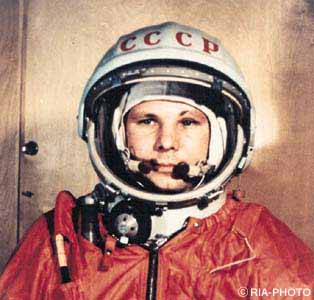
This was my reaction to hearing the news:

Having had a bit more time to think about it, I’m going to temper my celebration to a “Half-Hooray!!”, since the fact that the army is taking over must put the prospect of a swift transition to democracy in some doubt. It was interesting that CIA director Leon Panetta told a Congressional Committee that Mubarak was going to stand down yesterday, suggesting that the agency has inside information from the new regime, though clearly it is not entirely accurate. Vice-President Omar Suleiman is widely identified as the CIA’s main man in Cairo, and the US may be looking to him to deliver the sort of “orderly transition” that will protect Western interests in the region.

But whatever we in the West think, the final word will lie with the Egyptian people. Al Jazeera is reporting that the crowds in Tahrir Square are “hugely disappointed” with the army seizing control, and are vowing to take their protests to “a last and final stage”. Their courage and solidarity has carried them this far; it can surely lead them to victory.

Egypt in revolt

I’ve not had much time for blogging so far this month, as I’ve been caught up with various more pressing concerns, not least following the momentous events in Tunisia and Egypt.

I know a couple of guys from Egypt, and, unsurprisingly, they have been glued to Al Jazeera, as well as getting updates from friends and family in the country. At the start of this week I was feeling a bit discouraged, as it looked like the momentum of the revolution was slowing, but my friends, on the strength of what they were hearing, were still confident that change was on the way. They tell me that the demonstrations tomorrow are set to be the biggest yet, and, now that strikes are spreading and the army is wavering, time seems to be running out for Mubarak’s regime (though he must have missed that memo). A full-scale democratic revolution may still take some time, but even modest progressive change will be a first step.

The events in Egypt have again brought up the question of the degree to which social media have changed the dynamic of such movements – there’s a useful round-up of opinion here. I’m still unconvinced – while the internet may have helped spread word of what was happening around the world, I think the organising within Egypt must have been based mainly on more personal contacts. People may hear about demonstrations via Twitter or whatever, but the decision on whether to join in or not will depend on what family, friends, neighbours and workmates are doing, and any large-scale mobilisation needs the sort of guidance that comes from an organisational structure if it is going to be persistent and effective. That structure may come from a pre-existing political party, or it may arise more spontaneously, but I think it has to be based on something more concrete than the weak ties of social media.

What social media does have to offer, I think, is more in the way of creating a record of what has been happening from the level of the streets, an immediate and intimate history that will serve as a template for future movements.

The situation as I write tonight is still uncertain. My thoughts, for what they’re worth, are with the people of Egypt; I hope I’ll be able to celebrate their victory in the not too distant future.

Everybody’s Happy Nowadays

There was an interesting article in the Harvard Gazette this week, reporting on research into the secret of happiness.

In a study published in Science, Harvard psychologists Matthew A. Killingsworth and Daniel T. Gilbert recruited subjects from all over the world, then used a specially-designed iPhone app to contact them at random times, asking what they were doing and what they were thinking about, and prompting them to complete a happiness rating scale.

The results showed that maximum contentment was reported by those who were concentrating on what they were doing at that moment, rather than recalling the past or anticipating the future. This was true even if the immediate task was dull, and they were dwelling on pleasant memories, or looking forward to some enjoyable diversion. The researchers conclude that “a wandering mind is an unhappy mind” and that the key to happiness is to stay in the moment.

I think this is true as far as it goes, but it does rather assume that immediate gratification is the only outcome worth bothering about. Reflecting on past experience, or planning for the future, may not be so instantly pleasing, but I think they are still worthwhile in their own way.

That said, I have found that, as I have advanced in years, I have tended more to appreciate what is going on in the present, rather than dwelling on days gone by, or thinking about what tomorrow might bring. This is counterintuitive to some degree; I have a lot more past behind me than I did when I was younger, and many more responsibilities that should make me pay more attention to the future.

I guess this might be a cultural thing, reflecting modern society’s limited attention span and preoccupation with sensation, but I think it is mainly due to my growing realisation of my mortality, which makes the past too loaded with feelings of loss to contemplate, and renders my hopes for the future rather pointless.

Well, that’s a rather downbeat ending for a post about happiness. Here’s something to cheer you up.

Martian Chronical

I imagine that there has been more than a little schadenfreude circulating in the Linden Lab offices this week, as they digest the news that yet another pretender to the virtual world crown has hit the skids. Blue Mars, with its superior graphics and scalability, was hailed as the future of the 3D web, but, having reportedly never managed to attract more than a few thousand subscribers, now seems set for an uncertain future as an iPhone app.

It’s interesting to note that, despite all the flak they take from Second Life bloggers, the Lindens are still running the only profitable corner of the metaverse in existence. Could it be that they actually know what they are doing?

Maybe it’s just that chilled west-coast vibe

The Social Network

[Some spoilers ahead.]

The big winner at the Golden Globes this week (apart from Ricky Gervais), was Facebook biopic The Social Network, which picked up four awards, including best director and best picture. I caught the movie on a rare trip to the cinema back in October, and it got my vote for film of the year too.

What I liked about The Social Network was that it wasn’t really about the internet, or social media, or anything new-fangled like that, but instead was an examination of that timeless theme, the outsider’s quest to break down the barriers of class that stand in the way of his destiny.

This wasn’t exactly a subtext; the message was pretty clearly spelled out in the very first scene, where Mark Zuckerberg lists the advantages of belonging to one of Harvard’s elite final clubs to his unimpressed, soon-to-be-ex-girlfriend. This initial interchange establishes our hero’s less than charming character, but we gradually realise that he isn’t such a bad guy, as we are introduced to some of his even more unlikable associates.

Chief among these are the Winklevoss twins, scions of privilege with a sense of entitlement so broad that they literally cannot believe that Zuckerberg might breach the social code by presuming to rip them off. In one of their many comic scenes they use their connections to arrange a meeting with the President of Harvard, to whom they complain that Zuckerberg has behaved in an ungentlemanly fashion; their reaction on being told they should adjust themselves to the real world is an amusing mixture of bafflement and outrage.

(As an aside, I thought the filmmakers might have exaggerated the boorishness of Ivy League fraternities, until I read this. These are our future rulers.)

Zuckerberg subsequently falls under the mephistophelian influence of flawed Napster guru Sean Parker, and after a series of sharp business manoeuvres and steely confrontations in lawyers’ offices, finally gets the better of his adversaries.

But does it make him happy? The final scene shows Zuckerberg alone in an office, forlornly clicking on the Facebook profile of his lost girlfriend. All his billions are worth nothing, the film suggests, without the simple gift of friendship.

Which is nonsense of course, a fable we poor folks tell ourselves to temper our resentment at the good fortune of the rich. I’m sure that Zuckerberg (who in reality has been with his current partner since his pre-Facebook days) is perfectly content with his life, having learned what the likes of the Winklevosses have always known – money really can buy you happiness.

The overall moral of the film is more egalitarian though; the idea that the old structures of wealth and class can be undermined by a new technological paradigm, in much the way that Facebook itself morphed from an exclusive Harvard club into a tool for the masses. I’m not sure that I entirely buy that – the investors who stand to make the big money from Facebook were rich to start with, and the circles of real power are as closed to outsiders as ever – but the story is so engagingly told that one can’t help rooting for plucky underdog billionaire Zuckerberg as he strives to make the world a better place by letting us all be “friends”.

Where Is My Mind?

Wikipedia is 10 years old today. As an early adopter and regular user, I can honestly say that I can’t remember how I managed before the invaluable, and mostly reliable, reference source was available.

In fact there is a lot I don’t remember these days, stuff I used to be able to recall instantly that now lurks frustratingly beyond the borders of my conscious memory, like the date of the Paris Commune, or the title of the Pixies’ second album, or the name of that guy I stood next to in anatomy class. I’m sure this is mostly attributable to my advancing years, but I do wonder how much the smartphone/Wikipedia combination has encouraged me to transfer knowledge from my brain to my pocket. This should, theoretically, free up my neurones for higher pursuits, though all I actually do with my liberated intellectual capacity is write this blog, so maybe it’s not such a great trade-off after all.

Mutsugoto gone

Readers may remember that a couple of years ago we reported on a project to create Mutsugoto, a virtual intimacy device, which promised to allow couples to caress one another even if they were geographically separated. Moray-based Distance Lab used a combination of cameras and lights to let partners virtually “touch” each other while lying on their beds miles apart, which, we commented at the time, seemed a much more promising way of communicating real feelings than interacting in Second Life, as it was directly sensual and avoided all the cerebral processing inherent in text-based liasons.

Sadly, this week we heard the news that the company had been wound up, though not before burning through £3 million of taxpayers money. It seems that the gentle and relaxing Mutsugoto wasn’t what people were thinking of when they heard the words “virtual intimacy”. More surprisingly, Distance Lab’s other product, Remote Impact, which allowed far-flung combatants to viciously beat one another, also bombed. In today’s world, where one finds anger and aggression simmering at every turn, I would have thought that that would have been a winner.

2011: The year in preview

So, the New Year is here, time to think about the future, and make plans for what we want to do with this blog over the next twelve months.

Looking back over the last year, there are a few things that I planned to do but never got round to; organising some political activity within SL, delineating the psychological profile of a typical Second Life resident, and posting more general cultural commentary, in the form of book, film and music reviews.

I failed to complete, or even seriously start, the first two of these tasks for more or less the same reason; they are big projects, that would demand an investment of time and attention that couldn’t possibly be justified by the results, and thus seem rather self-indulgent. This is particularly true of the political organisation idea; virtual agitation isn’t going to have any practical effect, whereas spending even a fraction of the time on real-world activity would probably have some positive consequences. (Of course I can do the Second Life work from the comfort of my own home, rather than having to go out and stand on cold street corners, but that’s not quite enough to tip the balance.)

One can make more of a case for the SL psychological investigation plan; not because the final result would be particularly earth-shattering, but rather because there would be some likelihood that I would find the process educational in a generalisable way. Again though, utilising the time to study something more immediately applicable to my day-to-day work is likely to be more profitable.

So I’ll probably quietly forget about the political activity thing, though I do have a vague idea about doing a series of posts on the various political groups that already exist on the grid, and I’ll definitely be commenting on real world politics a bit more. As far as psychological comment goes, I suppose I’ll have to keep that going, since it is the ostensible raison d’être of this blog, but I’ll stick to small scale stuff rather then any more ambitious projects. Sherry Turkle has a new book just out – Alone Together, which “describes new, unsettling relationships between friends, lovers, parents, and children, and new instabilities in how we understand privacy and community, intimacy and solitude”; I expect I’ll have something to say about that once I get round to reading it. I may also try to do more about the psychosexual aspects of virtual interaction; I have written a little about this in the past, but mostly in the form of comments on other blogs.

I am going to start writing some more cultural reviews; the problem hitherto has been my rather obsessive nature, and my consequent inability to keep posts down to a manageable length. What I need to do is pick out a couple of aspects of the work in question and restrict myself to a few succinct comments.

I’ll have to do some basic blog housekeeping too; update the links, tidy up the tags, create a custom graphic for the header. The domain is due for renewal soon, and I’m going to pay WordPress a bit extra so they stop putting adverts on my pages, which should make things look a bit neater.

So there we are; a handy list of my aspirations, which will double up as a reminder of my shortcomings come December.

2010: The year in review

The year’s end draws nigh, and I feel I should produce some sort if review of the twelve months gone by…

First up, the topic that is dearest to our hearts, this blog. Here’s our top ten posts for the year, by traffic:

  1. Second Life demographics – a brief review
  2. Second Life, with graphics, on the iPhone?
  3. On Second Life and addiction
  4. O Superman
  5. What’s up
  6. Zombie Epidemiology
  7. Ladies and Gentlemen We Are Floating in Space
  8. Anatomy of a scandal
  9. Running Away
  10. That gum you like is going to come back in style

The demographics post is top by miles, with nearly as many hits as the rest put together, thanks to Google deciding that it should be the #1 result for the query “second life demographics 2010“. It got a lot of traffic in October, presumably due to media studies students researching start-of-term assignments, with another surge this month, probably because other SL bloggers are preparing their end-of-year posts. I think that the fact that this very slight essay, which I knocked out over one lunchtime back in April, should still be able to masquerade as an authoritative source says more about the paucity of serious academic interest in the topic than any brilliance in my writing.

Of the others, the addiction post benefited from my efforts to promote it by dropping a link into the comments of any blog post that mentioned the topic; the Superman post got a boost after it was featured in the Herald; “What’s up” gets traffic from people looking for pictures of 4 Non Blondes (a Google quirk that has at various times also given us hits from searches for Laura Palmer, Mae West and Catherine Deneuve/Susan Sarandon); the Zombie post is still getting referrals from the Undead Report; the rest, I don’t know, probably just random clicks.

Other posts from this year that I thought were OK, but that didn’t make the top ten:

I’m not sure if there was a theme to our posts this year; possibly something about the importance of narrative in the formation of identity, or some such pseudo-intellectual nonsense.

The year in Second Life? Stagnation, layoffs and general management chaos are the things that spring to mind; more detailed round-ups can be found at Daniel Voyager’s blog and Your2ndPlace if you’re interested.

In the real world it’s been a busy year politically; the event with the most direct effect on us was the return of a Conservative government to power in the UK. It’s been a bit of a phoney war since the summer, with only some student-led skirmishes, but the cuts will start to really kick in from now on, and the class struggle should get more intense. 2010 saw the right resurgent over in the US too, without much sign of the left regrouping; hopefully that will change in the months ahead.

In our last New Year review I suggested that we would be posting more general cultural comment during 2010; this remained, alas, an unfulfilled ambition, but I have belatedly managed to think about picks for book, film and album of the year.

Choosing a book was the hardest task; looking back I see that I didn’t read a single new novel all year, though I did buy a copy of Jonathan Franzen’s Freedom, which is glaring at me accusingly from the shelf. Instead I stuck to the classics, of which my favourite was Fielding’s Tom Jones. I hardly saw any new films either; from a restricted field I would have to give the nod to The Social Network. I did buy a lot of new albums; the two I’ve listened to most are Majesty Shredding by Superchunk and The Suburbs by Arcade Fire.

And so to the future… I expect I’ll keep this project going, out of habit if nothing else. Things might be a little quiet in January, while I’m busy with my New Year resolutions – do more serious writing, get more exercise – but once these have been discarded it’ll be back to our usual cavalcade of whimsy.

I’ll finish by sending our best wishes for 2011 to all our readers – may the New Year find you happy, healthy and prosperous.

Yuletide Greetings

I’m delighted to extend my best wishes for the season to all our readers. As is our custom in the depths of midwinter, we’ve spent the day, indeed the best part of the week, indoors, eating rich foodstuffs, ingesting various intoxicants, and generally trying to forget about the freezing weather. (Come to think of it, that’s not too different from our midsummer routine, except for the cold.) What better way to honour the true pagan roots of the festival?