Falling into the chasm

It was reported yesterday that Facebook had overtaken Google to become the most popular website in the US last week. The social networking site gathered 7.07% of total hits (up 185% on last year), marginally ahead of Google’s 7.03%.

Pundits are suggesting that this is an indication of how people are increasingly using the internet in a different way – instead of searching for information, the theory goes, we are now looking more for social connections.

As we’ve noted before, this type of thinking seems to be driving Linden Lab’s corporate strategy, as they try to market Second Life as a social networking application. They clearly have some way to go to compete with Facebook though, both in the raw numbers – FB has a user base of 400 million, and concurrency of up to a million, against SL‘s figures of 18 million and 80,000 respectively – and in terms of cultural penetration. Major newspapers are still publishing articles that assume that the majority of their readers will never have heard of Second Life, while Facebook references can be found even in traditionally conservative media like legacy comics.

Grace McDunnough posted an interesting piece (illuminating comments too) on the Lab’s marketing strategy a couple of days ago. Referencing a recent Harvard Business School case study, which itself draws on Geoffrey Moore‘s influential 1991 book Crossing the Chasm, Grace concludes that the educational market is a bust, the “adult” market is an embarrassment, and that content creators are being slowly sidelined. What does this leave? A 3D chat service, or, as Grace puts it, “playing house with paper dolls”.

This rings sadly true to me, and seems a terrible waste of the platform’s potential, but I guess there’s no arguing with market forces. It seems that the early adopter community (in which I count myself spiritually, if not strictly speaking temporally) is going to find itself increasingly marginalised. We can only hope that the Facebookisation of Second Life turns into a complete fiasco, M. Linden gets his cards, and a more enlightened management goes back to the original, steady (if limited) business model of taking money from people like me, who are willing to pay a few bucks a month to live out the life of the mind in a virtual world.

Monetising SL 2.0

I feel that I should download the SL 2.0 viewer, just so that I can have an opinion about it, and join in the general excitement, but I’m finding it hard to get enthusiastic about what is, after all, just a gateway to the really interesting part of Second Life, that is the content and the community. When I first signed up to SL a couple of years ago I downloaded the alpha build of the Linux client, and I was happy with that until fairly recently, when the Lab started restricting which viewers you could log in with and it stopped working. I switched to the then-current version of Snowglobe, which I have had no major complaints about.

I’ve never been entirely convinced that making the viewer more user-friendly was the key to broadening SL‘s appeal. I guess the Lab did some consumer research that told them that the viewer’s rather steep learning-curve was contributing to SL‘s woeful retention rate, and I’m sure that the new version makes it a bit easier to get through the first hour, but I would have thought that keeping people on board for months and years would depend more on the nature of the virtual world and its residents than the bells and whistles of the client software.

Though maybe I’m overstating the importance of content. The BBC are currently running a series The Virtual Revolution (which you can watch online if you live in the UK), which is taking a look at the impact on society of the growth of the internet in the last 20 years. It’s necessarily broad, and there’s been nothing terribly surprising, but it’s still interesting, particularly the discussion of how Web 2.0 has been monetised. Services like YouTube, Facebook and Twitter may get their user-generated content for free, but most of it is worthless junk. That doesn’t matter though, the theory goes, because as users post, search, rate and comment on all those videos, updates and tweets, they reveal a mass of valuable data about themselves and their social networks, information that can be profitably mined for targeted advertising.

One can’t help but wonder if the Lindens have some similar plan in mind. They have certainly been talking up the social-networking aspects of SL, with their purchase of Avatars United, and Wallace Linden’s suggestion that we should all link our real identities to our avatars. If they could find out all about us and our interests, they could turn that into a revenue stream, provided they could figure out how to serve up the ads in a way that wasn’t too annoying. Perhaps the much-touted URL-on-a-prim functionality of the 2.0 viewer is part of the Lab’s plan to sneak pop-up advertising into the virtual landscape.

History needs a push

Back in April I received an email inviting me to participate in a beta test of Metaplace, the “next-generation virtual world platform”, that, its designers hoped, would make it easy for anyone to create their own little metaverse.

“Lonely?” the invite inquired enticingly, before promising that I could “meet new friends to chat and build with.” I can’t say that I wasn’t tempted, but I figured that wasting my time in one virtual world was enough to be going on with, and gave it a pass.

I kept meaning to go back and have a proper look in the months that followed, but never quite got round to it. I was interested in what their monetisation strategy might be, and this week I found out; they didn’t have one, and are shutting down their operations early next month.

Metaplace isn’t the only player in the virtual world business to hit trouble recently; Forterra have laid off half of their staff, and are rumoured to be up for sale.

I hope there isn’t going to be a virtual rerun of the real world financial crisis, with relatively small outfits going to the wall first, to be followed by the big operations that everyone thought were solid. It would be vexing, to say the least, if Second Life were to disappear just as I have finally worked out something fun to do with it, though perhaps an atmosphere of impending crisis will help my plans.

Here’s me in my new outfit, in a bar in Steelhead, a steampunk community in the Pacific Northwest:

I’m trying my best to look like a Wobbly, though I’m perhaps a little too smart. Clothes for the common man are hard to get hold of in SL; the best I could do was this Victorian worker’s suit by Eladrienne Laval. At least the neckerchief is deepest red. I’m going to try to get some radical agitating started in the new year, once I’ve worked out what our demands should be, and had some flyers and red cards printed up.

Virtual Bakumatsu

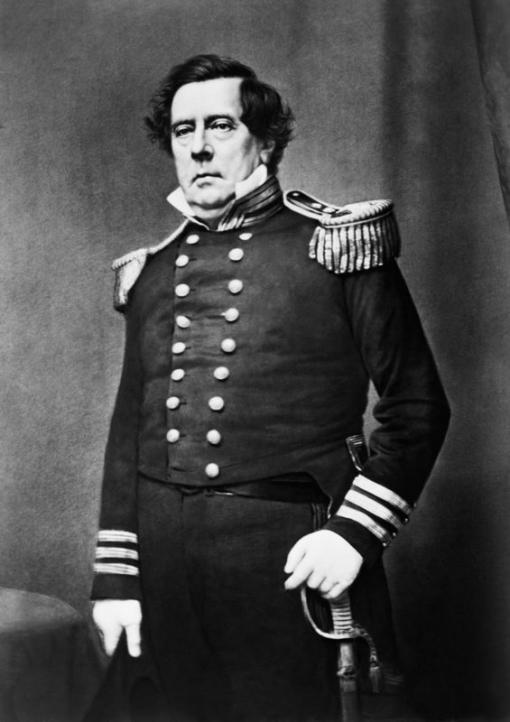
On the 8th of July 1853 US Navy Commodore Matthew C. Perry anchored at Uraga Harbour near Edo (modern-day Tokyo) and presented officials with a letter from President Millard Fillmore, which demanded that Japan, which had been largely closed to foreigners for two centuries, open its borders to US trade. To show that he was serious Perry bombarded the harbour with explosive shells, and when he returned a few months later he found the locals willing to sign up to the Convention of Kanagawa, which established, among other things, minimal import taxes for foreign goods.

In the years that followed Japan was obliged to conclude similar treaties with other Western powers, and the influx of cheap imports plunged the country into economic chaos. The feudal order of the 250 year old Tokugawa Shogunate collapsed under the pressure, its demise speeded by military intervention by the US, France and Britain. It was followed by the Meiji Restoration, which laid the foundations for the modern industrialised Japanese state, though the remnants of feudalism were not entirely swept away until the defeat of the Satsuma Rebellion in 1877 (an event portrayed, with considerable artistic licence, in the film The Last Samurai).

I mention this because I can see parallels between the hierarchical society of sakoku-era Japan and the regime we know in Second Life. What commerce there is with the outside world is strictly regulated by the ruling caste, who either directly control the marketplaces, or take a hefty cut of transactions. In-world manufacturing is dominated by small-scale craft producers, and success in this field is dependent on acquiring mastery of relatively low-tech but somewhat esoteric skills. Borders are closed, there is no democracy, and the population lives and dies at the whim of their masters.

Like feudal Japan Second Life is threatened by a tsunami that may sweep away the present economic certainties. This peril does not come in the shape of a warship, but in the seemingly harmless form of mesh imports.

The plan to allow import of content created using professional 3D design tools like Maya or Blender was first announced back in August, and recent reports have suggested that it will become reality soon. The Second Life design market is currently protected by the fact that there is little incentive for professional digital designers to learn how to build with prims, since there is no application for the skill outside of SL. Once they are able to create virtual objects using the knowledge they already have it’s more likely that they (or the companies that they work for) will see SL as a way of making some easy cash. Existing SL designers will find themselves exposed to competition from a well-established industry, whose advanced products will make their painstakingly sculpted prim creations look hopelessly primitive, and their businesses will be unable to survive.

Will this opening of the market to outside competition be a bad thing for the average non-entrepreneurial resident? The quality of virtual items will rise, and they will probably be cheaper too, since production will be more efficient. The grid as a whole will survive, as the Lindens are sure to impose a healthy tax on mesh uploads to keep their revenue stream flowing. There may be less circulation of L$ within the world, as the dominant businesses are less likely to be resident-owned concerns, and would be extracting their profits rather than spending them on the grid, but this would just mean more real money would have to be transferred in to allow residents to buy stuff, which would also boost the Lab’s bottom line.

What might change is the nature of the SL experience. The idea that all residents have the tools at hand to create their own reality will fade, to be replaced by a culture where our avatars exist only to consume the products that are manufactured for us. Second Life, which seemed to offer an antidote to the alienation of capitalist society, will have become just one more expression of it. I guess this is progress though, and we can no more resist it than the Samurai could halt the march of modernity and expel the barbarians. We can only hope that this is just the first step in a process of proletarianisation of the SL population that will one day create the conditions for more progressive social change.

Tweetomania

I hate to admit it, but, way behind the curve as usual, I have started to view Twitter as an important part of my life, rather than a pointless irritant. When I set up our feed I was intending just to use it for publicising blog posts, but then I started following a couple of people (you know, just for kicks), then a couple more (though I could have given up any time I wanted, I just didn’t want to, right?), and before I knew it I was getting mildly agitated if I couldn’t get my tweet fix several times a day.

The tipping point came when I started following Mal Burns, who is a one-man SL newsfeed, cranking out dozens of tweets a day linking to all sorts of interesting metaverse stories. He seems to have quite a big audience, judging by the surge of traffic we have had on the couple of occasions he has featured one of our posts.

Our feed is somewhat less influential, though we do have a few followers, including one celebrity, Noreena Hertz, the vaguely left-wing economist, though I expect that by the time you read this she will have ditched us – she’s done the follow/unfollow thing on us a few times before, so I suspect that she has some sort of system that automatically follows anyone tweeting with the #economics tag, and then one of her assistants kicks us off a couple of days later when they actually read the rubbish we have written. Interestingly, our old SLS account has roughly ten times as many followers as our active feed, despite not being updated for nearly a year.

My addiction has been facilitated by my acquisition of the TweetDeck app for my iPhone, which makes it much easier to post updates and follow the general chatter. TweetDeck is part of the huge ecosystem that has grown up around Twitter, with literally hundreds of startups vying for a slice of the revenue pie, which, last time I looked, amounted to exactly US$0. Twitter head honcho Biz Stone has reportedly targeted 2010 as “the revenue year”, but even he isn’t willing to predict that the company will be profitable any time soon, so I can’t see how all the hangers-on are hoping to make any money.

I have a horrible feeling that the whole set-up is some kind of plot to get us all hooked on free produce, before they crank up the price and force us to pay big bucks to feed our habits. That wouldn’t be entirely bad news for me though, since I am qualified in the treatment of cyberaddiction, and the tweet-detox market might be worth quite a bit.

Scenes from the Class Struggle in Second Life

Anyone who felt that my suggestion that all property in Second Life should be collectively owned was overly fanciful should perhaps direct their attention towards a couple of recent developments in the area of SL commerce.

First up: the changes to the structure of XStreet listing fees and commission charges. The exact ins and outs of this are detailed elsewhere; the main thing is that the service has become much less friendly for small-scale vendors, and more orientated towards big operations.

Secondly, Pink Linden recently sent out a questionnaire to a sample of SL merchants, canvassing their opinion on various hypothetical developments, including setting up an official Linden-sponsored shopping mall. Again the pricing and commission structure would favour large, established businesses over their smaller or newer competition. (It may be relevant that Pink used to work for eBay, who have also been accused of squeezing small sellers off their platform).

This initially reminded me of the concept of State Monopoly Capitalism. The intricacies of this theory are too complicated to go into here, but it can be roughly summed up as the idea that in the late stages of capitalism the state becomes increasingly identified with the interests of a particular section of capital, specifically the big monopolies, to the detriment not only of the proletariat, but also the smaller capitalist enterprises.

The thesis is not without its problems, though a full discussion of these is beyond the scope of this column, and it has been rather discredited by its association with the Popular Front orientation of Stalinist Communist Parties in post-war Europe. The question of the power of monopoly capital and its relationship with the state is more interesting than ever these days though, and it’s still worth reading Lenin on Imperialism, the Highest Stage of Capitalism, and Mandel on The Economics of Neo-Capitalism.

To transfer the concept of SMC to Second Life, one would have to see the Lindens as the equivalent of the state, and the big merchants as monopoly capitalists. Are either of these assumptions valid?

To quote Engels, from The Origin of the Family, Private Property and the State:

[The state] is a product of society at a certain stage of development; it is the admission that this society has become entangled in an insoluble contradiction with itself, that it has split into irreconcilable antagonisms which it is powerless to dispel. But in order that these antagonisms, these classes with conflicting economic interests, might not consume themselves and society in fruitless struggle, it became necessary to have a power, seemingly standing above society, that would alleviate the conflict and keep it within the bounds of ‘order’; and this power, arisen out of society but placing itself above it, and alienating itself more and more from it, is the state.

A “society … entangled in an insoluble contradiction with itself … split into irreconcilable antagonisms” does sound like a description of Second Life, and the Lindens certainly have the coercive powers usually associated with the state, but is it a state in the modern, capitalist, sense of the term? There may seem to be “classes with conflicting economic interests” among the residents of SL, but what is the nature of these classes? To answer these questions we must determine where avatars stand in relation to the means of production, which in turn requires us to decide what form the “means of production” take in a virtual world.

Virtual items may be created in the minds and on the computers of designers, but they only take on a social reality when they become available for exchange, when they are uploaded to the platform. Thus the virtual world itself forms the means of production. Linden Lab owns the world in its entirity, which means that no one else can independently control those means of production, and thus no resident can really be said to be a capitalist, let alone a monopoly capitalist.

Second Life may indeed be the scene of class struggle, but the conflict is not between workers and capital. The social relations that operate are more akin to those pertaining between feudal overlords and their serfs, with the Lindens taking on the role of absolute monarchs, supported by a small group of robber barons. The virtual masses are not proletarians free to sell their labour power to the highest bidder, but peasants obliged to toil for the benefit of their masters.

How can we move on from this obviously unsatisfactory state of affairs, and build a virtual communist society? I have a plan, but I’ll need another post to explain it properly. I might even make it my entry for the Linden Prize

A Nation of Shopkeepers

The third-quarter SL figures came out the other week, and, as usual, tout est pour le mieux dans le meilleur des mondes. One statistic in particular caught my eye; the number of monthly unique users, which was just over 750000. This reminded me of the results of a survey of the SL economy released in the spring, which estimated there were around 18000 self-identified virtual businesses.

The 750000 figure will include an indeterminate number of alts, and the 18000 enterprises may each employ more than one person (or some people may run more than one business), but, whichever way you look at it, it’s clear that SL entrepreneurs form only a tiny part of the virtual population.

I have no objection to people using the immersive virtual environment that is Second Life as an opportunity to live out their shopkeeper fantasies; whatever floats your boat I guess. However I do find it irksome when this small minority demand that the whole world should be structured to facilitate their particular brand of role-play, even if this grossly inconveniences everybody else, and, when they don’t get their way, threaten legal action that might destroy the entire system.

Linden Lab should adopt a Zindra-style solution to this problem, and set up a special continent where aspiring virtual business people can be segregated. There they would be free to sell each other shoes and sex-beds, sue one another to their hearts’ content, and leave the rest of us in peace to have fun with our second lives.

Taking Ownership of the Problem

In an intriguing footnote to the Burning Life festival, reports have emerged that a person or persons unknown distributed a mysterious box around the site, said box allegedly containing a virtual cornucopia of ripped-off items. Outraged commentators immediately cited this as yet another example of Linden Lab’s woefully negligent approach to protecting IP rights. Interestingly, and I’m sure entirely coincidentally, the alleged super-crime was brought to the world’s attention by none other than Stroker Serpentine, who of course is currently suing the Lab, claiming in his action that, among other things, the Lindens have had a woefully negligent approach to protecting IP rights. If that wasn’t enough to get the conspiracy theories going, Stroker’s rather ham-fisted attempt to pin blame for the alleged offence on (apparently) well-known open-source advocate Damen Hax further fanned the flames. Throw in the whole third-party viewer controversy, and the scene is set for another skirmish in the long-running war between the forces of DRM and the open-source guerillas.

Godless communist that I am, in my ideal virtual world all items would be free to transfer and copy, and content creators would contribute their talents without material recompense, their reward being the knowledge that they had helped build a better experience for everyone. I guess that’ll have to wait until after the revolution. In the meantime we’re stuck with some sort of copyright protection system, though we clearly need something better than the current unsatisfactory model.

The lesson from the music industry is that there is no future in ever-more-complex DRM – making customers jump through hoops to access content that they have purchased just pisses them off, and it’s never long before the pirates crack it anyhow. It’s much better to make paying for stuff so painless that people won’t go to the bother of seeking out stolen goods – some sort of micro-payment or subscription system seems to be the favoured model.

How might that work in Second Life? The first step would be to establish a central content inventory, run by Linden Lab directly, or some semi-autonomous surrogate. Upon payment of a subscription residents would gain access to this inventory, and would be able to rez up a set amount of prims. The exact number available concurrently could vary depending on the level of the subscription – free accounts could be limited to, say, 10, with a sliding scale up an unlimited quantity. Continued access to the items would be dependent on keeping up the payments. Content creators who wanted their items to be included would have to register, and once they had they would get a cut of the subscriptions, based on the relative popularity of their stuff.

I’m sure that it wouldn’t take too much tweaking of the permissions system to make this function. The key would be to set the subscription (tax might be a more descriptive word) low enough so that evading it by picking up pirated goods was more trouble than it was worth, but high enough to generate enough revenue to keep the designers happy.

A scheme like this is much more likely to succeed in a virtual world than in real life, where a lot of work would have to be put into prediction of demand, and planning resource and capacity allocation. This doesn’t always work out well in practice, though I’d argue that it is possible to run a successful planned economy if enough information is available. In a virtual world however, items can be manufactured instantly, with practically no resource implications, so it’s perfectly feasible to have no advance plan for production, and to just react to demand.

The biggest hurdles to overcome might be cultural, psychological and political. Designers would have to accept that they were essentially employees, or at least subcontractors, of a big state-owned corporation, and residents would have to be happy to pay the tax to support it. Somehow I can’t see either of these things, especially the former, coming to pass, and I doubt Linden Lab, grounded as they are in the free-market spirit, would have the appetite to run such a system anyway.

If the public option isn’t palatable, there might be a private alternative – designers could band together in consortia to offer a smaller subscription service. I think it would really need the scale of a grid-wide operation to make it practical though, so over time the trend would be towards a private monopoly, which has a lot less to recommend it than a public one.

I’m sure that someone has thought of this before, done the sums, and worked out that it wouldn’t be profitable. I don’t see that as a valid objection though, since the aim I have in mind is improving Second Life for everyone, rather than making money for anyone in particular.

The broader point is that it’s no good pursuing technical solutions to what are essentially cultural problems. It’s very difficult to make people do things that you want them to do on an individual level, even harder to get them to stop doing things you don’t want them to do. A better approach is to try to construct a psychosocial milieu in which the desired behaviour is more likely than unwanted actions.

The solution to the content theft problem lies not in stronger encryption of content, nor with harsher penalties for breaking the TOS. What the Lindens must do is engage in some social engineering, to foster a stronger sense of collective ownership, to build a community that believes that an offence against one is an offence against all. Give everyone a chance to own an equal share of everything, at a price that seems fair, and no one will feel the need to steal, for they would only be robbing themselves.

The killer awoke before dawn

I’ve been caught up with work and social engagements recently, and so completely missed the latest big Second Life story; Stroker Serpentine’s lawsuit against Linden Lab over the thorny issue of IP rights, and the Lindens’ efforts, or lack thereof, to protect them.

The details of the case, and its merits, have been well covered in the Alphaville Herald and New World Notes, and there’s no shortage of comment around the SL blogosphere (like here, here and here). In such circumstances any opinion I care to offer is bound to be superfluous, as well as being thoroughly uninformative, seeing as how I have no knowledge whatsoever of contract and copyright law as it is applied in the state of California. But what kind of blogger would I be if I let ignorance of the topic or fear of repetition stand in the way of weighing in with my two cents worth?

Everyone agrees that content theft is an issue; Stroker’s case revolves around the question of whether the Lindens are mere providers of the framework in which the criminality occurs, and thus not responsible for it, or if the fact that the Lab profits from copyright infringement by collecting dues from the malefactors makes it part of the evil enterprise. The precedent that is being quoted is the case of Louis Vuitton Malletier, S.A., v. Akanoc Solutions, Inc., et al., where the luxury goods maker was awarded $32 million damages against a firm that hosted websites selling counterfeit Vuitton items. The Taser case seems relevant too, as well as the Lab’s previous actions in banning in-world gambling and banking, which presumably stemmed from a realisation that the US Department of Justice was likely to regard hosting illegal activity as an offence in itself.

The Lindens’ defence will probably rest on the “safe harbor” provision of the DMCA, but they may be on shaky ground there, since any claim to be at one remove from the murky business of SL commerce would be rather undermined by their ownership of XStreet, and their record of assisting aggrieved creatives with DMCA filings is allegedly very poor. There is some speculation that the Second Life Terms of Service, specifically the sections prohibiting residents from suing the Lindens, might be the Lab’s get-out-of-jail card, but it seems unlikely that any court would enforce a contract containing such obviously unfair terms.

All these legal questions are mildly diverting, but what is much more interesting is the underlying psychology. It reminds me of a gritty crime movie, the part where the heist has gone wrong and the thieves have started to fall out. One can only imagine that Stroker’s sex-bed business must have hit the skids before he would pursue the nuclear option of suing the Lindens. I’ve no doubt that having his designs ripped off has at least partially contributed to this, but I suspect that the inherent limitations of the virtual economy (which we’ve previously discussed here and here) have had a more significant impact.

It feels as if there is more to this than mere financial considerations though. What Stroker and other designers want is not just money, but respect, due acknowledgement of their creative talents. Unfortunately, outside of a small subsection of the SL population, being a virtual clothes/hair/whatever producer just doesn’t count for very much, in terms of cash or kudos. This may or may not be unfair (I tend to think it is some way off being the worst injustice in the world), but it’s a fact, and no amount of complaining on the internet or suing Linden Lab is going to change it.

Looking at it more analytically, there also seems to be an Oedipal theme to this lawsuit. By all accounts Stroker was a Joe-the-plumber type before Second Life gave him the chance to reinvent himself as a virtual pornography mogul; it seems ungrateful, to say the least, that he should set in train a process that could theoretically ruin the company that made his good fortune possible. The Lab may have begat Stroker, but he has good reason to think that he is not Philip’s favourite son; the sex business of which Stroker is the most prominent public face is often cited as the biggest threat to the Lindens’ future prosperity. Stroker would not have to be particularly paranoid to see the regulation of adult content on the grid as an attempt to castrate him (figuratively and literally; ridding SL of penises seems to be one of the prime objectives of the new rules). Perhaps the case represents Stroker’s unconscious desire to kill his virtual father before he himself is annihilated by paternal rage.

What would be the most desirable, or least undesirable, outcome of the case? Should Stroker prevail it would surely be a Pyrrhic victory. The suit is a class action, so every frustrated shopkeeper who ever had a texture pilfered would be able to jump on the bandwagon, exposing the Lindens to potentially unlimited liability. Even if this doomsday scenario didn’t come to pass, an adverse judgement would force the Lab to radically change the Second Life retailing landscape, probably by introducing some sort of merchant registration and approval system, shutting out the small scale entrepreneurs who are, everyone says, the lifeblood of SL creativity.

And what if Stroker loses? There has been the usual Atlas Shrugged-style posturing from various bloggers, with talk of how an exodus of talent will leave the rest of us wailing and gnashing our teeth, bereft of prim hair and erotic animations. In reality, of course, little would change, since any designers who did flounce out would be quickly replaced by others with equal skill and a rather more realistic estimation of the value society places on virtual creativity. It would be for the best in the long run, since Second Life can only benefit from a population that is more interested in enriching the collective experience than amassing personal wealth.

So I’m hoping that the case goes to court, and that Stroker loses. I doubt that this will happen though; the Lindens’ corporate lawyers will want to avoid the uncertainty of going to trial, and will push for a settlement, which I suspect is what Stroker has had in mind from the start. Even if they don’t admit liability the Lab will have to introduce more regulation to avoid facing similar actions in the future, and the nature of Second Life will change forever.

Whatever happens, it feels like a chapter, if not the whole book, is drawing to a close.

It’s the end of our elaborate plans…

Brother, can you spare me an ISK?

More virtual-life-imitates-real-life news from the futuristic universe of EVE Online, where EBANK, one of the game’s largest financial institutions, has frozen all deposits after new management discovered a 1.2 trillion ISK (InterStellar Kredit) hole in the accounts.

At first glance this seems to be a repeat of the Second Life banking fiascos of 2007, but, to be fair to the directors of EB, they do seem to have been trying to run a proper retail banking operation rather than just a glorified Ponzi scheme, with interest paid to depositors theoretically covered by interest charged to creditors.

The initial stories of EB’s troubles focused on the embezzlement of 250 billion ISK by the bank’s former CEO, but what really seems to have done the damage is the spectacularly high level of bad-debt provision. Just about the whole of EB’s loan book looks to be unrecoverable, a failure of risk-management that makes even the most delinquent of real-life banks look ultra-cautious.

It is, I think, another example of cargo cult consciousness, the belief that you can capture the essence of something by replicating its superficial form. In this case EB did the things that a real bank does, like taking deposits and making loans, but without the social infrastructure than underpins such a business in the real world, like a legal system that allows creditors to pursue their debtors and seize their assets. More importantly, institutions of finance capital can only exist in the context of a system where there is actual value being produced, rather than an imaginary universe where work ultimately counts for practically nothing.

It’s surprising that anyone still believes that banking and other financial wizardry can magically create wealth, rather than just existing parasitically on the labour of the workers, given that recent events in the real world have shown up the masters of the universe for the frauds that they are. (ISK also stands for Icelandic Krona, and we all know how well that’s been doing recently.) A certain suspension of disbelief is required to enjoy the experience of EVE Online; perhaps for the more avid players their time in New Eden detaches them from reality altogether.