International Women’s Day 2013

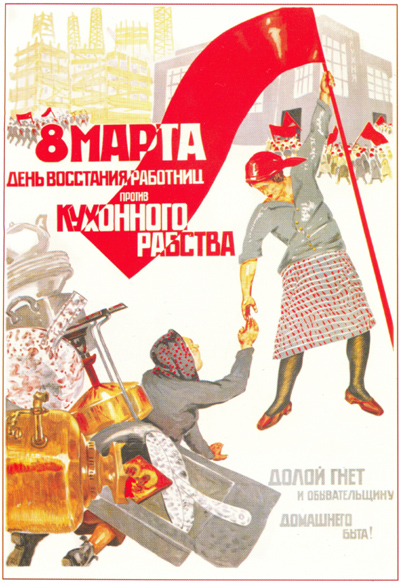
When Luise Zietz and Clara Zetkin proposed the observance of an International Women’s Day back in 1910, I wonder if they imagined that over a century later their sisters would still be campaigning against gender-based violence and in defence of reproductive rights. In some ways it’s depressing that so much remains to be done, but the history of struggle over the years is never less than inspiring.

Viva la Revolución Bolivariana!

I woke to sad news today; Hugo Chavez, President of Venezuela, had lost his final battle against illness. It seems like only yesterday we were celebrating his reelection; now we mourn his passing.

Hugo Chavez will undoubtedly be remembered as a great figure in left politics; his legacy not just the vast improvement in living standards he brought to the people of Venezuela, but also the movement he built that will carry on his work, and the inspiration he gave to others fighting poverty and injustice in neighbouring countries and around the world.

That inspiration is captured in the documentary The Revolution Will Not Be Televised, which covers the abortive 2002 coup against Chavez, and the popular uprising that defeated it. It’s available in full on YouTube, and well worth watching.

There is no land beyond the Volga

Today is the 70th anniversary of the final surrender of the German 6th Army at Stalingrad, the last act in the most significant battle of the Second World War. It marked the end of the Nazi dream of eastward expansion, and the beginning of the Soviet counteroffensive which would end two years later with the Red flag flying over the Reichstag in the ruins of Berlin.

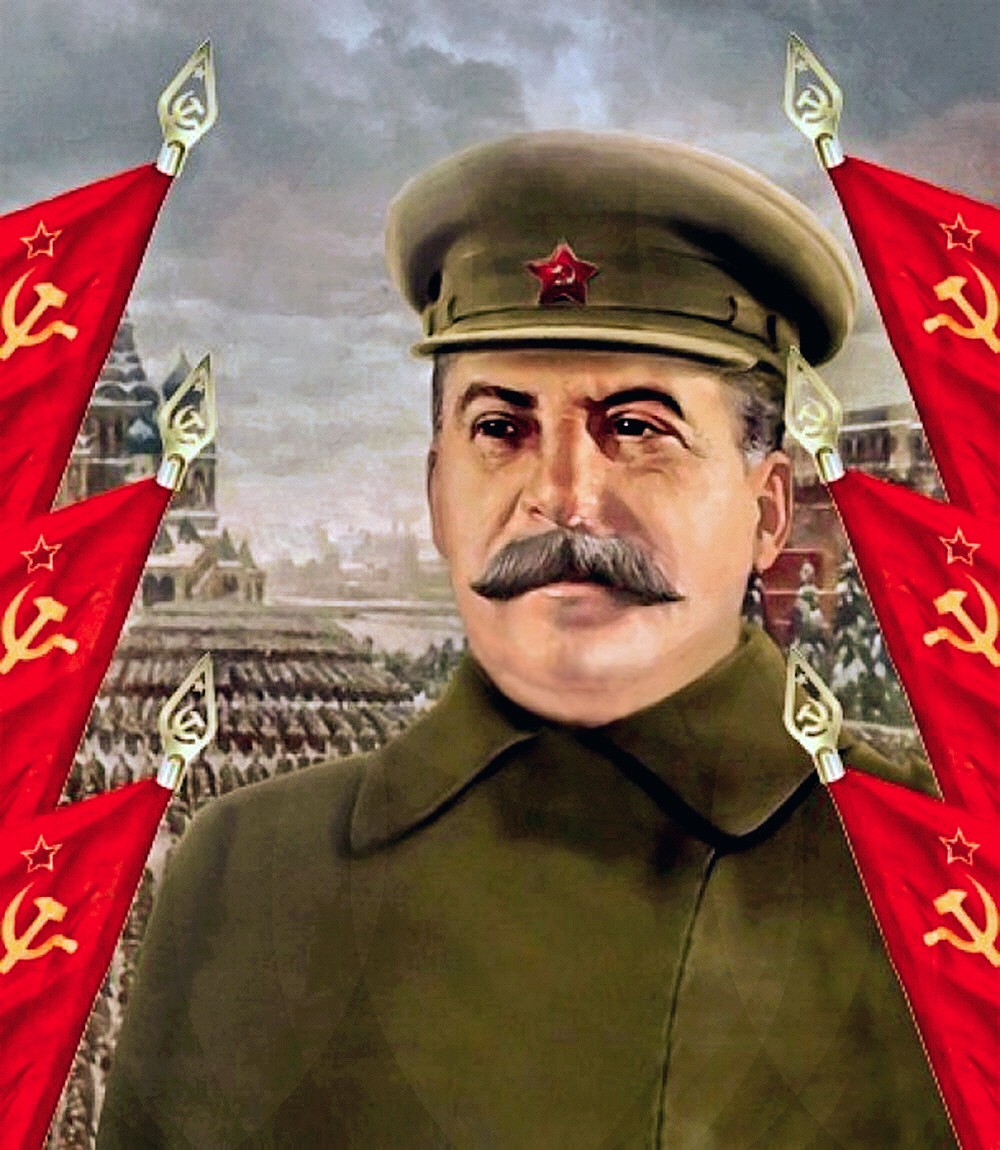
Whatever one thinks of the wartime Soviet regime (and even a committed communist like myself has some serious reservations about Uncle Joe) it’s impossible to read the story of the struggle for the city without being inspired by the remarkable courage and tenacity of the troops who fought and died to turn the tide of fascism on the Eastern Front. Units like the young women of the 1077th AA Regiment, who stood against the advancing Panzers to the last shot, or Rodimtsev’s 13th Guards Rifle Division, 10,000 strong at the start of the campaign, of whom barely 300 lived to see the German surrender. The battle made heroes of Vasily Zaytsev and Yakov Pavlov, among many more of the thousands of soldiers who crossed the burning Volga to defend the last Soviet enclaves on the west bank of the river, knowing that their life expectancy could be measured in hours. Their sacrifice stalled the Nazis while Soviet forces built up on the German flanks, ultimately springing the pincer movement that trapped and destroyed the once-mighty 6th Army.

The resolve of the Soviet troops was undoubtedly bolstered by harsh discipline – Stalin himself commented that it took a brave man to be a coward in the Red Army – but it’s clear from contemporary accounts that the soldiers on the front line were well motivated to fight the invaders, partly by ideology, but mostly by a desire to protect their homeland.

Although with hindsight the Soviet victory at Stalingrad seems as if it was inevitable, given their ability to replace losses in a way that the overstretched Germans never could, at the time it must have been much less certain. The decisive factor may have been that communism, even in the distorted form of Stalinism, is essentially rational – coldly and brutally rational at times, but always more effective than the half-baked mysticism of Nazi ideology. Hitler may have believed that Aryan destiny and fighting spirit could substitute for food, ammunition and winter uniforms, but Stalin knew that the war would be won by the side which could bring the most force to bear on the enemy, and at Stalingrad the Soviet armies proved that with ruthless efficiency.

Lunar Requiem

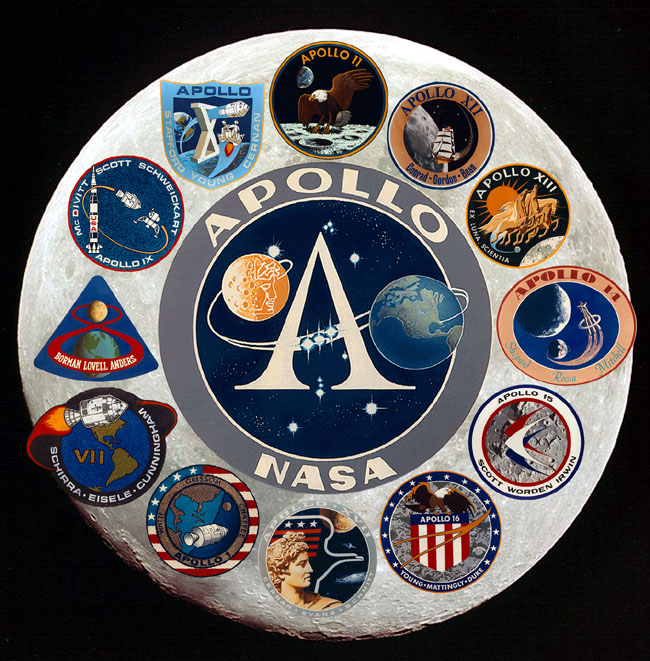
Back in 2009 we ran a piece marking the 40th anniversary of the first moon landing, which noted wistfully that the vision of widespread space travel promised by the Apollo program had never been realised. We returned to this theme on the 50th anniversary of Yuri Gagarin’s maiden space flight, by which time our regret had expanded to cover the passing of the whole concept of progress through rational planning.

The news that Neil Armstrong has passed away is another reminder of how much the world has moved on since the days when flying to the moon was the peak of human aspiration. In a few more years an era in which there exist living men who have walked on another celestial body will have passed completely, with no sign that it will ever be repeated, a thought which I find almost unbearably sad.

Of course the Space Race of the 50s and 60s was driven by Cold War tensions, and it’s hard to argue that the threat of global thermonuclear destruction that hung over that period was a price worth paying for the dreams of space exploration. Nevertheless, I think our culture has lost something important since then; the sense that we could go ever onward and upward, replaced by the generally gloomy feeling that our best days as a species are already behind us.

All hope is not lost though; we’re still sending robots to other planets, and the information they send back may inspire another wave of space enthusiasm. I might yet make it to Mars after all…

New Hampshire

So, the New Hampshire Primary turned out more or less as predicted; Romney consolidated his position as front-runner without landing a knock-out blow, Paul maintained his momentum but still isn’t looking like a serious contender, and Santorum did just enough to keep his hopes alive heading into the more conservative territory of South Carolina.

There were a couple of interesting points in the campaign though; the decisive role played by secretive Super PACs, which confirmed that election results are controlled by big money, and the somewhat surprising revelation that Newt Gingrich has discovered that capitalism is evil.

There is a lot of interest in the GOP nomination process on this side of the Atlantic, though much of it stems from the fact that observing the process allows us smug Europeans to feel superior to our dull American cousins; even the Daily Telegraph had a piece this week suggesting that the only way to get elected in the US was by pandering to the stupid vote.

It’s easy to laugh at the likes of Santorum, Gingrich, Perry and Bachmann, because they are clowns, but it may be unwise. Matt Taibbi made a good point in his profile of Michele Bachmann for Rolling Stone:

Snickering readers in New York or Los Angeles might be tempted by all of this to conclude that Bachmann is uniquely crazy. But in fact, such tales by Bachmann work precisely because there are a great many people in America just like Bachmann, people who believe that God tells them what condiments to put on their hamburgers, who can’t tell the difference between Soviet Communism and a Stafford loan, but can certainly tell the difference between being mocked and being taken seriously. When you laugh at Michele Bachmann for going on MSNBC and blurting out that the moon is made of red communist cheese, these people don’t learn that she is wrong. What they learn is that you’re a dick, that they hate you more than ever, and that they’re even more determined now to support anyone who promises not to laugh at their own visions and fantasies.

I come from that school of left-wing thought that tends to view politics as a coldly rational business, and I am generally sceptical of any analysis that focuses on individual psychology, rather than impersonal class forces, as an explanation for world events. I believe this approach is broadly correct, but it can perhaps lead to an underestimation of the emotional power of right-wing rhetoric, which can be a dangerous blind-spot. It’s always worth re-reading Richard Hofstadter’s 1964 essay The Paranoid Style in American Politics, written at the time of Barry Goldwater but equally applicable to the likes of Ron Paul, to remind oneself of the threat that reactionary irrationality can pose.

Finally, mention of the Granite State gives me an excuse to link to one of my favourite tracks by Sonic Youth.

Bin gone

So, nearly 10 years after 9/11, the US has finally caught up with Osama Bin Laden. It feels like some sort of closure, though since there had been no solid proof he was alive since 2002, he was reportedly discovered living in a quiet suburb of Abbottabad, next door to the Pakistan Army’s main training college, and his body has been quickly buried at sea, (not to mention that the timing of this seems very convenient for President Obama’s re-election campaign) there is little doubt that he will live on in the fevered minds of conspiracy theorists for years to come.

It is the end of a chapter of modern history though, one that began back in the 70s when the CIA first started undermining the Afghan government, with the intention of drawing the Soviet Union into a costly war. That part of the plan worked out, but, after the Soviet withdrawal, the jihadists that the US had nurtured needed a new enemy, and found one in their erstwhile sponsors.

It seems likely that Obama will use Bin Laden’s death to start winding down the unwinnable Afghan war ahead of the US Presidential election next year, which is clearly a good outcome, albeit one that has come far too late for that conflict-ravaged region. It would be nice to think some lessons had been learned from the whole debacle, but since the US government seems to be falling ever more under the influence of the military-industrial complex, and the generals need war like a junkie needs his fix, I’m guessing that we’ll be seeing history repeat itself sooner rather than later.

Spaced Out

Talking of Yuri Gagarin’s historic space-flight prompted me to revisit a favourite spot in Second Life, the International Spaceflight Museum. They have nicely-rendered models of various rocket-ships from around the world, including the latest Indian and Chinese models:

The big rocket second from the right is a Soviet N1, designed to take cosmonauts to the moon; unfortunately all the test flights exploded shortly after take-off, and the programme was abandoned. Next to it is an American Ares V, which was set to be the launcher for the Moonbase and Mars expeditions, but that programme was cancelled last year.

More successful Soviet craft are featured too, from the Vostok and Voskhod boosters of Gagarin’s day, to the Soyuz workhorses, and the current Proton rocket which, now the Space Shuttle has retired, is the only way to get big things up into orbit:

The Museum also has an earth-orbit exhibit, featuring the International Space Station. I felt a little exposed in my normal clothes, so I quickly scored a nice retro-style space-suit (from Aurican’s Pyramid Store), before venturing into the vacuum:

Now I had the suit it seemed a shame not to do some more space exploration. Back at my little mountainside home I quickly build a mini launch pad, and picked up a cool little space-coupé (a PS-1 Dart by PlasmaStorm Industries at Port Clarke):

My original plan was to zoom around my neighbourhood (which, incidentally, seems to have gone completely to the dogs since last time I looked, abandoned land everywhere, but that’s a topic for another day), but after a few jarring collisions, presumably with the sim borders, I gave up on that and headed into deep space.

First stop was Tranquility Base on the Moon:

Then on to see the big starships at Talmont Space Port:

Finally, some chill-out time at Inspire Space Park, where one can meditate while tumbling through the celestial sphere:

and relax in front of a nice warm fire:

Recreating outer space is perhaps the perfect use for Second Life, since the relatively featureless terrain means it all renders nice and quickly, and the characteristic lack of other people adds to the verisimilitude. I would quite like to get into some space-based role-play, but I don’t really have the time to devote to that right now. Another project to add to my list for later in the year.

Red star shines on

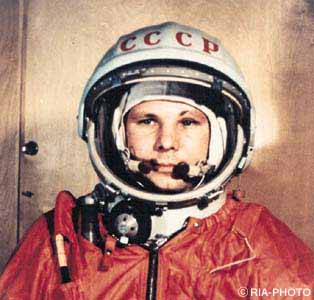
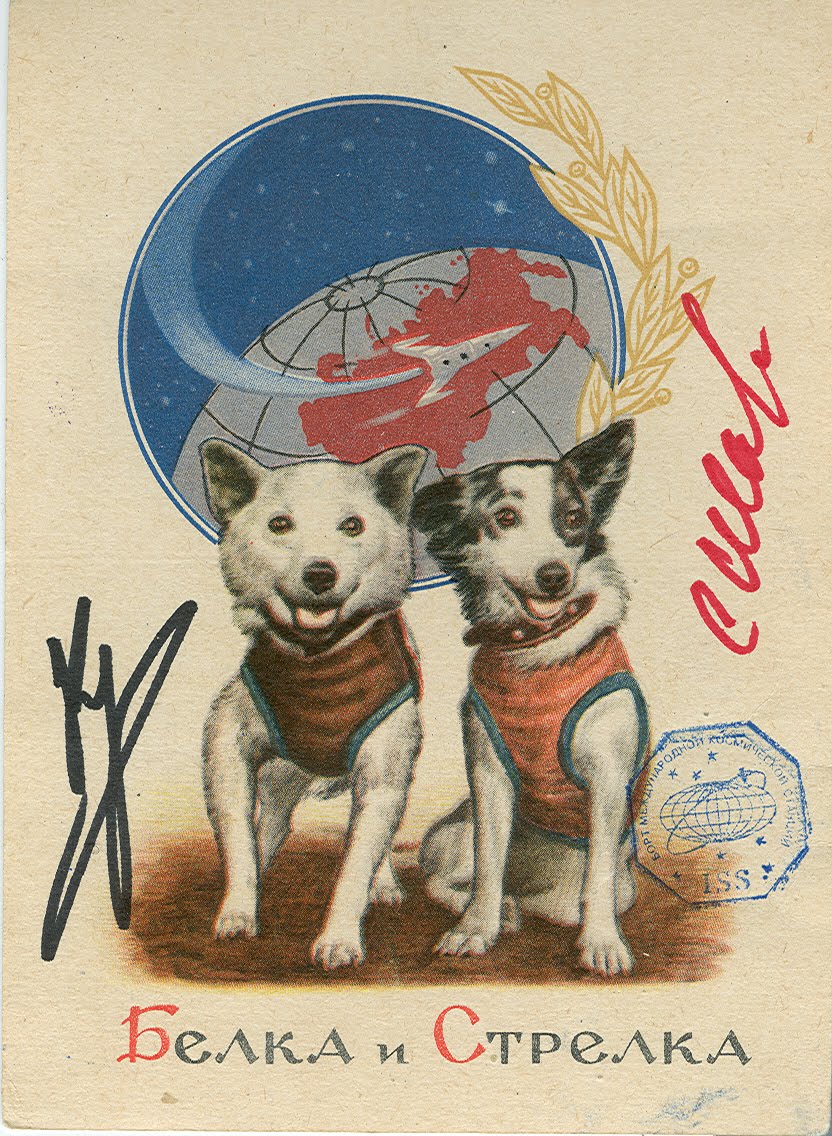
Fifty years ago today, Yuri Gagarin climbed into a small capsule atop a Vostok rocket and blasted off to become the first human in space. The Soviet programme had previously launched a few dogs into orbit, and had brought most of them back alive, but, even so, Gagarin must have known that his mission was insanely risky, and his courage is still inspiring today.

Gagarin’s historic flight resonated far beyond science, deep into general culture and Cold War politics. This wasn’t just a man going into space; it was the frontier of humanity being expanded by the son of a farmer from Smolensk, the technological triumph of a nation that just half a century before had been a pre-industrial backwater, the ultimate demonstration of the superiority of Soviet planning over the capitalist economies left struggling in its wake.

Of course we now know that this confidence was misplaced, for a number of reasons. The drawn-out failure of the Soviet experiment ushered in an era where it became accepted wisdom, even on much of the left, that inequality and injustice were the natural state of the world, and talk of building a new society freed from want by the application of human intellect was utopian. The best we could do, we were told, was to let the market run free, and trust to the charity of our rulers, with some light government regulation, to spare us from the worst excesses of unrestrained capital.

The financial crisis of the past few years has seriously undermined this theory, as living standards for the mass of the population have plummeted, while the rich have continued to get richer. People are again wondering whether there may be a more efficient way of organising society; the hope of a better future embodied by Gagarin and his fellow cosmonauts still has some life in it. The Soviet model of a planned economy may not have lived up to its initial promise, but the next iteration could still take us to the stars.

The Leopard

This week saw the sesquicentennial of the foundation of the unified Italian state. This notable anniversary inspired me to snack on some antipasti and quaff a glass or three of Valpolicella; thus refreshed, I pulled my old copy of Giuseppe Tomasi di Lampedusa’s The Leopard from the shelf, and settled down to reread one of the classic works of European literature.

The Leopard has in fact been called “Perhaps the greatest novel of the century”, though that was by L.P. Hartley, whose admiration is understandable when one considers that his best-known work, The Go-Between is very similar thematically.

The praise is not too hyperbolic though; Lampedusa’s tale of the twilight of the aristocratic order and the rise of the bourgeoisie in the days of the Risorgimento is a compact masterpiece. It works powerfully on several levels; as a vivid description of the political events of the time, as a portrait of individuals struggling with the conflicting pulls of love and duty, but perhaps most affectingly as an examination of mortality, and the perpetual impermanence that is an inevitable part of the human condition.

That feeling of loss that pervades the book makes it a very conservative work; it is an elegy for the lost nobility, and the picture it paints of the bourgeoisie who succeeded them is decidedly unflattering. This interpretation of the events of the 1860s couldn’t be further from my own, but the novel’s melancholic tone is sufficiently sympathetic to my general outlook on life that such political differences seem irrelevant.

I may be making The Leopard sound rather depressing, and in some ways it is, but it is one of those sad stories that is so beautifully told that the overall effect is uplifting. The events it portrays may now be distant history, but the message that destruction is the unavoidable cost of progress is as relevant as ever.

International Women’s Day

Today is International Women’s Day. It was first marked one hundred years ago, in Germany, following a proposal by famous German socialist Clara Zetkin, and is now celebrated all over the world. I’m hoping to make it along to a local event later today; check the IWD website for activities in your area.

In the virtual world, the Instituto Espanol in Second Life has an interesting-looking program of IWD-related talks and music which I may try to catch too. I couldn’t see any other events in SL advertised, but I only did a quick search, so I’m sure there are more out there.

As the IWD website says, “International Women’s Day is a global day celebrating the economic, political and social achievements of women past, present and future.”. These days it sometimes seems that our ruling elite are determined to roll back every progressive gain the working class has made in the last century, so it’s important to pause and reflect upon the victories our sisters have won, and look forward to a better, more egalitarian, future.