Thoughts on the Libyan situation

The tide of revolution sweeping the Arab world had looked as if it was going to wash away long-serving dictator Muammar Gaddafi, but as I write it appears that Libya is poised on the brink of all-out civil war. The situation is fluid of course, but it seems that Gaddafi has been able to consolidate his position around Tripoli and other strongholds, while the rebels are not showing much sign of advancing from the territory they have won in the east of the country.

The outlook looks grim in the short term, though at least there seems to be little appetite in the West for military intervention, so the Libyans should be allowed to fight it out on their own. I hope the rebels will prevail in the end, and usher in a more peaceful and democratic future for the country, but that outcome is far from certain.

Gaddafi’s reputation has come full circle in the last thirty years. Back in the ’80s he was a “mad dog”, and Ronald Reagan was trying to kill him; by 2009 his rehabilitation was so complete that Reagan’s successor could greet him like a long-lost friend. Now he has returned to the doghouse, and it seems unlikely that history will remember him kindly. Gaddafi’s popularity, or lack thereof, in the West always had more to do with global power relations than his personal attributes anyway; when he stood in opposition to imperialist designs in the region he was demonised, and when he was willing to sign deals with our oil corporations he was lauded. The views of the Libyan people, who actually had to live with him, were never factored into this of course.

I think that the Libyan revolution illustrates the reality of what it takes to challenge established power, and seriously undermines the idea that there is some new social media-related paradigm that allows us to overthrow the government by tweeting and posting videos on YouTube. The Guardian had a piece on this last week; here’s the comment I left in the discussion:

I think that the points about how Twitter, Facebook, etc have facilitated communication are valid, but I don’t buy the idea that social media have been the main factor, or even a major factor, in this wave of revolution – that honour belongs to the courage and initiative of the working masses, as expressed through their own forms of organisation, such as (in Egypt especially) labour unions.

I think that the tendency to reduce the complexity of these events to simple labels like “Twitter Revolution” betrays an essential ignorance in the West about the degree of development of Arab society, and represents an attempt to appropriate the energy of the revolutions in a way that portrays the West as a liberating force – “Aren’t these people lucky we set them free by giving them Facebook?” The truth is of course that we have maintained these repressive regimes over decades, and it is despite us, rather than thanks to us, that the people of the region are finally freeing themselves.

No doubt this debate will run and run, but the Libyan people, like their Egyptian and Tunisian counterparts before them, are teaching us a lesson about the courage and commitment that is needed to bring about true change.

The Great Gonzo

On this day back in 2005 the great Hunter S. Thompson signed off for the last time, with a gunshot to the head. He had his reasons for such a dramatic exit, but it seemed like a tremendous loss at the time, a feeling that has deepened in the intervening years as the authoritarian shift in US politics has cried out for the sort of biting social commentary that was Thompson’s speciality.

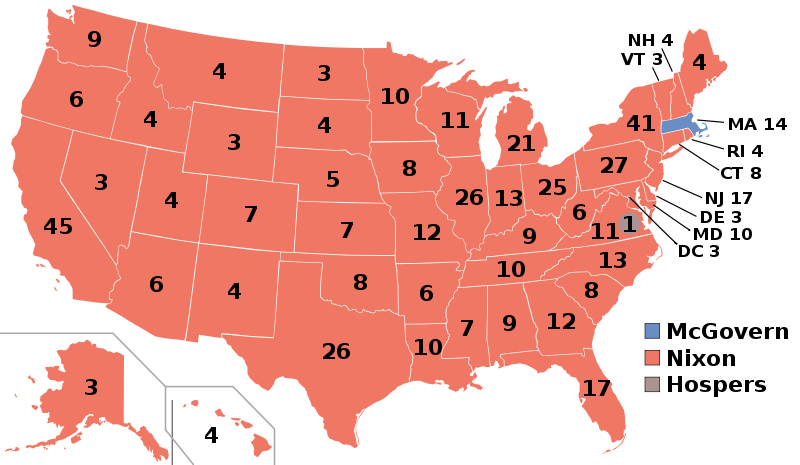
Thompson is best known for Fear and Loathing in Las Vegas, his 1971 account of a drug-fuelled trip to Nevada, but I think his finest work is Fear and Loathing on the Campaign Trail ’72, a collection of his reports on the 1972 US Presidential elections. …Vegas is a great book, but ultimately rather downbeat, charting as it does the defeat of 60’s counterculture at the hands of the Man. …Campaign Trail is much more optimistic, as Thompson gets caught in the tide of the McGovern campaign and starts to believe that progressive politics might just have a chance. It ends in disappointment of course, when Nixon wins with a landslide, but at least Thompson didn’t have to wait too long to see Tricky Dicky’s downfall. (Years later Thompson would write the definitive Nixon obituary, He Was a Crook.) …Campaign Trail‘s depiction of the youthful energy of McGovern’s supporters is still inspirational today, and should be required reading for community organisers and political activists everywhere.

To mark the anniversary of Thompson’s death The Quietus has a previously unpublished interview, along with a brief but useful biography. The BBC produced a fine documentary on Thompson’s life and work a couple of years ago, and Terry Gilliams’ film version of Fear and Loathing in Las Vegas, with Johnny Depp as Thompson, is worth seeing too.

The style of journalism that Thompson pioneered has become so commonplace now that it’s almost a cliche, but out of his many imitators none have come close to the man himself. I’m going to settle down tonight with my dog-eared copy of Fear and Loathing on the Campaign Trail ’72, and have a few drinks in his memory.

Egypt in revolt

I’ve not had much time for blogging so far this month, as I’ve been caught up with various more pressing concerns, not least following the momentous events in Tunisia and Egypt.

I know a couple of guys from Egypt, and, unsurprisingly, they have been glued to Al Jazeera, as well as getting updates from friends and family in the country. At the start of this week I was feeling a bit discouraged, as it looked like the momentum of the revolution was slowing, but my friends, on the strength of what they were hearing, were still confident that change was on the way. They tell me that the demonstrations tomorrow are set to be the biggest yet, and, now that strikes are spreading and the army is wavering, time seems to be running out for Mubarak’s regime (though he must have missed that memo). A full-scale democratic revolution may still take some time, but even modest progressive change will be a first step.

The events in Egypt have again brought up the question of the degree to which social media have changed the dynamic of such movements – there’s a useful round-up of opinion here. I’m still unconvinced – while the internet may have helped spread word of what was happening around the world, I think the organising within Egypt must have been based mainly on more personal contacts. People may hear about demonstrations via Twitter or whatever, but the decision on whether to join in or not will depend on what family, friends, neighbours and workmates are doing, and any large-scale mobilisation needs the sort of guidance that comes from an organisational structure if it is going to be persistent and effective. That structure may come from a pre-existing political party, or it may arise more spontaneously, but I think it has to be based on something more concrete than the weak ties of social media.

What social media does have to offer, I think, is more in the way of creating a record of what has been happening from the level of the streets, an immediate and intimate history that will serve as a template for future movements.

The situation as I write tonight is still uncertain. My thoughts, for what they’re worth, are with the people of Egypt; I hope I’ll be able to celebrate their victory in the not too distant future.

The time is right for a palace revolution

Picture of the month, if not the year, has to be this one. Normally I would be aghast at the sight of an elderly couple being menaced by an angry mob, but this is one of those iconic images that seem to capture a moment in history, in this case the instant when the bubble around the privileged elite burst, and hard reality forcefully intruded.

Whether this will turn out to be just a fleeting breakdown of deference, or a more serious breach in the established order, only time will tell. There do seem to be a lot of angry people around at the moment; the last time I remember it being quite like this was in the heady days of the Poll Tax protests. I’d like to say that I was in the thick of it back then, but I’ve always been more of a make-sure-the-bus-is-booked-get-the-flyers-printed sort of revolutionary, rather than a street fighting man. I worry sometimes that everyone these days is so busy rioting, and tweeting and blogging about it, that no one will be interested in the boring organisational work that actually gets things done. There are always plenty of would-be bureaucrats (like me) around though, so I probably shouldn’t be too concerned.

In support of Wikileaks

Last month I posted a piece about the Twitter-related travails of Paul Chambers, and commenter LarryE rightly pulled me up for my apparently unsympathetic tone. The point I was trying (and failing) to make wasn’t that I was unsupportive of Chambers, but rather that his case was small beer compared to things like the latest developments in the Wikileaks story.

My position is one of complete support for what Wikileaks are doing. I don’t have any sympathy with the notion that governments and diplomats need to operate in secrecy; it just buys into the idea that the business of running society should be reserved for the ruling elite, with the rest of us left in the dark. A lack of transparency favours the status quo; anybody who claims to be interested in progressive change has to believe in maximum openness. As Trotsky said, apropos of the Bolsheviks’ decision to publish secret Tsarist diplomatic papers, “Secret diplomacy is a necessary tool for a propertied minority which is compelled to deceive the majority in order to subject it to its interests … The abolition of secret diplomacy is the primary condition for an honest, popular, truly democratic foreign policy.”

The issue of government secrecy shouldn’t be confused with that of personal privacy; it’s perfectly consistent to believe that we should know what they are doing while maintaining the confidentiality of our own activities. Our rulers certainly see the distinction; while they scramble to keep their own secrets intact they are building up the infrastructure needed for a surveillance state.

Now Julian Assange finds himself in prison, and on charges that leftist types like myself will feel uncomfortable about dismissing as trumped-up, no matter how much we feel the timing of the case is very convenient for the authorities. It is of course possible to approve of what Assange has done with Wikileaks without endorsing every aspect of his character, and the allegations against him shouldn’t distract us from the substance of the issues that have been exposed.

It’s heartening to see the Anonymous response to the attacks on Wikileaks, though, as we’ve noted before, it seems unlikely to be sustained enough to really damage ruling-class interests.

Still, this feels like an early battle in what is going to be a protracted war. Even if Wikileaks doesn’t survive this skirmish in its present form, there is now an established community of radicalised internet activists ready to keep the fight going. With a bit more organisation the virtual class struggle might yet get the bourgeoisie on the run.

Everybody’s got a bomb

I’ve had a bad cough for the last week or so, what with all the cold weather, and it’s been keeping me awake at night. Consequently I’ve been watching more late-night TV, mostly junk like CSI reruns or televised poker, but also a couple of semi-good movies, including Cold War drama-doc Thirteen Days.

Actually “semi-good” is being generous; the heavily-fictionalised account of the Cuban missile crisis is rather melodramatic, as it portrays the heroic Kennedy brothers (aided by a brooding Kevin Costner) facing down the evil communists, while simultaneously restraining their own gung-ho generals, who are itching to launch a full-scale war. The story is inherently gripping though, and, even though obviously I knew there was going to be a happy ending, I enjoyed the building tension as it looked like the two sides had boxed themselves into an inevitable conflict. (My favourite film about the crisis, which deals with the themes much less earnestly, but rather more effectively, is Joe Dante’s Matinee.)

Watching Thirteen Days reminded me a little of the 1980s, when, after years of relative détente, it looked like Ronald Reagan was determined to start World War Three. I was never one of those kids who got all neurotic about the prospect of nuclear armageddon, but I was a bit freaked out by watching things like The War Game (made and suppressed back in the 60s, but still a favourite at leftist meetings 20 years later) and The Day After, though I wasn’t ever concerned enough to do much beyond going on a couple of CND marches. (Central American solidarity was my main political interest at that time, as I recall).

Then the Soviet Union collapsed, and we all enjoyed the 90s, free, we thought, from the shadow of complete destruction. There was still plenty of war to go around, of course, and not a little millennial angst, but it was probably the safest decade since the end of the Second World War (for those of us in the West anyhow).

Fast-forward to today, and we’re all supposed to be worried about The Bomb again, though this time round it’s not the Reds we’re told we should be scared of, but North Korea, Pakistan and Iran, or al-Qaeda, or just “terrorists” in general. I can’t say that I lose too much sleep over those last three, but North Korea and Pakistan (and to a lesser degree Israel and India) are more concerning. While these countries don’t have the capacity to nuke the whole world (or, hopefully, provoke anyone else into nuking the whole world), that just means they are less restrained by the logic of mutually assured destruction, and might use their weapons for local strategic reasons. At least with the old East/West standoff one had the idea that Washington and Moscow knew that once they started fighting it was going to end badly for everyone, but one can’t be so confident that the smaller nuclear states will never convince themselves that a first-strike strategy might be successful.

There’s not much to be done about it I guess, except to keep on working away at building the sort of progressive international movement that will eventually bring the people of the world together and abolish war altogether.

That, and partying of course.

Bastille Day 1989

I’ve been in Paris on Bastille Day on exactly one occasion, but it was a good one, 1989, the bicentennial of the French Revolution. I had read about the lavish festivities planned for the capital and had jumped on a bus more or less on a whim, with just a small bag and not much cash.

I ended up spending four nights sleeping rough on the streets, which was not as bad as it sounds, since the city was awash with young tourists too cheap to spring for accommodation, and the Gare du Nord in particular resembled a huge public dormitory. Not that I actually slept much, since it was pretty much a constant party, and every street urchin in the city seemed to have been issued with an unlimited supply of fireworks, which they gleefully discharged at all hours and locations.

The weather was fine, the crowds were good-humoured and the cops were (mostly) relaxed, so a good time was had by all. I watched the traditional military parade, and later saw President Mitterrand arrive to open the brand-new Opéra Bastille. While the great and good enjoyed the music inside, the sans-culottes partied outside until dawn. I fell asleep on the steps of the opera house, and was rudely awakened by the outbreak of a mini-riot, complete with bottle-throwing punks, volleys of tear-gas and a climatic charge by baton-wielding riot police which convinced me that discretion was the better part of valour.

The highlight of the celebrations was a grand parade on the Champs-Élysées, but the crowds were so dense that I couldn’t get closer than two blocks away, though I was able to watch it all on a giant TV screen (which was quite a novelty in those days). I wasn’t caring much by that point, as three days and nights of nearly ceaseless movement and intoxication had drained even my youthful energy, and by the next morning I was ready to collapse onto the bus for the long ride home.

I’ve been back to Paris numerous times since, and always had a great time, but I’ve never felt the city as energised as it was that week. If I’m still around in 2039 I’ll go back for the 250th anniversary. I may even stay up all night, just for old times’ sake.

Cinco de Mayo

I first became aware of the significance of this date for the Latino community in the US nearly 20 years ago now, when I found myself in San Antonio, and came across an impromptu fiesta at a traditional icehouse on one of the dusty streets in the insalubrious part of town where I was staying. Twenty-four hours, many new friends, numerous beers and a lot of good weed later I was a convert. Good times.

Virtual Bakumatsu

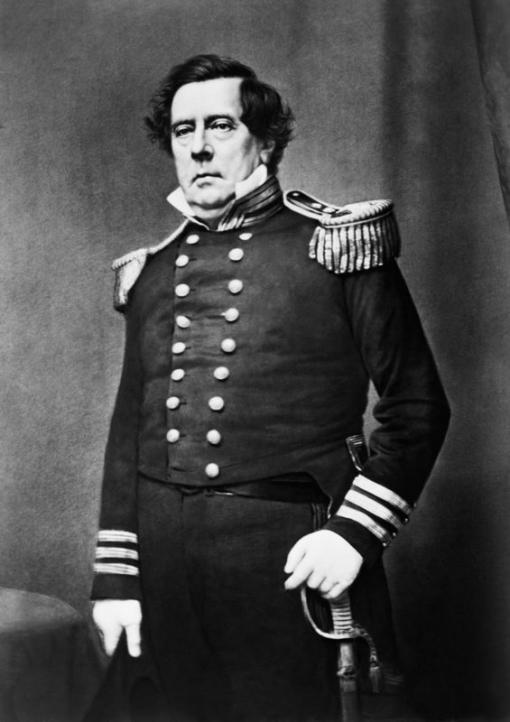
On the 8th of July 1853 US Navy Commodore Matthew C. Perry anchored at Uraga Harbour near Edo (modern-day Tokyo) and presented officials with a letter from President Millard Fillmore, which demanded that Japan, which had been largely closed to foreigners for two centuries, open its borders to US trade. To show that he was serious Perry bombarded the harbour with explosive shells, and when he returned a few months later he found the locals willing to sign up to the Convention of Kanagawa, which established, among other things, minimal import taxes for foreign goods.

In the years that followed Japan was obliged to conclude similar treaties with other Western powers, and the influx of cheap imports plunged the country into economic chaos. The feudal order of the 250 year old Tokugawa Shogunate collapsed under the pressure, its demise speeded by military intervention by the US, France and Britain. It was followed by the Meiji Restoration, which laid the foundations for the modern industrialised Japanese state, though the remnants of feudalism were not entirely swept away until the defeat of the Satsuma Rebellion in 1877 (an event portrayed, with considerable artistic licence, in the film The Last Samurai).

I mention this because I can see parallels between the hierarchical society of sakoku-era Japan and the regime we know in Second Life. What commerce there is with the outside world is strictly regulated by the ruling caste, who either directly control the marketplaces, or take a hefty cut of transactions. In-world manufacturing is dominated by small-scale craft producers, and success in this field is dependent on acquiring mastery of relatively low-tech but somewhat esoteric skills. Borders are closed, there is no democracy, and the population lives and dies at the whim of their masters.

Like feudal Japan Second Life is threatened by a tsunami that may sweep away the present economic certainties. This peril does not come in the shape of a warship, but in the seemingly harmless form of mesh imports.

The plan to allow import of content created using professional 3D design tools like Maya or Blender was first announced back in August, and recent reports have suggested that it will become reality soon. The Second Life design market is currently protected by the fact that there is little incentive for professional digital designers to learn how to build with prims, since there is no application for the skill outside of SL. Once they are able to create virtual objects using the knowledge they already have it’s more likely that they (or the companies that they work for) will see SL as a way of making some easy cash. Existing SL designers will find themselves exposed to competition from a well-established industry, whose advanced products will make their painstakingly sculpted prim creations look hopelessly primitive, and their businesses will be unable to survive.

Will this opening of the market to outside competition be a bad thing for the average non-entrepreneurial resident? The quality of virtual items will rise, and they will probably be cheaper too, since production will be more efficient. The grid as a whole will survive, as the Lindens are sure to impose a healthy tax on mesh uploads to keep their revenue stream flowing. There may be less circulation of L$ within the world, as the dominant businesses are less likely to be resident-owned concerns, and would be extracting their profits rather than spending them on the grid, but this would just mean more real money would have to be transferred in to allow residents to buy stuff, which would also boost the Lab’s bottom line.

What might change is the nature of the SL experience. The idea that all residents have the tools at hand to create their own reality will fade, to be replaced by a culture where our avatars exist only to consume the products that are manufactured for us. Second Life, which seemed to offer an antidote to the alienation of capitalist society, will have become just one more expression of it. I guess this is progress though, and we can no more resist it than the Samurai could halt the march of modernity and expel the barbarians. We can only hope that this is just the first step in a process of proletarianisation of the SL population that will one day create the conditions for more progressive social change.