Lunar Requiem

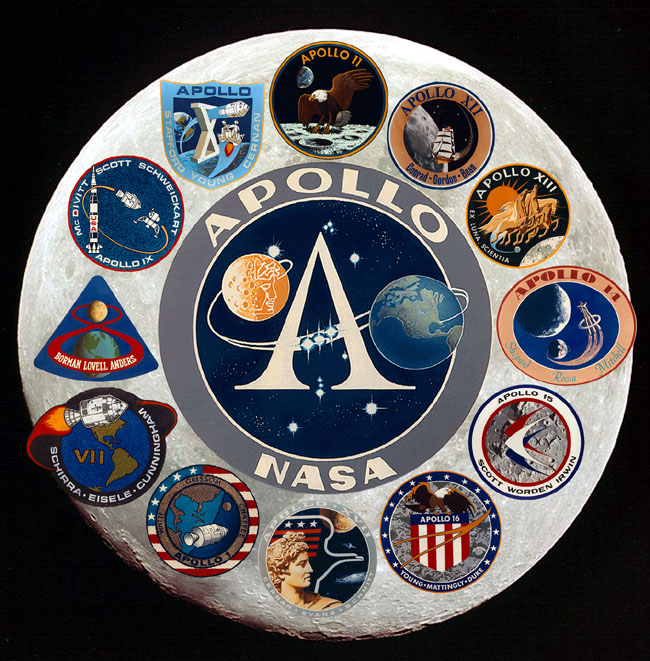
Back in 2009 we ran a piece marking the 40th anniversary of the first moon landing, which noted wistfully that the vision of widespread space travel promised by the Apollo program had never been realised. We returned to this theme on the 50th anniversary of Yuri Gagarin’s maiden space flight, by which time our regret had expanded to cover the passing of the whole concept of progress through rational planning.

The news that Neil Armstrong has passed away is another reminder of how much the world has moved on since the days when flying to the moon was the peak of human aspiration. In a few more years an era in which there exist living men who have walked on another celestial body will have passed completely, with no sign that it will ever be repeated, a thought which I find almost unbearably sad.

Of course the Space Race of the 50s and 60s was driven by Cold War tensions, and it’s hard to argue that the threat of global thermonuclear destruction that hung over that period was a price worth paying for the dreams of space exploration. Nevertheless, I think our culture has lost something important since then; the sense that we could go ever onward and upward, replaced by the generally gloomy feeling that our best days as a species are already behind us.

All hope is not lost though; we’re still sending robots to other planets, and the information they send back may inspire another wave of space enthusiasm. I might yet make it to Mars after all…

God save your mad parade

I know that at least a million other bloggers will be posting this link today, but I’m hardly going to let the occasion go by without taking the chance to simultaneously state my republican sympathies and revisit my punk rock youth.

Wasted Youth

Today (or actually yesterday, since, in true slacker fashion, I haven’t got round to posting this until after midnight), was the 30th anniversary of the launch of the ZX Spectrum. Unsurprisingly, the internet has been awash with articles by 40-something guys fondly recalling long hours spent honing their programming skills on the iconic machine, and pitying later generations, who may have iPads and Twitter and what have you, but missed out on the character-building experience of wrestling with a rubber keyboard to produce the 8-bit classics that founded the video-game industry.

I have to admit that I was one of those sad cases who spent too much time alone in my bedroom typing code, when I should have been out engaging in healthier youthful pursuits, like smoking, drinking, or committing acts of petty vandalism. It doesn’t seem to have done me any harm in the long term though, as long as you don’t count my ongoing tendency to stay up all night blogging about obsolete computers.

Planned obsolescence

I have a somewhat ambivalent relationship with cutting-edge technology; in theory I am in favour of keeping bang up to date, but in practice I find myself hanging on to old gadgets long after they should have been consigned to the recycling bin.

It’s only fairly recently that I got an LCD TV, after spending years squinting at a vintage 14-inch Sony Trinitron, latterly augmented with a digital tuning box (and an RF-modulator, since it didn’t have a SCART socket) when they turned off the analogue signal. I would still have it today, but it stopped working, and I couldn’t find anyone willing to even look at it, never mind fix it, though it was probably a simple enough job.

This state of affairs is mostly due to a combination of laziness and stinginess – I’m driving around right now in a car with two broken mirrors and a busted heater, because I resent paying the inflated fee the mechanic would charge me for swapping a couple of parts, but I can’t be bothered going down to the scrapyard to get the bits myself – along with a high tolerance for imperfection; if something isn’t actually going to kill me I can usually put up with it. That’s not the whole story though; despite being avowedly anti-conservative there is a large part of me that is resistant to change. Jobs, cities, relationships; I’ve stayed in them all long after it would have been sensible to leave. This is probably down to a subconscious fear of death or something; I should perhaps try to work through it in therapy, but I guess it has saved me a lot of money over the years.

All this is a roundabout way of explaining why there hasn’t been much in the way of Second Life content in this blog recently. When I last downloaded an updated version of the viewer (which was a while ago, so it’s not even the latest one), it had the not entirely unpredictable effect of slowing my venerable desktop box to a crawl, making my SL experience even more tiresome than usual. I suppose that I should try using some nimble third-party viewer, but the task of identifying one that is both reliable and linux-friendly seems like too much of a drag right now, and anyway the Lindens seem to be freezing out the TPV developers, so it would probably only be a temporary fix.

Thus I have reluctantly come to the conclusion that my trusty 12 year-old 1.6 GHz P4 has reached the end of the line, and that I need a new computer. The simplest solution would be to buy a ready-built machine, but I want to reuse as many components as possible, and the case, keyboard, mouse, monitor, hard drives and optical drive are all perfectly serviceable, so I think I’ll go down the DIY route.

I’ll need a new motherboard, processor, RAM, and a graphics card (I’d keep my not-too-ancient nVidia Ge Force 7-series, but it’s got an AGP plug). I’d really like an Intel I-7, but they are rather expensive, so I’ll probably settle for an I-5, which should do me for a few years; processor/motherboard/memory bundles can be had for between £200 and £300. Add in a GeForce 500 card at about a ton, and that’s a fairly nifty system for under £400.

On the other hand, who uses a desktop computer these days? I could take the money and buy a new iPad, which would do for 90% of my computing needs, pretty much everything except Second Life in fact. I do like to have a big hard drive to keep my data on, since I’m far too paranoid to trust the cloud, but I don’t need a fancy new processor or graphics card for that.

Still, I guess my inertia will keep me from wholeheartedly embracing the new paradigm of mobile computing, and I probably will end up trying to rejuvenate my old desktop. I doubt I’ll get round to it much before the summer though, so this blog will remain misleadingly named until then at least.


Davy Jones R.I.P.

I’m too young to have experienced The Monkees first time around, but the show was a staple of after-school TV when I was growing up in the 70s, and their movie Head became one of our late-night favourites in my student days, so I was sad to hear that Davy Jones had passed away. Another sign that time is moving on I guess.

Leap of imagination

When I was at school there was a boy in my class whose birthday was on the 29th of February. I was always a bit jealous of this, because it seemed like some sort of magic date, upon which special things would happen.

I’m much older and more rational now of course, but I still get the feeling that the extra day is a bonus, one which postpones my fated demise by 24 hours, and that I mustn’t waste it on dull everyday life, but instead do something out of the ordinary.

But, with my characteristic lack of foresight, I failed to take time off work, so today has been just like any other day. I’ll have to get it together for 2016…

Time takes its crazy toll

The news that Kim Gordon and Thurston Moore are to separate has caused a wave of consternation to sweep around the internet, as all we ageing Sonic Youth fans are forced to confront the fact that a band that seemed young and vital back when we were young and vital has members who have been married for 27 years, and are in their 50s.

I guess I’m not alone on The Diamond Sea

Steve Jobs R.I.P.

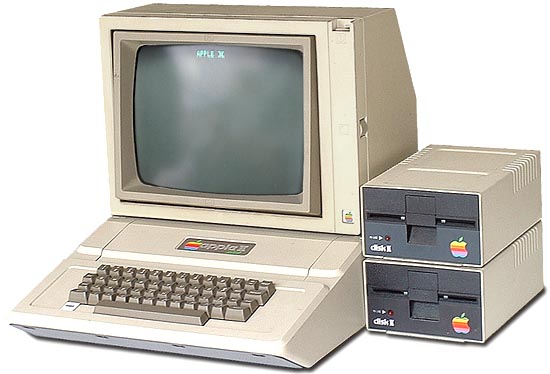
I’d love to say that my first-ever computer was an Apple II, but it wasn’t, it was a ZX Spectrum; I just fantasised about having an Apple II, which seemed like a properly futuristic machine when I read about it in Omni magazine in the 1980s. I never actually got round to buying an Apple desktop, even when I had the money; at some point I was seduced by the counter-cultural charms of Linux, and have stuck with that ever since.

I do however have an iPhone, and I think I can say without much exaggeration that it has changed my life. I guess that an Android smartphone would have had the same effect, and preserved my open-source purity, but Apple got to me first, and, at this point in my life, I can’t be bothered with the dislocation of changing software ecosystems.

I am planning to get an iPhone 4S, despite the lukewarm reviews, since my current model is a 3G, which is getting to be embarrassingly clunky. It’ll be interesting to see if Apple’s products can retain their cachet now that Steve Jobs is gone, or if people will finally notice that everyone and their granny has an iPhone or an iPod, and Apple are just another producer of (somewhat overpriced) consumer commodities.

The wrong move at the right time

Regular readers will know that I have an interest in internet addiction, but I came to that via impulse control disorders in general, and pathological gambling in particular.

The BBC reported this week on the release of the British Gambling Prevalence Survey 2010, produced by the National Centre for Social Research for the Gambling Commission. It’s a fairly hefty document, and I’ve only managed to read the executive summary, but even that contains plenty of food for thought.

The headline figures are that 73% of the adult population gambled in the last year, up from 63% the last time the survey was done in 2007. Problem gambling, as measured by the DSM-IV criteria, was up from 0.6% to 0.9% in the same period, though it hadn’t risen significantly on the Problem Gambling Severity Index (0.5% in 2007 and 0.7% in 2010). These numbers are similar to the rest of Europe, but lower than the US and Australia.

One thing that surprised me was that the prevalence of online betting hadn’t increased much in the last three years. Excluding online purchase of lottery tickets, which they didn’t measure last time, the rate was 7%, up from 6% in 2007; 81% of gamblers place their wagers exclusively offline. Within this certain types of online betting are more popular though; 39% of casino gamers play on the internet.

The betting landscape has certainly changed a lot since I was a child. My grandfather liked to play the horses, which back then involved visiting the local bookie, a sinister establishment next to the pub, with blacked-out windows and a permanently smoky atmosphere, frequented by the shadiest-looking characters in the neighbourhood. He used to take home the little pens to give to me, which my mother would immediately confiscate, lest I take them to school and shame our family with the association of vice. I take after my grandfather in a lot of ways, but I must have internalised some of his daughter’s disapproval, because to this day I have never set foot inside a betting shop. I’m rather ashamed of this, as it feels like I’m betraying my working-class roots in favour of a notion of bourgeois respectability, but my mother’s scruples have probably saved me a lot of money over the years.

My grandfather’s other flutter of choice was the football pools; a sacred ritual in our family was gathering around the television at about ten to five on a Saturday to listen to the classified results. As eldest grandchild I had the responsibility of recording the scores as they were announced; the mention of lower-league English teams like Huddersfield or Gillingham still takes me back to cosy teatimes all those years ago. I was sad to see that the explosion of alternative gambling opportunities in recent times has all but killed off the pools; only 4% of the population put on a coupon now.

The change in social attitudes to gambling can be traced back to the introduction of the National Lottery in 1994; overnight gambling became a government-approved leisure activity rather than a disreputable habit looked down upon by polite society. The whole industry was deregulated, with bookies allowed to put signs in their windows advertising what went on inside, and to install seats to encourage their customers to linger; a far cry from the dens of ill-repute my grandfather used to frequent.

Card gaming, poker in particular, has had quite a makeover too. It used to be a game associated with cowboys and gangsters, or at best the idle super-rich in places like Monte Carlo. I do remember, in my youth, being quite taken by Steve McQueen’s character in The Cincinnati Kid, but “professional poker player” was never going to be among my career choices. The advent of internet and televised poker tournaments has changed all that, and now the game is played by a whole host of perfectly respectable, and decidedly unglamorous, doctors, lawyers, accountants and the like.

A year or so ago I was seeing a client who had a bit of an issue with internet poker, and, out of curiosity, I registered with one of the online casinos and tried playing for a while. I’d like to say that this plunged me into a House of Games-style maelstrom of underworld intrigue, but since a) I limited myself to a $10 roll and nickel-and-dime tables and b) I am a dreadful poker player and lost all my money in short order, nothing nearly so interesting happened.

Every so often, usually when I am bored at work and daydreaming about alternative income streams, I return to the virtual tables, generally with the same result. This last month was different though; despite playing my usual ham-fisted game I went on a pretty good run, boosting my $10 stake up to over $60, before enduring an equally persistent losing streak, which had, by yesterday, reduced my stack to $15.30.

This experience has given me a bit of insight into some of the psychological phenomena associated with gambling that I had previously only read about. Simple arithmetic tells me that my latest session has been much more successful than previous forays, since I have ended up 53% ahead rather than 100% behind, but that’s not how it feels, and the temptation to chase my “losses” by playing more, or moving to a higher-stakes table has been pretty strong. It’s also been interesting to note how my feeling for the game mechanics, particularly the balance between luck and skill, has changed as my fortunes have varied; when I was hot I was convinced that I was playing masterfully, but as the money ebbed away I found myself cursing the bad cards I had been dealt.

I guess I should be happy that I’ve received some valuable professional education, and been paid $5.30 into the bargain, but I can’t help thinking about the $45 that got away, and how, if I just kept playing a little longer, the law of averages would throw a few good hands my way again…

Downhill Racer

It’s kept on snowing over the last couple of weeks, so I thought I should follow through on my plans to go skiing. I still couldn’t summon the energy to go up to the actual mountains though, so I figured I should see what Second Life had to offer in the way of winter sports. I got myself kitted out at the Zagoskin Ski Shop, for a surprisingly modest sum – skis, boots, poles, ski-suit and goggles for under L$500 – then headed over to the Nakiska Ski Club to hit the piste:

The panorama was certainly impressive, and the run ahead was invitingly steep, so I pushed off and shot away down the slope:

Down at the bottom there was a futuristic mountain train waiting to take me back up the hill:

It was fun for a while, but after a few runs it began to get a little dull. The AO that came with the skis allows one to steer from side to side, but one can’t really do anything more complicated than zig-zaging down the slope. I guess it might be more exciting if there was a slalom course laid out, or if one was racing with someone else. I should probably check out some of the other Second Life ski resorts to see if they are any more thrilling.

The experience reminded me of nothing more than the classic ZX Spectrum game Horace Goes Skiing. I’ve been similarly underwhelmed by other interactive activities on the grid – nice graphics in the service of eight-bit gameplay seems to be the rule for such things.

I was also a little disappointed, though not entirely surprised, to find that I was the only person at the resort, since I always feel that the conviviality of the après-ski is a crucial part of any winter holiday. It’s a shame it was so quiet, because the one big advantage that Second Life has over stand-alone simulations, the thing that makes up for all the limitations, is its social aspect. Maybe next time I go it will be a bit more lively.