2022: The year in review – Part 1: Culture

It’s time once again for the annual audit of my engagement with contemporary culture. As ever the full story is on our Tumblr; here are the best bits:

Television – I still subscribe to several streaming services, but despite this I’ve been watching a lot less TV this year compared with last. I was going to say it was mostly lightweight genre programming, but looking back I see it was actually exclusively lightweight genre programming; I evidently no longer have the intellectual stamina for the sort of serious dramas that the critics recommend. I liked Moon Knight, and The Rings of Power was pretty to look at if ultimately rather unsatisfying, but, judged by the speed with which I binge-watched it, my vote for most enjoyably diverting show would have to go to season two of Only Murders in the Building.

Film – At the start of the year I took out a membership at our local arthouse cinema, fully intending to get back into the independent movie habit; let’s just say that hasn’t quite worked out, though I did manage around one film a month. Honourable mentions go to Amsterdam, Licorice Pizza, and Nightclubbing, but I’ll try to maintain my cinephile credibility by nominating a film with subtitles as my favourite; The Worst Person in the World.

Books – My major literary project this year was reading The Brothers Karamazov, which I found every bit as good as its reputation suggests; satisfying philosophically but also narratively, with characters so vividly drawn that one never feels they are mere mouthpieces for Dostoyevsky’s ideas, rather than living, feeling individuals. I have some regret that I didn’t tackle this great work years ago, but on the other hand I also believe that the books that stay with you are the ones you read at the right time in your life; perhaps late middle-age is when I needed to meet Fyodor Pavlovich Karamazov and his sons. My other obsession in 2022, inspired by my trip in the summer, involved books about life in California; highlights in the fiction category included works by Bret Easton Ellis, Edward Bunker, Joan Didion, and Armistead Maupin. My favourite book of the year was something more contemporary though; I Fear My Pain Interests You, by Stephanie LaCava.

Music – I’ve purchased rather fewer albums this year than usual; I think it’s because I’ve not been listening to the radio or reading the music press much. Still a lot of good stuff though; here are my top eleven, since I can’t quite edit it down to ten:

I didn’t get to see much live music this year; of the shows I did attend Kim Gordon was the one I really enjoyed.

So that’s the year in culture; not particularly adventurous I guess, but not totally ossified either. Next up: blogging.

700-ish

In an indication that I am perhaps not paying as much attention to this blog as I used to, I completely overlooked the fact that the post before last was our 700th, and thus missed the chance to do one of our traditional century-celebrating pieces. In lieu of that I’ve gone back and marked all the previous ton-up posts with a special “Century” tag, which hopefully will remind me to write something more notable when number 800 rolls around, which, at my current pace, should be sometime in 2025.

The art of patience

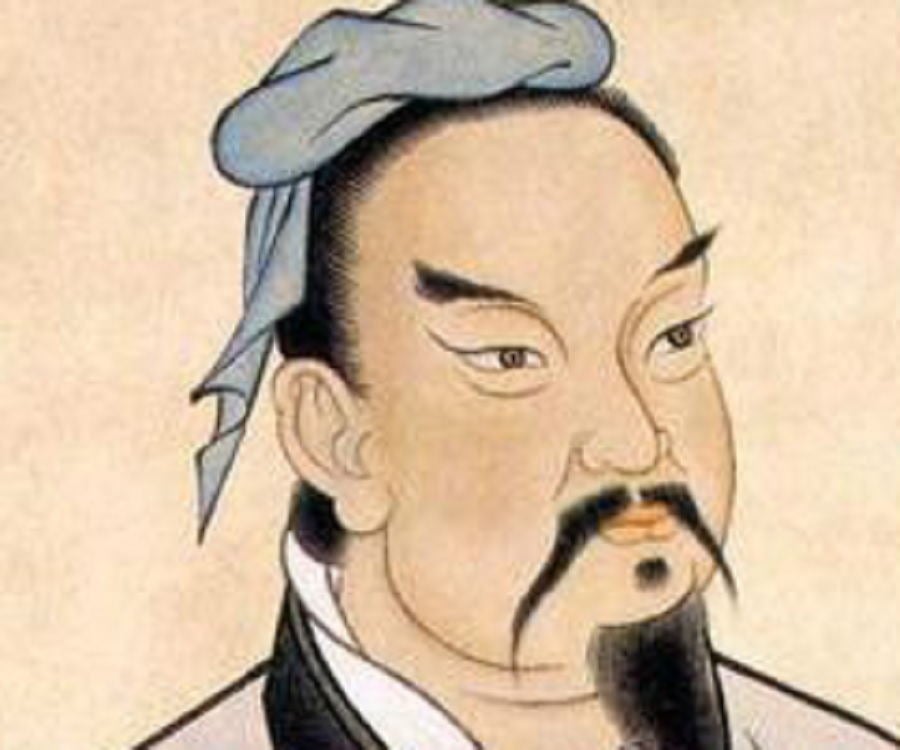
I’m pretty sure it was Sun Tzu who wrote something to the effect of “If you wait by the river long enough, the bodies of your enemies will float by”, and so it has proved, as some of our half-forgotten prophecies seem set to bear fruit; Twitter is heading for bankruptcy, crypto is in meltdown, and Donald Trump is going to jail.

Unpacific heights

The undoubted highlight of 2022 for me was my trip to the US in the summer. I had a particularly agreeable time in San Francisco; lazy days in peaceful parks, intriguing art in quirky galleries, culinary discoveries in exciting restaurants, and a climate that was pleasantly warm, but without the stifling heat and dust of Los Angeles.

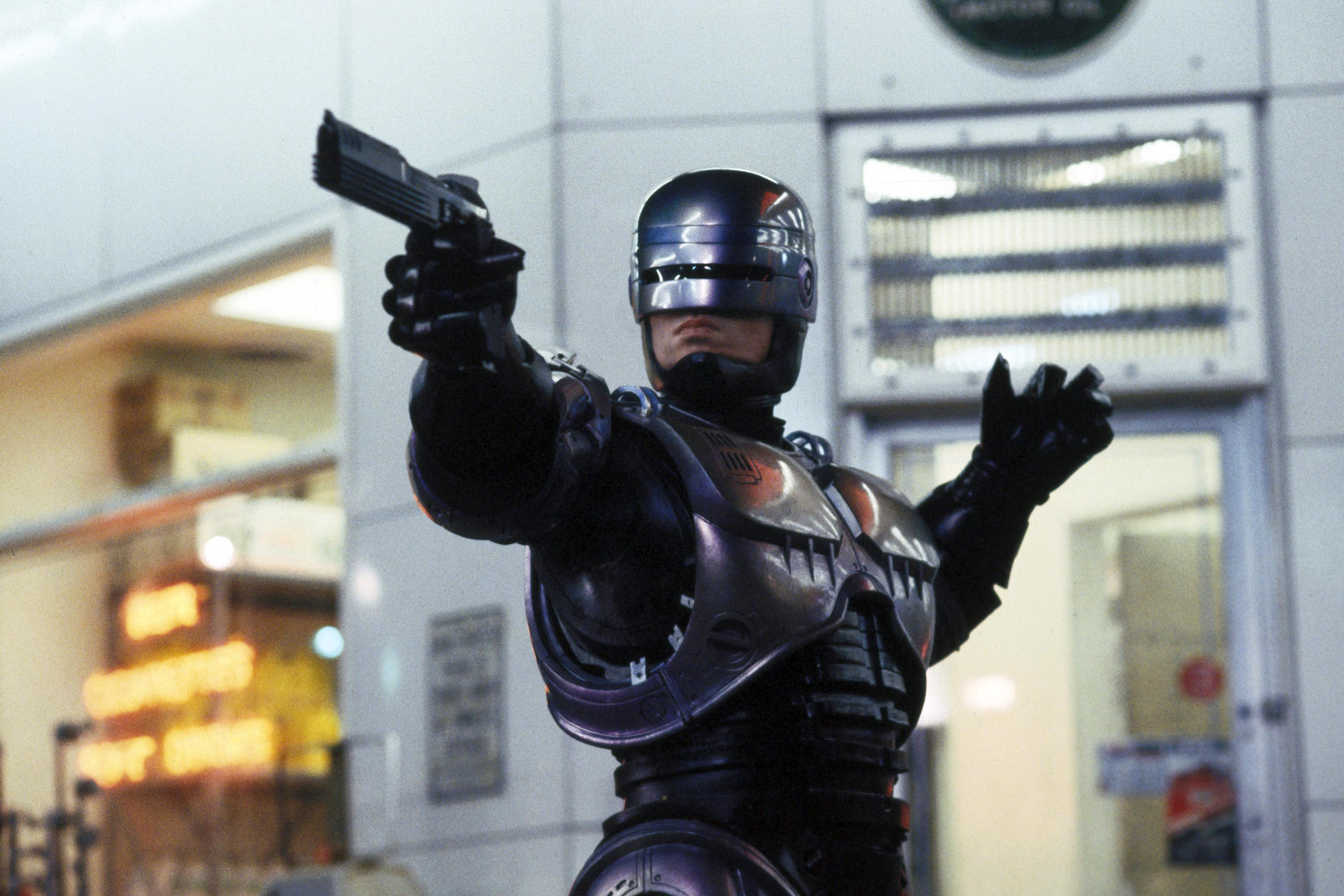
I’ve been daydreaming about returning to the Bay Area more or less from the moment I stepped off the return flight, but I must admit I’ve been given some pause by the news today that the SFPD are planning to enhance their crime-fighting effectiveness by deploying killer robots on the city streets.

The actual story is perhaps a little less alarming than the lurid headlines; the androids in question will not be autonomous, and will only be armed in extraordinary circumstances, but still, I’ve seen Robocop, and Terminator, not to mention Blade Runner, so I know one can’t be too blasé about these things. I guess I could always move to Oakland instead…

Martian forward

In a week when discouraging news wasn’t hard to find – the war in Ukraine spilling over into Poland, Donald Trump hitting the comeback trail, the UK government gearing up for another round of austerity – it was heartening to see NASA’s Artemis spacecraft finally get off the ground.

We’ve written before of our disappointment that, well into the 21st century, lunar bases aren’t yet a thing, so I’ve got my fingers crossed that the mission goes without a hitch, and the project to use the moon as a stepping stone to Mars comes to fruition within my lifetime. I don’t think things on Earth are quite so bad that leaving the planet is our only hope, or not yet at least, but it’s good to have a plan B…

BBC centenary

It was one hundred years ago today that the British Broadcasting Company, as it was then, transmitted its first programme on the wireless, a news bulletin from London, covering, among other things, billiard scores and the foggy weather. Or it may have been a children’s programme broadcast the previous day from Manchester; records of those pioneering days are a little sketchy.

Whatever the details, when viewed from the perspective of today’s fractured and fractious media landscape it’s hard not to feel a sense of longing for the days when broadcasting was viewed as a way of “spreading culture and good sense”, an antidote to the horrors of the Great War. More recently, the internet seemed to hold similar promise, but that hasn’t really worked out either. Perhaps the next telecommunication revolution will be more successful…

Blue midterms

A problem faced by all political candidates, particularly those operating in highly-polarised environments, is that the positions they have to adopt to get ahead in their own party can prove to be a serious liability when presented to the general electorate. This can be offset to some degree by a tacit understanding between politicians and voters that certain policies are for internal party consumption only, and that, once the election is won, they will be quietly abandoned.

Recent history has destabilised this arrangement however; the example of Donald Trump, who in office was even crazier than he had been on the campaign trail, seems to have convinced floating voters in the US that aspiring public servants should be taken at their word.

Thus the widely-predicted wave of Republican success has failed to materialise, and the Democrats have done remarkably well for an incumbent party at this point in the electoral cycle. Trump-backed candidates touting election-denial and abortion bans have largely floundered, leaving the man himself with a somewhat more difficult path to the GOP nomination in 2024.

It’s not all good news of course; the House is still on course to turn red, which will stymie Joe Biden’s modestly progressive programme, and control of the Senate may once again depend on the outcome of a run-off election in Georgia. The longer-term outlook is a little brighter though; Trump’s new vulnerability will embolden party rivals like Ron DeSantis, and the resulting struggle for the hearts of the ever more extreme Republican base can only further alienate the mass of the electorate.

That doesn’t mean that that Biden can relax about his re-election – the GOP will be redoubling its voter-supression efforts in response to this setback, the economy is still a potential time-bomb, and there may be any number of as-yet unknown crises waiting to break out in the next 2 years – but the odds on seeing Trump, or a Trump-clone, back in the White House are a bit longer than they were 24 hours ago.

Midterm blues

A couple of weeks have passed without a change in Prime Minister, and this relative stability has allowed my attention to drift from what is, in global terms, the sideshow of UK politics to the rather more consequential events on the far side of the Atlantic.

For a while over the summer it looked like the Republican assault on women’s rights would provoke enough of a backlash to preserve Democrat control of both houses of Congress, but as winter has set in the cold economic winds seem set to blow Joe Biden’s legislative programme off course by delivering GOP majorities in the House and perhaps the Senate.

Some commentators are predicting a descent into civil war should the Republicans prevail; that seems a little hyperbolic, or at least I hope so. My take is that the MAGA-fication of the GOP is a blind alley; the influx of assorted kooks and oddballs will fracture the party into a myriad of conspiracy-obsessed factions that will consume themselves in internecine hostility long before they pose any serious threat to the integrity of the nation.

That’s not to say that there won’t be a great deal of unpleasantness ahead, especially once Donald Trump declares his candidacy for 2024, an announcement that may come as early as tonight. Detaching oneself from reality is not a recipe for long-term political success though; as this year in British politics has shown, eventually the facts catch up. Whether the US electorate will figure this out this while they still have the right to vote is the big question; I guess we’ll have a better idea of the answer by this time tomorrow.

Boris bottles it

So, the Tories have the coronation they were looking for, as Rishi Sunak ascends to the premiership by default. Penny Mordaunt failed to generate enough enthusiasm among her colleagues, while Boris Johnson belatedly realised that presiding over a hopelessly divided party might be more hard work than he cared to take on.

What will PM Sunak have to offer a fearful country in its hour of need? It’s hard to tell, since he did not deign to put his platform before the electorate (and he has indicated that he has no plans to do so in the immediate future), but it seems likely that he will attempt to reassure the markets with another round of austerity. He may find the population less amenable to this approach than he imagines. Political and economic stability still looks some way off.

Déjà Boris

I guess an indication that one is living through a true political crisis is when things that seem inconceivable one day appear to be inevitable the next. Thus it is that the country is bracing itself for the return of Boris Johnson to the head of government.

It’s not quite a done deal, as there are plenty in the influential circles of his party who recoil at the prospect of Johnson’s rehabilitation, but he does look likely to secure the 100 nominations that would probably be enough to put him into a head-to-head contest with Rishi Sunak. Since the final decision will once again be taken by the Conservative membership, the body that saw no problem with Prime Minister Liz Truss, Boris may soon be settling back into Number 10.

Would this development make a general election more or less likely? Johnson can just about plausibly claim that no vote is needed, as he already has a mandate from the public, which would offer nervous Tory MPs some hope that they could avoid a reckoning with the electorate until their poll numbers were a little less catastrophic. Whether the country would stand for that is another question of course; I for one would be out on the streets should we be denied an opportunity to express our democratic judgment on the situation, and I’m sure many of my fellow citizens feel the same. The country would become ungovernable, at just the time when some competent government is needed to avoid disaster.

As has been the case on many occasions in the last few years, we are left to hope that those in power have the wisdom to put aside narrow interests and do what is right for the whole population. Since our experience has been that they invariably do not, we would perhaps be better to start thinking about securing the power to do so ourselves.