Four Years

It was four years ago today that I started writing this blog, and I’ve managed to keep up a fairly steady flow of posts since then, with the biggest gap being about three weeks I think.

Inexplicably, my literary endeavours in this space have, as yet, failed to bring me fame and fortune. Perhaps sometime in the next twelve months the world will finally wake up to my genius, if my senses don’t fail me.

Do You Believe in Rapture?

Readers may have noted that I’ve not been posting much recently. This is of course in line with my general slacker ethos, but it’s been even harder than usual to rouse myself to action of late; what with the Rapture forecast for this weekend, blogging seems rather pointless.

I’m not entirely familiar with the finer points of evangelical eschatology, but, as I understand it, Christ himself is going to visit Earth tomorrow, and bodily transport the faithful straight to heaven, while the rest of us are left behind to face the wrath of Satan and his minions.

If this miraculous event does come to pass (the pastor predicting it may not be completely reliable), I wonder if we will actually notice much difference, apart from the sudden disappearance of the most annoying 10% of the population. Humankind is well capable of creating mayhem without Beelzebub’s input, so if the Dark Lord is given untrammelled dominion over the mortal plane he may decide just to sit back and let us go on heading straight to hell in a handcart all by ourselves.

[I couldn’t decide which of two tunes was best to accompany this post; this Sonic Youth track is one of my favourites, but it would be criminal to cover this topic without linking to this classic by Blondie.]

Apple stalk

Another day, another reason to be paranoid. It turns out that my seemingly trustworthy iPhone has been secretly recording my every move, for goodness knows what nefarious purpose.

I would be worried, were it not for the fact that, sadly, I haven’t been anywhere remotely compromising in longer than I care to remember.

The (Un)Freed Weed

This time last year we were celebrating International Marijuana Day and looking forward to political developments on both sides of the Atlantic that promised a brighter future for aficionados of the noble weed. Sadly, our hopes turned out to be as insubstantial as smoke in the breeze; in the UK the Liberals did end up in government, but have, as yet, failed to rationalise the drug laws, while in California Proposition 19 fell agonisingly short of success.

So, another year of furtiveness beckons. I guess the habit might lose some of its outlaw charm if it was legalised, but a more relaxed approach would reduce the risk of burning out.

Spaced Out

Talking of Yuri Gagarin’s historic space-flight prompted me to revisit a favourite spot in Second Life, the International Spaceflight Museum. They have nicely-rendered models of various rocket-ships from around the world, including the latest Indian and Chinese models:

The big rocket second from the right is a Soviet N1, designed to take cosmonauts to the moon; unfortunately all the test flights exploded shortly after take-off, and the programme was abandoned. Next to it is an American Ares V, which was set to be the launcher for the Moonbase and Mars expeditions, but that programme was cancelled last year.

More successful Soviet craft are featured too, from the Vostok and Voskhod boosters of Gagarin’s day, to the Soyuz workhorses, and the current Proton rocket which, now the Space Shuttle has retired, is the only way to get big things up into orbit:

The Museum also has an earth-orbit exhibit, featuring the International Space Station. I felt a little exposed in my normal clothes, so I quickly scored a nice retro-style space-suit (from Aurican’s Pyramid Store), before venturing into the vacuum:

Now I had the suit it seemed a shame not to do some more space exploration. Back at my little mountainside home I quickly build a mini launch pad, and picked up a cool little space-coupé (a PS-1 Dart by PlasmaStorm Industries at Port Clarke):

My original plan was to zoom around my neighbourhood (which, incidentally, seems to have gone completely to the dogs since last time I looked, abandoned land everywhere, but that’s a topic for another day), but after a few jarring collisions, presumably with the sim borders, I gave up on that and headed into deep space.

First stop was Tranquility Base on the Moon:

Then on to see the big starships at Talmont Space Port:

Finally, some chill-out time at Inspire Space Park, where one can meditate while tumbling through the celestial sphere:

and relax in front of a nice warm fire:

Recreating outer space is perhaps the perfect use for Second Life, since the relatively featureless terrain means it all renders nice and quickly, and the characteristic lack of other people adds to the verisimilitude. I would quite like to get into some space-based role-play, but I don’t really have the time to devote to that right now. Another project to add to my list for later in the year.

Red star shines on

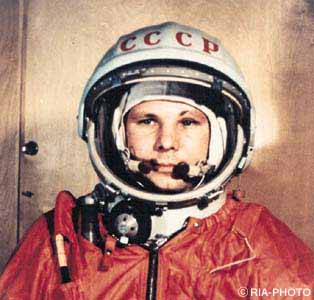
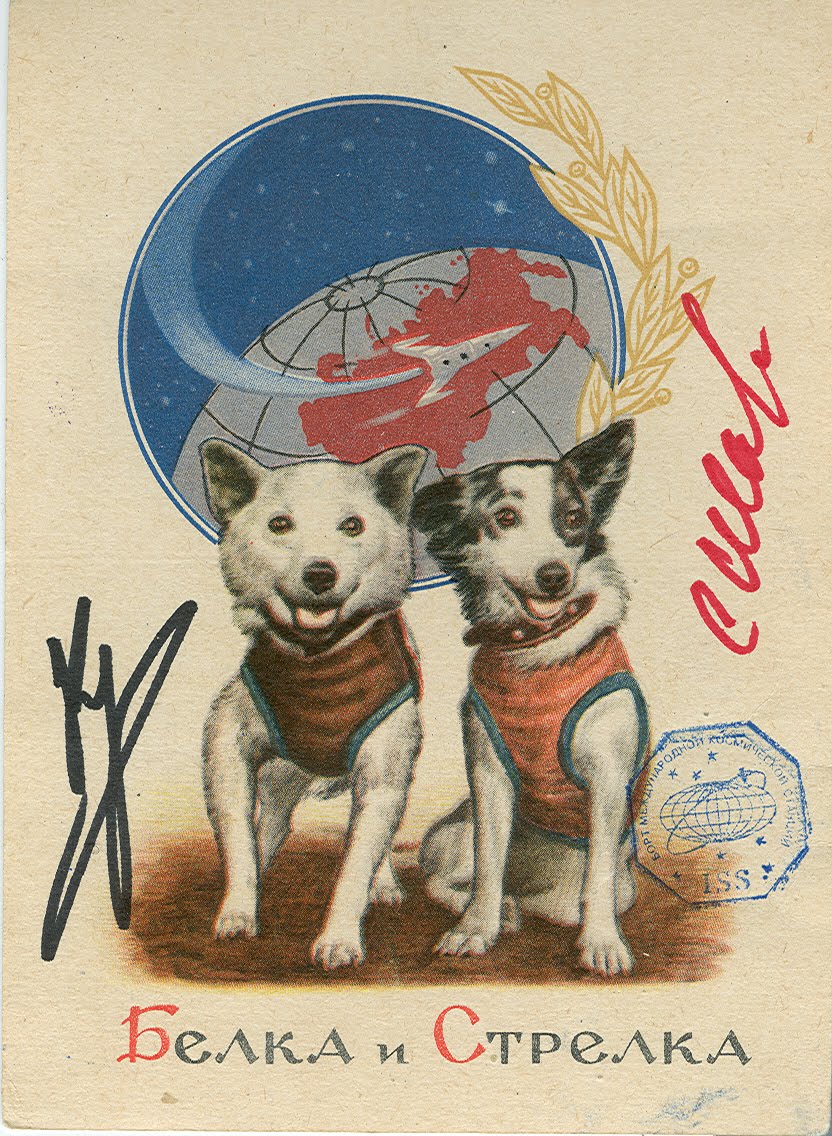
Fifty years ago today, Yuri Gagarin climbed into a small capsule atop a Vostok rocket and blasted off to become the first human in space. The Soviet programme had previously launched a few dogs into orbit, and had brought most of them back alive, but, even so, Gagarin must have known that his mission was insanely risky, and his courage is still inspiring today.

Gagarin’s historic flight resonated far beyond science, deep into general culture and Cold War politics. This wasn’t just a man going into space; it was the frontier of humanity being expanded by the son of a farmer from Smolensk, the technological triumph of a nation that just half a century before had been a pre-industrial backwater, the ultimate demonstration of the superiority of Soviet planning over the capitalist economies left struggling in its wake.

Of course we now know that this confidence was misplaced, for a number of reasons. The drawn-out failure of the Soviet experiment ushered in an era where it became accepted wisdom, even on much of the left, that inequality and injustice were the natural state of the world, and talk of building a new society freed from want by the application of human intellect was utopian. The best we could do, we were told, was to let the market run free, and trust to the charity of our rulers, with some light government regulation, to spare us from the worst excesses of unrestrained capital.

The financial crisis of the past few years has seriously undermined this theory, as living standards for the mass of the population have plummeted, while the rich have continued to get richer. People are again wondering whether there may be a more efficient way of organising society; the hope of a better future embodied by Gagarin and his fellow cosmonauts still has some life in it. The Soviet model of a planned economy may not have lived up to its initial promise, but the next iteration could still take us to the stars.

Win some, lose some, it’s all the same to me

The New York Times had an interesting piece this week profiling top online poker player Daniel Cates, and seeking to identify the secret of his success. The short answer seems to be “Asperger Syndrome“, but the details of how hours spent playing resource-management games like Command and Conquer sharpen the skills needed to triumph at the virtual card tables are certainly fascinating.

The key message though is that even a good player is at the mercy of fortune, and skill will only out over the course of thousands of hands, with many a losing streak along the way. It evidently helps to be able to see money as just an abstract way of keeping score rather than something actually valuable, especially when one can lose over $4 million in a few hours.

My own poker habit is nowhere near that level thankfully; I don’t win, but I lose slowly enough that it qualifies as cheap entertainment. Even when the cards don’t fall my way it can still be fun – just the other day I went all-in with a King-high flush only to see my opponent turn over the Ace, but I was able to smile at the thought of him gathering in my cash while whistling the greatest song about gambling ever written.

Won’t you please be my friend?

In an effort to win back the confidence of the government, I have redoubled my efforts in the social media sphere by setting up a Facebook page unashamedly in the identity of my avatar. This clearly breaches the rules of the social networking site, but I have heard that they are turning a blind eye to SL-related profiles, so hopefully I won’t be deleted.

I currently have a grand total of zero friends, and I’m not exactly sure how I should go about remedying this problem. I guess the Lab would like me to invite all my non-virtual acquaintances over, so that I could introduce them to the joys of the grid, but, in common with most other residents I’m sure, I have a real-life reputation that I don’t want associated with Johnny Staccato, thank you very much. (It’s called Second Life for a reason.)

So I’m reduced to trawling the internet, forlornly appealing for attention. Perhaps not the best way of dispelling the notion that Second Life residents are needy, socially-challenged losers.

I think the problem is that Facebook and Second Life are functional in diametrically opposite ways; the former is useful for integrating our diverse social networks, but the latter is attractive because it allows us to dis-integrate the different strands of our personality. That the Lindens don’t seem to understand this (if they did they wouldn’t be pushing a Facebook strategy, and would have been much quicker to ban alt-linking products like Redzone) is just one more reason to be pessimistic about the future of Second Life.

The Solution

In other news, Hamlet Au at New World Notes has discovered what is wrong with Second Life; it’s the residents. His answer to this problem? We should all get lost, and let the Lindens recruit a better class of customer by befriending people on Facebook.

It puts me in mind of Bertolt Brecht’s famous poem The Solution:

After the uprising of the 17th June
The Secretary of the Writer’s Union
Had leaflets distributed in the Stalinallee
Stating that the people
Had forfeited the confidence of the government
And could win it back only
By redoubled efforts. Would it not be easier
In that case for the government
To dissolve the people
And elect another?

A few months ago I joked that New World Notes was the virtual equivalent of Soviet Weekly – perhaps I was closer to the truth than I knew.

The Leopard

This week saw the sesquicentennial of the foundation of the unified Italian state. This notable anniversary inspired me to snack on some antipasti and quaff a glass or three of Valpolicella; thus refreshed, I pulled my old copy of Giuseppe Tomasi di Lampedusa’s The Leopard from the shelf, and settled down to reread one of the classic works of European literature.

The Leopard has in fact been called “Perhaps the greatest novel of the century”, though that was by L.P. Hartley, whose admiration is understandable when one considers that his best-known work, The Go-Between is very similar thematically.

The praise is not too hyperbolic though; Lampedusa’s tale of the twilight of the aristocratic order and the rise of the bourgeoisie in the days of the Risorgimento is a compact masterpiece. It works powerfully on several levels; as a vivid description of the political events of the time, as a portrait of individuals struggling with the conflicting pulls of love and duty, but perhaps most affectingly as an examination of mortality, and the perpetual impermanence that is an inevitable part of the human condition.

That feeling of loss that pervades the book makes it a very conservative work; it is an elegy for the lost nobility, and the picture it paints of the bourgeoisie who succeeded them is decidedly unflattering. This interpretation of the events of the 1860s couldn’t be further from my own, but the novel’s melancholic tone is sufficiently sympathetic to my general outlook on life that such political differences seem irrelevant.

I may be making The Leopard sound rather depressing, and in some ways it is, but it is one of those sad stories that is so beautifully told that the overall effect is uplifting. The events it portrays may now be distant history, but the message that destruction is the unavoidable cost of progress is as relevant as ever.