That Joke Isn’t Funny Anymore

Accountant Paul Chambers was back in the news this week, after he lost his appeal against a conviction for sending a “menacing message”, specifically an ill-advised tweet in which he humorously threatened to blow up Robin Hood Airport in Nottingham. The case has prompted a flurry of indignation around the Twittersphere, with supporters complaining about censorship, and rallying to show solidarity by retweeting Chambers’ offending message.

I’m not sure how to feel about this issue. I’m all for freedom of speech, but I’m finding it hard to get too outraged about this limitation of my liberty to issue prank terroristic threats on the internet.

It reminds me of how, back in the old days, when one was standing in line at the airport, one would occasionally hear some wise-guy “joke” with the security staff with some variant of “Don’t look in there mate, that’s where the bomb is, ha ha”, which would be met with an icy smile, but no further action. Then, after 9/11, these irritating but otherwise harmless jackasses started getting hauled off to jail, and pretty soon that brand of humour disappeared. It’s difficult to say that the world is a poorer place for its passing.

That said, I guess on balance my sympathy is with Chambers, since I think that momentary stupidity, while clearly regrettable, shouldn’t actually be against the law. His faux pas is another illustration of how social media are blurring the distinction between public and private in ways that can have unexpected results. What’s passably funny when recounted to one’s immediate circle may be less amusing when it is relayed to the whole world.

I expect that, as immersion in electronic social networks becomes the norm, people will develop a keener sense of what to share and what to keep to themselves. The law will probably take longer to catch up though, so I’m going to make sure that all my tweets remain thoroughly anodyne, and not susceptible to any misinterpretation whatsoever – certainly nothing that’s too near the bone.

Living in Gangster Time

A rather curious comment arrived in the SLS inbox the other day, from someone who identifies himself as “gunmaker_guardian”. It opened with this charming salutation:

hey guyz 🙂 its me 🙂 both of u igniter and nicholas”mafia” are full of …

and carried on in the same vein for several hundred words.

Mr Guardian is not averse to blowing his own trumpet; among other exploits he claims to have:

fired my laser in THREE colors 🙂 … broke a hackers world record of 20 million packets per second … used secondlife itself to launch a mail bomb if (sic) impossible proportions … [created] a self replicating nanoscopic black dot …

and so on.

Our intrepid internet warrior’s IP address resolves to Prescott, Arizona. Who knew such mayhem could lurk beneath the surface of this sleepy burg?

I’m guessing that this comment refers to one of those Second Life “Mafia Wars” that the Alphaville Herald is always writing about. I can’t imagine why our friend felt moved to share his thoughts on the matter with us though, unless it has something to do with that JLU piece we did a while back.

Anyway, I’ve deleted the offending epistle, since we try to aim for a slightly classier tone here at SLS, and I have no desire to get caught up in any of that griefer nonsense. Hopefully that’s the last we’ll hear of it.

Still, I dread, dread to think what the future will bring…

Reoccurring Dreams

There was a lively debate amongst the commenters at Botgirl’s blog over the last week or so, concerning that perennial preoccupation of the SL intellectual elite, the question of identity in virtual environments.

I must have listened (and occasionally contributed) to this discussion dozens of times in the last three years, but I’m not sure that I’ve ever read anything that was a significant advance on what Sherry Turkle was writing about fifteen years ago.

The particular facet of the issue that we (for of course I couldn’t resist chipping in with my two cents’ worth) focussed on this time around was the significance of choosing to represent oneself in Second Life with an avatar that differs substantially from one’s corporeal incarnation, especially with regard to gender.

How dishonest is this? Moral relativist that I am, my answer to that question is “it depends”; upon a lot of things, but mainly the expectations of the parties to the interaction. In the discussion parallels were drawn with other media, such as written fiction or cinema, with the point being made that no one feels deceived when they discover that, say, Robert De Niro isn’t really a taxi driver. This is true to a degree; for books, plays and movies there are commonly accepted cultural norms that define when it’s OK to make stuff up and when it’s not, and people do feel cheated when the rules are broken.

There is much less consensus regarding online interaction though, and, crucially, in a space like Second Life there is no easy way to communicate the extent to which one is using the platform as a vehicle for personal reinvention, as opposed to expressing one’s everyday self (which of course opens up the question of where one’s “true” identity really lies, or if such a thing even exists).

I’ve noted before that the research evidence suggests that it’s harder than one might think to create a new personality in a virtual world (certainly my avatar is boringly similar to my mortal form, in appearance and character), so in theory it should be possible to get to “know” someone just by interacting with their SL alter-ego. I suspect that there are not many people who could be bothered to put in the work required for this though, and there is always the (mostly unconscious) drive to project one’s internal object-relations on to the virtual relationships, which further muddies the waters.

With all this going on it’s hardly surprising that miscommunication and unhappiness can occur from time to time. I don’t think that there’s much to be done about it; it’s the price we pay for access to the creative possibilities of the medium,  like Cézanne being poisoned by Emerald Green.

Like I said though, none of this is new, or particularly profound, except insofar as it sheds some light on that other topic that has launched a thousand SL blog posts; “Why blog about Second Life?” Why make the same points about the same issues over and over, when we could be turning our minds to something more productive? I can only answer for myself of course, but I think (as, unsurprisingly, I’ve said before) that SL blogging is essentially just another form of role-play, a chance to imagine oneself as a heavyweight intellectual commentator, without all the tiresome business of actually having to think too much about what one writes.

It keeps me amused anyhow. And I get to link to some cool music.

California Über Alles

Sadly, Proposition 19 didn’t make it over the victory line yesterday, causing intense disappointment to weed aficionados worldwide. The Federal Government had promised to vigorously enforce the US anti-dope statutes in the event of Prop 19 passing (the DEA built its power during the marijuana scares of the 30’s), so victory would probably have been more symbolic than immediately practical, but it would have moved the issue a few more steps towards a rational solution. The problem seems to have been the inexplicable failure of the stoner youth vote to turn out. Let’s hope they get their act together for 2012.

The night in general turned out just about as well for the right as had been predicted, with big Republican gains across the nation, though they narrowly missed out on gaining control of the Senate, thanks to the failure of Sharron Angle and Christine O’Donnell to win in Nevada and Delaware respectively.

The defeat of the Tea Party candidates in these races is obviously cheering, but in the long term it may prove to be a mixed blessing for the Obama administration. The 21st-century Know-Nothings may be on a roll at the moment, but I wonder if 2010 may turn out to be the high-water mark of the Tea Party, as GOP strategists assimilate the lessons of the debacle in Delaware especially, and conclude that they need to steer more to the centre if they want to win the big prize in 2012. A lot depends on how the economy goes, but Obama’s best shot at a second term must lie with the Republicans going with a wing-nut candidate rather than the sort of fiscally conservative but socially liberal mix that worked so well for the Tories here.

Meanwhile, back in California, Jerry Brown is heading for the Governor’s mansion once again, which gives me an excuse to spin this classic number by the Dead Kennedys.

Memory Lapse

About a week or so ago I was idly browsing the web when I was suddenly struck by the thought that I should buy some more memory for my desktop computer. I must have been thinking it would speed it up, or let me run Viewer 2.0 properly or something. Anyway, I surfed over to eBay to look for some of the DIMMS that my elderly box needs. Readers may recall that the last time I tried this I went to the auction site after having a few drinks, and ended up buying the wrong kind, so I was careful to only bid on PC133 modules, and managed to pick up 1GB for what seemed like the bargain price of £8, including delivery.

The chips arrived in the post today, so this evening I set to work installing them, which was a lot more bother than I remembered. The memory slots are partially blocked by the video card and obscured by the hard drive cables, so I had to take the machine half to pieces to get the modules in. Once everything was back together I switched the power on, but of course all I got was the triple beep of the BIOS “Your memory is screwed” signal.

Some online research soon revealed that there there is a subtle but crucial difference between the PC133r memory I had purchased and the PC133u memory that my machine was expecting. After a further bout of dismantling and rebuilding I had my old configuration back working again.

I guess I’m only down a few pounds and a couple of hours, and I have learned something, albeit only some almost completely useless knowledge about the inner workings of a long-obsolete computer, which will probably crowd something more valuable out of my brain. The lesson I’m drawing from this is that change is to be feared, and I should just be happy with what I’ve got.

In Dreams

Writing in Nature this month, neuroscientist Dr Moran Cerf claims to have developed a system that can read and record people’s dreams. That’s the attention-grabbing headline at least; the actual technique seems somewhat less refined, though the researchers do appear to be able to identify which neurons are activated when the subject thinks of a particular image. It does involve planting electrodes into the brain, which I imagine might limit its attraction to the casual dreamer.

Dr Cerf does hope to come up with more user-friendly mind-reader, and I guess eventually we might have the sort of machine one reads about in pulpy sci-fi, a helmet connected to a TV set which shows pictures of the subject’s thoughts, or the perception-recording devices they had in the classic cyberpunk movie Strange Days.

This might seem to pose a threat to those of us in the psychiatric profession; who needs to see a shrink when you can just wire up your head and look straight into your unconscious? I’m not too worried though – knowing what someone is thinking or dreaming is one thing, deciphering why these things are in their mind and what it all means is quite another. The interpretation of dreams (and nightmares) has been a lucrative wheeze for thousands of years; it will take more than some new technology to put us out of business.

Red Ties

Back at the start of this month I posted a piece about the limitations of social media as tools for political action. It has subsequently come to my attention that Malcolm Gladwell had published an article in the New Yorker the previous month which makes substantially the same points, though much more eloquently of course. We even used the same Gil Scott-Heron reference as a tagline.

Unsurprisingly, Gladwell’s piece generated rather more response than mine, from, among others, Alexis Madrigal at The Atlantic, David Dobbs at Wired and Zeynep Tufekci at technosociology. All make good points, mostly focusing on Gladwell’s juxtaposition of weak and strong social ties, but I don’t think that any of them really address the central strand of his (and my) argument; effecting meaningful social change is a difficult thing to do, because it requires directed activity sustained over a long period of time, something that calls for a centralised and hierarchical organisation of the kind which social media is ill-suited to foster.

Having thought about this a bit more, I’m starting to wonder if scepticism about the revolutionary potential of social media is a generational thing. All my political experience has been in movements based around the sort of strong ties that are implied by the word “comrade”, with people, some of whom I have known for decades, that I have worked, lived, studied and socialised with, and who I would trust with my life. Of course these days we communicate by email, Twitter and especially SMS, and conduct our agitation through the web as much as on the street, but our relationships are still founded on those personal bonds. I can’t imagine the same thing developing from contacts that are exclusively internet-based, but maybe that’s just because I haven’t grown up in a landscape where electronically-mediated communication has become the dominant form of social discourse.

Perhaps for future generations “Facebook Friend” will have the same resonance as “Comrade” has for us old Bolsheviks, but I doubt I’ll ever come round to that way of thinking.

Soon it will be gone forever

So, Philip Rosedale is stepping down from the CEO role at Linden Lab again, if in fact he ever came back. As might be expected this has fuelled the ongoing speculation about the company’s future, with the consensus (based on my entirely unscientific survey of the usual SL blogs) being that the move is a sure sign that the Lab is headed for merger, sale or liquidation.

I have no contacts among the Lindens, nor any inside knowledge of the industry, so I have nothing useful to add to the debate. I don’t usually let that stop me sharing my uninformed opinion of course, but I’m in the middle of a “Second Life? – meh” phase at the moment, so I can’t really summon the energy to think about it.

I’ll have to get interested again soon though, since I have to come to a decision about whether or not to renew my Premium account next month.

How invested am I in Second Life? I have a patch of mainland which cost me about US$16 back in 2007, though I doubt it’s worth that now, and about L$35K in virtual cash, which is, what, US$120? If I shelled out for another US$85 annual membership I would be in for around US$200, which isn’t a huge amount, but it is a sum of money that I could spend on something else.

The obvious solution would be to cash out my Linden dollars and use the proceeds to pay my subs, and I expect that’s what I’ll do. I’ve stuck around this long, I may as well see it out to the end.

Cut Away

I hadn’t been near a cinema for months, but this weekend I managed to catch two films on the big screen; a belated viewing of summer hit Inception at the multiplex, and a late-night screening of The Social Network, with drinks and friends, at our local arthouse movie theatre.

I’ll review the films themselves in later posts, but for now I’ll just wax nostalgic about how my movie-going habits have changed over the years.

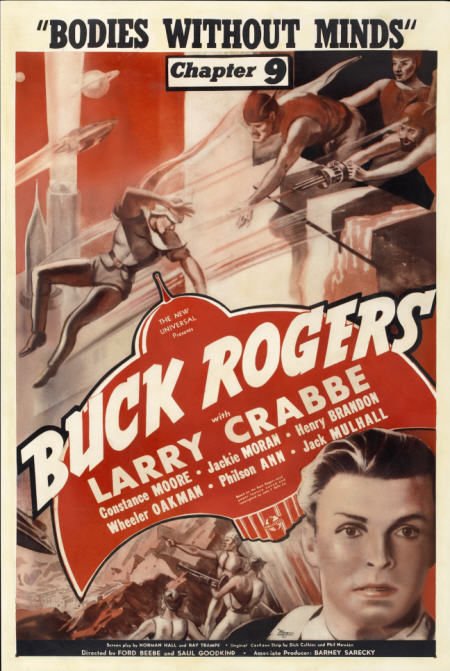
My earliest memories of the medium are of going to the Saturday morning shows at the long-vanished art-deco cinema that once stood on the seedier side of our town centre. It had a vast auditorium, that could sit something like two thousand people, which would be packed full of hyped-up kids, buzzing on the sugar from the bags of cheap sweets on sale in the foyer. We would see a few cartoons, an old serial like Buck Rogers or King of the Rocket Men, and one feature, usually something from The Children’s Film Foundation, which were usually pretty imaginative, or occasionally an old Hollywood action movie; I remember a showing of Kelly’s Heroes that inspired our playground games for weeks afterwards. This was all in the mid-70’s, not long before the rising popularity of Saturday morning kids’ TV more or less killed off the picture shows. I enjoyed staying in on a cold morning and watching the box as much as anybody else, but I did miss the social aspect of the cinema a bit.

In my early teens I would go with friends, or the occasional date, about once a month to see mainstream movies, and towards the end of high school I started to get into independent cinema. It was when I left home to go to University that my cinema addiction really kicked in though; I joined the campus film society, which screened five or six movies each week in term time, and I often skipped classes to catch matinee shows at the arthouse, so I must have been seen well over 500 films during my college years, from just about all genres. Once I started working I had to cut back a bit, but I still caught a film most weekends, and occasionally would go on little binges when I was on holiday.

Sometime over the last decade I seemed to lose the habit; now I’m in the cinema maybe ten times a year. This is partly because I’ll watch a DVD instead of going out on a Saturday, but I think it’s mainly because I have substituted internet addiction for my celluloid fix.

I do have some regrets about this; my imagination seemed to be highly stimulated when I was more immersed in film. I used to do a lot of writing when I was in college, but now this blog is about all I can manage; I haven’t penned any proper fiction for a long while. I think there is something about following a film narrative that particularly exercises the creative faculties, by demanding attention over a relatively long time. I guess reading does this too, but with a book I tend to concentrate in shorter bursts, so it doesn’t have quite the same effect, and when I’m surfing the net I’m rarely on one topic for more than a couple of minutes.

I’m going to try to make it to the cinema at least once a fortnight over the next few months; we’ll see if that revives my dormant Muse. I might even catch something at the drive in.

Subterranean Hope

I’m sure I’m not the only one for whom the story of the trapped Chilean copper miners has called to mind the classic novel Germinal.

A vividly-drawn tale of the struggle for survival in the coalfields of northern France in the mid-nineteenth century, Zola’s naturalistic masterpiece is one of my favourite books, but it is rather grim. I had to stop reading it for a day or two at several points, to take a break from the relentless tide of misfortune that befalls the central characters, who are pictured so realistically that it is impossible not to empathise with their suffering. It does end on a note of optimism though, with one of the most rousing passages in literature:

“Beneath the blazing of the sun, in that morning of new growth, the countryside rang with song, as its belly swelled with a black and avenging army of men, germinating slowly in its furrows, growing upwards in readiness for harvests to come, until one day soon their ripening would burst open the earth itself.”

Nearly two centuries have passed since the period portrayed in Germinal, but it’s worth remembering that mining remains one of the most hazardous professions in the world, with more than twelve thousand workers losing their lives every year. Even in safety-conscious Switzerland eight men died during the construction of the Gotthard tunnel.

Let’s hope the discipline and solidarity shown by the 33 miners of San Jose inspires workers the world over to unite, organise and demand an improvement in their conditions.