History needs a push

Back in April I received an email inviting me to participate in a beta test of Metaplace, the “next-generation virtual world platform”, that, its designers hoped, would make it easy for anyone to create their own little metaverse.

“Lonely?” the invite inquired enticingly, before promising that I could “meet new friends to chat and build with.” I can’t say that I wasn’t tempted, but I figured that wasting my time in one virtual world was enough to be going on with, and gave it a pass.

I kept meaning to go back and have a proper look in the months that followed, but never quite got round to it. I was interested in what their monetisation strategy might be, and this week I found out; they didn’t have one, and are shutting down their operations early next month.

Metaplace isn’t the only player in the virtual world business to hit trouble recently; Forterra have laid off half of their staff, and are rumoured to be up for sale.

I hope there isn’t going to be a virtual rerun of the real world financial crisis, with relatively small outfits going to the wall first, to be followed by the big operations that everyone thought were solid. It would be vexing, to say the least, if Second Life were to disappear just as I have finally worked out something fun to do with it, though perhaps an atmosphere of impending crisis will help my plans.

Here’s me in my new outfit, in a bar in Steelhead, a steampunk community in the Pacific Northwest:

I’m trying my best to look like a Wobbly, though I’m perhaps a little too smart. Clothes for the common man are hard to get hold of in SL; the best I could do was this Victorian worker’s suit by Eladrienne Laval. At least the neckerchief is deepest red. I’m going to try to get some radical agitating started in the new year, once I’ve worked out what our demands should be, and had some flyers and red cards printed up.

Virtual Bakumatsu

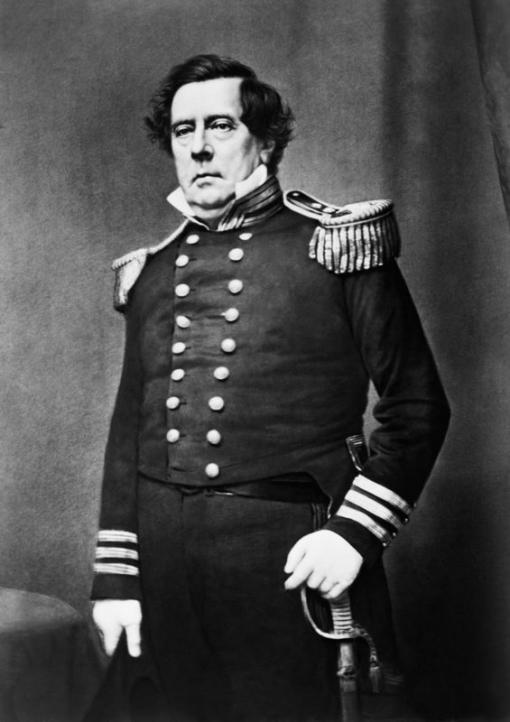
On the 8th of July 1853 US Navy Commodore Matthew C. Perry anchored at Uraga Harbour near Edo (modern-day Tokyo) and presented officials with a letter from President Millard Fillmore, which demanded that Japan, which had been largely closed to foreigners for two centuries, open its borders to US trade. To show that he was serious Perry bombarded the harbour with explosive shells, and when he returned a few months later he found the locals willing to sign up to the Convention of Kanagawa, which established, among other things, minimal import taxes for foreign goods.

In the years that followed Japan was obliged to conclude similar treaties with other Western powers, and the influx of cheap imports plunged the country into economic chaos. The feudal order of the 250 year old Tokugawa Shogunate collapsed under the pressure, its demise speeded by military intervention by the US, France and Britain. It was followed by the Meiji Restoration, which laid the foundations for the modern industrialised Japanese state, though the remnants of feudalism were not entirely swept away until the defeat of the Satsuma Rebellion in 1877 (an event portrayed, with considerable artistic licence, in the film The Last Samurai).

I mention this because I can see parallels between the hierarchical society of sakoku-era Japan and the regime we know in Second Life. What commerce there is with the outside world is strictly regulated by the ruling caste, who either directly control the marketplaces, or take a hefty cut of transactions. In-world manufacturing is dominated by small-scale craft producers, and success in this field is dependent on acquiring mastery of relatively low-tech but somewhat esoteric skills. Borders are closed, there is no democracy, and the population lives and dies at the whim of their masters.

Like feudal Japan Second Life is threatened by a tsunami that may sweep away the present economic certainties. This peril does not come in the shape of a warship, but in the seemingly harmless form of mesh imports.

The plan to allow import of content created using professional 3D design tools like Maya or Blender was first announced back in August, and recent reports have suggested that it will become reality soon. The Second Life design market is currently protected by the fact that there is little incentive for professional digital designers to learn how to build with prims, since there is no application for the skill outside of SL. Once they are able to create virtual objects using the knowledge they already have it’s more likely that they (or the companies that they work for) will see SL as a way of making some easy cash. Existing SL designers will find themselves exposed to competition from a well-established industry, whose advanced products will make their painstakingly sculpted prim creations look hopelessly primitive, and their businesses will be unable to survive.

Will this opening of the market to outside competition be a bad thing for the average non-entrepreneurial resident? The quality of virtual items will rise, and they will probably be cheaper too, since production will be more efficient. The grid as a whole will survive, as the Lindens are sure to impose a healthy tax on mesh uploads to keep their revenue stream flowing. There may be less circulation of L$ within the world, as the dominant businesses are less likely to be resident-owned concerns, and would be extracting their profits rather than spending them on the grid, but this would just mean more real money would have to be transferred in to allow residents to buy stuff, which would also boost the Lab’s bottom line.

What might change is the nature of the SL experience. The idea that all residents have the tools at hand to create their own reality will fade, to be replaced by a culture where our avatars exist only to consume the products that are manufactured for us. Second Life, which seemed to offer an antidote to the alienation of capitalist society, will have become just one more expression of it. I guess this is progress though, and we can no more resist it than the Samurai could halt the march of modernity and expel the barbarians. We can only hope that this is just the first step in a process of proletarianisation of the SL population that will one day create the conditions for more progressive social change.

Watching the Okhrana

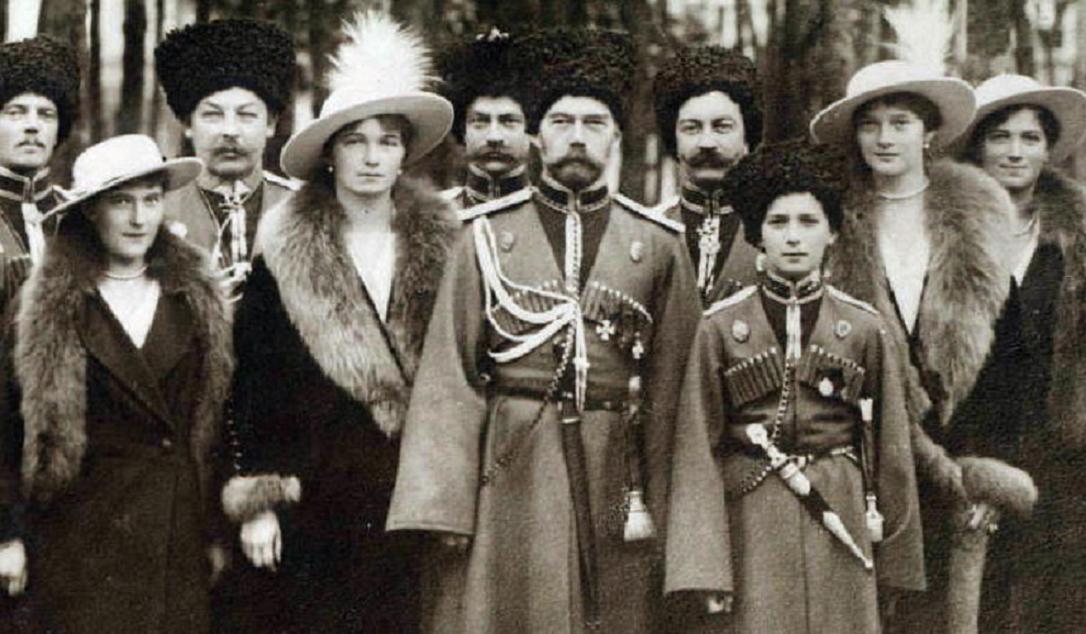
Anyone who harbours doubts about my theory that the Lindens are the Romanovs of the virtual world should read this report of their secret police at work, snooping on the chat of those well-known subversives the Elf Clan Social Network.

Liberté, Egalité, Virtualité

There was an interesting story in the Herald this week, concerning Greg Drayman, a well-known figure around the SL auto-racing circuit I’m told, who found himself on the wrong end of a permanent banning order earlier this month, as a result of conviction on what seem like trumped-up charges. As one might expect Mr Drayman is not best pleased at this turn of events, especially since the penalty extended to the confiscation of all his virtual land and property, including the popular Kokopelli Raceway Park.

This act of Linden absolutism backs up my theory that social relations in Second Life are essentially feudal in nature, and that the conflicts that arise are analogous to those which drove the transformation of western society in the late Eighteenth and early Nineteenth centuries, culminating in the triumph of bourgeois liberal democracy. (An excellent overview of this period is provided by E. J. Hobsbawm in The Age of Revolution: Europe, 1789-1848).

What are the demands that must be met before we could be confident that injustices like those inflicted on Mr Drayman could happen no more? What concessions must be wrung from the Lindens to bring the political culture of Second Life into the Nineteenth century, never mind the Twenty-first?

If we take our cue from the liberal revolutionaries of the past we would campaign for basic democratic rights: universal suffrage, civil liberties and the rule of law. The Terms of Service should be replaced by a written Constitution (approved by referendum), a Legislature should be elected to write new laws as necessary, and day-to-day policy should be directed by an elected Executive, all overseen by an independent Judiciary. Some sort of land reform would seem to be essential too. As we have noted before SL land is distributed under a leasehold system; for capitalist social relations to really take hold there would have to be the possibility of owning freehold land.

These rights might seem unobtainable, since it is difficult to see how any leverage could be exerted on Linden Lab as long as they own and control the physical infrastructure of the grid. Any assault on the virtual Bastille could be repulsed by the flick of a switch, and cyber-insurrectionists liquidated just as easily.

There may be a technical solution to this though; it would involve engineering interoperability between the main grid and OpenSims running on non-Linden hardware. The key thing would be to allow SL residents to import into their inventories items created on external systems, preferably without the Lindens being aware of this. (I have no idea if this is feasible; I imagine it would involve hacking into the asset servers in some way.) Political dissidents could reside on democratically constituted OpenSim servers, storing their virtual lives safely beyond the reach of the SL authorities, ready to be transferred to an alt when they needed to visit SL proper. Nobody would need to have a premium account, unless they particularly wanted to lease land on the main grid, though there would be no real reason to do that if land could be bought outright on a non-Linden grid. Merchants could set up in the free zones, attracted by the lower tax rates and superior governance, which would give a them a competitive edge over businesses still paying dues to the Linden empire.

If enough people got on board with this, and if the rebels were able to stay one step ahead of the Lindens’ attempts to secure their borders, the Lab’s revenue from subscription and tier payments would dwindle, to the point where they would be forced to concede to democratic demands, as the ancien régimes of Europe were obliged to cede power to a triumphant bourgeoisie in the Nineteenth century.

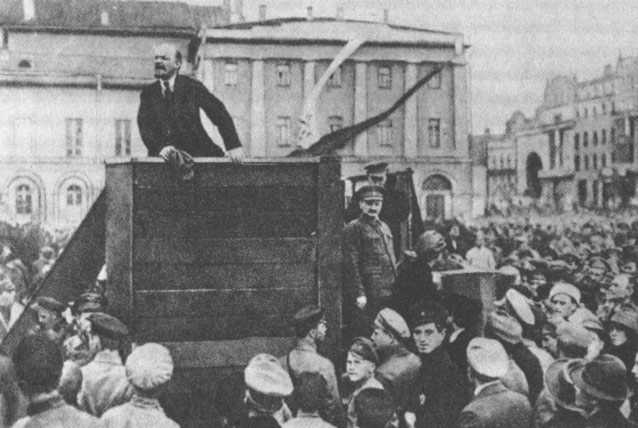
Would this be enough to satisfy those of us with more radical aspirations? The situation might be akin to that in Russia after the February Revolution, with Liberals and Mensheviks trusting the bourgeoisie to complete the process of democratic reform, and Bolsheviks arguing that only a dictatorship of the proletariat could truly achieve the goals of the revolution.

It seems clear that a campaign for democratic rights in Second Life is long overdue, and that communists should play a leading part in such a movement (though in organisational terms we would have to maintain a separate identity within the anti-Linden struggle, to ensure we were in a position to oppose the liberal tendency to compromise with counter-revolutionary forces). It would be a big task, but I don’t think that it’s impossible. I have some more detailed thoughts on Party structure, programme, propaganda and tactics, but I’ll save them for another post.

Incomplete hints of impossible marvels

One of my favourite places in SL used to be Innsmouth in October Country, a run-down coastal town with more than a few hidden secrets. Sadly, it disappeared some time ago, to be replaced, last time I looked, by an anonymous marina.

Now Innsmouth has been resurrected, though it’s looking even more dilapidated and spooky than it used to:

The whole place seems deserted, though the lighthouse is still working:

But be careful – the town is not as empty as it seems, and a little exploration may turn up more than you really want to find…

Why we hate and fear the BBC

A couple of weeks ago the BBC published a piece about Second Life on their news website. The article itself was a fairly inoffensive statement of fact – in summary “Second Life? People used to talk about that a lot; now, not so much” – but it set off an entirely predictable flurry of indignation around the SL blogosphere. The prize for the most ridiculously hyperbolic comment goes to Hamlet Au at New World Notes:

The BBC’s recent magazine article, “What Happened to Second Life?” … is so incandescently bad, to read it is to feel the entire institution’s credibility undermined.

One can picture tribesmen in the jungle of Myanmar, hunched over their short-wave radio, wondering if they can still trust the BBC’s reports on the Naypyidaw junta after that hatchet job they did on SL.

Why do SL aficionados respond to even mild criticism by foaming at the mouth in a way that makes Leave Britney Alone Guy look like a model of calm and reason? (Not that I haven’t been guilty of this myself once or twice).

I suspect there may be some projective identification going on. Anxiety is generated by the conflict between the desire to express unconscious fantasy through the medium of virtual reality, and the internalised attitude of general society that such activity is not really what one expects of a grown adult; these desires are therefore split off into “bad” internal objects.

A threatening sense of dis-integration may be produced, which, if it cannot be contained within the ego (that is, if the subject is in the paranoid-schizoid position), must be projected into our perceived critics, who, we imagine, are persecuting us because they do not understand the value of our virtual experiences – though in reality it is actually we who cannot fathom why we want to spend time on such apparently pointless activity.

The vehemence of our response is mystifying to those outside the circle, who begin to regard partisans of Second Life with genuine bafflement, and not a little trepidation. Thus the defence creates its own reality, which may be effective in relieving our anxiety (as the conflict is perceived to be between ourselves and “bad” external objects, rather than being intra-psychic), but which sets the stage for a cycle of mutual misunderstanding and hostility.

Anyone who has worked through the depressive position should be able to tolerate the ambiguity related to being a fan of Second Life, both internal (I know it’s a bit silly, but I like it anyhow), and external (other people may think it’s silly, but it doesn’t make them bad). It helps to be honest with oneself about one’s motives for spending time on the grid, and to leave the rationalisation to the Lindens, who, after all, do have a business to run. The truth is that Second Life is like any other pastime; some people are into it, most people aren’t, but that’s cool, and certainly not worth getting all angry about.

Tweetomania

I hate to admit it, but, way behind the curve as usual, I have started to view Twitter as an important part of my life, rather than a pointless irritant. When I set up our feed I was intending just to use it for publicising blog posts, but then I started following a couple of people (you know, just for kicks), then a couple more (though I could have given up any time I wanted, I just didn’t want to, right?), and before I knew it I was getting mildly agitated if I couldn’t get my tweet fix several times a day.

The tipping point came when I started following Mal Burns, who is a one-man SL newsfeed, cranking out dozens of tweets a day linking to all sorts of interesting metaverse stories. He seems to have quite a big audience, judging by the surge of traffic we have had on the couple of occasions he has featured one of our posts.

Our feed is somewhat less influential, though we do have a few followers, including one celebrity, Noreena Hertz, the vaguely left-wing economist, though I expect that by the time you read this she will have ditched us – she’s done the follow/unfollow thing on us a few times before, so I suspect that she has some sort of system that automatically follows anyone tweeting with the #economics tag, and then one of her assistants kicks us off a couple of days later when they actually read the rubbish we have written. Interestingly, our old SLS account has roughly ten times as many followers as our active feed, despite not being updated for nearly a year.

My addiction has been facilitated by my acquisition of the TweetDeck app for my iPhone, which makes it much easier to post updates and follow the general chatter. TweetDeck is part of the huge ecosystem that has grown up around Twitter, with literally hundreds of startups vying for a slice of the revenue pie, which, last time I looked, amounted to exactly US$0. Twitter head honcho Biz Stone has reportedly targeted 2010 as “the revenue year”, but even he isn’t willing to predict that the company will be profitable any time soon, so I can’t see how all the hangers-on are hoping to make any money.

I have a horrible feeling that the whole set-up is some kind of plot to get us all hooked on free produce, before they crank up the price and force us to pay big bucks to feed our habits. That wouldn’t be entirely bad news for me though, since I am qualified in the treatment of cyberaddiction, and the tweet-detox market might be worth quite a bit.

Scenes from the Class Struggle in Second Life

Anyone who felt that my suggestion that all property in Second Life should be collectively owned was overly fanciful should perhaps direct their attention towards a couple of recent developments in the area of SL commerce.

First up: the changes to the structure of XStreet listing fees and commission charges. The exact ins and outs of this are detailed elsewhere; the main thing is that the service has become much less friendly for small-scale vendors, and more orientated towards big operations.

Secondly, Pink Linden recently sent out a questionnaire to a sample of SL merchants, canvassing their opinion on various hypothetical developments, including setting up an official Linden-sponsored shopping mall. Again the pricing and commission structure would favour large, established businesses over their smaller or newer competition. (It may be relevant that Pink used to work for eBay, who have also been accused of squeezing small sellers off their platform).

This initially reminded me of the concept of State Monopoly Capitalism. The intricacies of this theory are too complicated to go into here, but it can be roughly summed up as the idea that in the late stages of capitalism the state becomes increasingly identified with the interests of a particular section of capital, specifically the big monopolies, to the detriment not only of the proletariat, but also the smaller capitalist enterprises.

The thesis is not without its problems, though a full discussion of these is beyond the scope of this column, and it has been rather discredited by its association with the Popular Front orientation of Stalinist Communist Parties in post-war Europe. The question of the power of monopoly capital and its relationship with the state is more interesting than ever these days though, and it’s still worth reading Lenin on Imperialism, the Highest Stage of Capitalism, and Mandel on The Economics of Neo-Capitalism.

To transfer the concept of SMC to Second Life, one would have to see the Lindens as the equivalent of the state, and the big merchants as monopoly capitalists. Are either of these assumptions valid?

To quote Engels, from The Origin of the Family, Private Property and the State:

[The state] is a product of society at a certain stage of development; it is the admission that this society has become entangled in an insoluble contradiction with itself, that it has split into irreconcilable antagonisms which it is powerless to dispel. But in order that these antagonisms, these classes with conflicting economic interests, might not consume themselves and society in fruitless struggle, it became necessary to have a power, seemingly standing above society, that would alleviate the conflict and keep it within the bounds of ‘order’; and this power, arisen out of society but placing itself above it, and alienating itself more and more from it, is the state.

A “society … entangled in an insoluble contradiction with itself … split into irreconcilable antagonisms” does sound like a description of Second Life, and the Lindens certainly have the coercive powers usually associated with the state, but is it a state in the modern, capitalist, sense of the term? There may seem to be “classes with conflicting economic interests” among the residents of SL, but what is the nature of these classes? To answer these questions we must determine where avatars stand in relation to the means of production, which in turn requires us to decide what form the “means of production” take in a virtual world.

Virtual items may be created in the minds and on the computers of designers, but they only take on a social reality when they become available for exchange, when they are uploaded to the platform. Thus the virtual world itself forms the means of production. Linden Lab owns the world in its entirity, which means that no one else can independently control those means of production, and thus no resident can really be said to be a capitalist, let alone a monopoly capitalist.

Second Life may indeed be the scene of class struggle, but the conflict is not between workers and capital. The social relations that operate are more akin to those pertaining between feudal overlords and their serfs, with the Lindens taking on the role of absolute monarchs, supported by a small group of robber barons. The virtual masses are not proletarians free to sell their labour power to the highest bidder, but peasants obliged to toil for the benefit of their masters.

How can we move on from this obviously unsatisfactory state of affairs, and build a virtual communist society? I have a plan, but I’ll need another post to explain it properly. I might even make it my entry for the Linden Prize

Bonfire of the Inanities

Blog-cataloguing website Technorati overhauled its database last month, purging tens of millions of spam blogs which had been making a mockery of their ranking numbers. Unfortunately there seems to have been a fair bit of collateral damage in this operation, as the internet has resounded with the protests of outraged bloggers who have seen their cherished writing projects disappear from the index. I am sad to say that Second Life Shrink was among the casualties; it is no longer possible to check how much authority we have, or see where we rank in the world wide web. Which is just as well probably, since the last time I looked the answers were “not much” and “way down”. (I never really understood how the Technorati ranking worked anyhow, since over the years our place has varied from below 5 million to inside the top half million, while all the time we have been turning out more or less the same rubbish, to more or less general indifference).

I does make me reflect on why I bother to blog at all, especially about something as unimportant as a minority-interest computer fantasy world. I think it’s the very inconsequentiality of the topic that that makes it attractive. It feels good to have strong opinions, because it sustains the illusion that one’s thoughts might actually matter in the grand scheme of things, rather than just being transient chemical reactions in the nervous tissue of a barely sentient creature in one obscure corner of an essentially chaotic cosmos. Strong opinions about important things are risky though; someone else might strongly disagree with you, raising the threat of unrestrained violence, or at least social awkwardness. Much better to confine one’s pontificating to subjects that no one really cares about; whatever I write about, say, IP rights in virtual worlds, I can be fairly sure that, in the unlikely event that anyone is paying attention, they won’t be upset to a degree that they will want to come round to my house and have a fight about it.

Even when I offer my random thoughts about things that might actually be relevant to everyday life, like politics or economics, I know that I’m not going to encounter any serious disagreement, because my voice will be lost in the general hubbub of subjectivity that is the blogosphere. There is no vehicle better than a blog for sounding off without having to think about how others might interpret or respond to your comments. The promise of Web 2.0 – that it would facilitate intellectual interactivity on a global scale – is in danger of being lost, as we bloggers use the medium to reinforce our own preconceptions instead of opening up to the ideas of others. (I’ll stop there before I prove my argument by descending into completely solipsistic nonsense).

Anyway, I’m going to try to re-register with Technorati, since I need to feed my obsession with blog statistics. Our content may be getting a boost soon – our art correspondent Olivia is back at work, and has promised me an article before the end of the month – and I wouldn’t want to miss the increased authority her erudite commentary will undoubtedly bring us.

[I was going to link to a video of the Austin Lounge Lizards performing their track “Bonfire of the Inanities”, but YouTube has failed me, so here’s another of their numbers, “Jesus Loves Me But He Can’t Stand You”.]

A Nation of Shopkeepers

The third-quarter SL figures came out the other week, and, as usual, tout est pour le mieux dans le meilleur des mondes. One statistic in particular caught my eye; the number of monthly unique users, which was just over 750000. This reminded me of the results of a survey of the SL economy released in the spring, which estimated there were around 18000 self-identified virtual businesses.

The 750000 figure will include an indeterminate number of alts, and the 18000 enterprises may each employ more than one person (or some people may run more than one business), but, whichever way you look at it, it’s clear that SL entrepreneurs form only a tiny part of the virtual population.

I have no objection to people using the immersive virtual environment that is Second Life as an opportunity to live out their shopkeeper fantasies; whatever floats your boat I guess. However I do find it irksome when this small minority demand that the whole world should be structured to facilitate their particular brand of role-play, even if this grossly inconveniences everybody else, and, when they don’t get their way, threaten legal action that might destroy the entire system.

Linden Lab should adopt a Zindra-style solution to this problem, and set up a special continent where aspiring virtual business people can be segregated. There they would be free to sell each other shoes and sex-beds, sue one another to their hearts’ content, and leave the rest of us in peace to have fun with our second lives.