The Great Gonzo

On this day back in 2005 the great Hunter S. Thompson signed off for the last time, with a gunshot to the head. He had his reasons for such a dramatic exit, but it seemed like a tremendous loss at the time, a feeling that has deepened in the intervening years as the authoritarian shift in US politics has cried out for the sort of biting social commentary that was Thompson’s speciality.

Thompson is best known for Fear and Loathing in Las Vegas, his 1971 account of a drug-fuelled trip to Nevada, but I think his finest work is Fear and Loathing on the Campaign Trail ’72, a collection of his reports on the 1972 US Presidential elections. …Vegas is a great book, but ultimately rather downbeat, charting as it does the defeat of 60’s counterculture at the hands of the Man. …Campaign Trail is much more optimistic, as Thompson gets caught in the tide of the McGovern campaign and starts to believe that progressive politics might just have a chance. It ends in disappointment of course, when Nixon wins with a landslide, but at least Thompson didn’t have to wait too long to see Tricky Dicky’s downfall. (Years later Thompson would write the definitive Nixon obituary, He Was a Crook.) …Campaign Trail‘s depiction of the youthful energy of McGovern’s supporters is still inspirational today, and should be required reading for community organisers and political activists everywhere.

To mark the anniversary of Thompson’s death The Quietus has a previously unpublished interview, along with a brief but useful biography. The BBC produced a fine documentary on Thompson’s life and work a couple of years ago, and Terry Gilliams’ film version of Fear and Loathing in Las Vegas, with Johnny Depp as Thompson, is worth seeing too.

The style of journalism that Thompson pioneered has become so commonplace now that it’s almost a cliche, but out of his many imitators none have come close to the man himself. I’m going to settle down tonight with my dog-eared copy of Fear and Loathing on the Campaign Trail ’72, and have a few drinks in his memory.

The wrong move at the right time

Regular readers will know that I have an interest in internet addiction, but I came to that via impulse control disorders in general, and pathological gambling in particular.

The BBC reported this week on the release of the British Gambling Prevalence Survey 2010, produced by the National Centre for Social Research for the Gambling Commission. It’s a fairly hefty document, and I’ve only managed to read the executive summary, but even that contains plenty of food for thought.

The headline figures are that 73% of the adult population gambled in the last year, up from 63% the last time the survey was done in 2007. Problem gambling, as measured by the DSM-IV criteria, was up from 0.6% to 0.9% in the same period, though it hadn’t risen significantly on the Problem Gambling Severity Index (0.5% in 2007 and 0.7% in 2010). These numbers are similar to the rest of Europe, but lower than the US and Australia.

One thing that surprised me was that the prevalence of online betting hadn’t increased much in the last three years. Excluding online purchase of lottery tickets, which they didn’t measure last time, the rate was 7%, up from 6% in 2007; 81% of gamblers place their wagers exclusively offline. Within this certain types of online betting are more popular though; 39% of casino gamers play on the internet.

The betting landscape has certainly changed a lot since I was a child. My grandfather liked to play the horses, which back then involved visiting the local bookie, a sinister establishment next to the pub, with blacked-out windows and a permanently smoky atmosphere, frequented by the shadiest-looking characters in the neighbourhood. He used to take home the little pens to give to me, which my mother would immediately confiscate, lest I take them to school and shame our family with the association of vice. I take after my grandfather in a lot of ways, but I must have internalised some of his daughter’s disapproval, because to this day I have never set foot inside a betting shop. I’m rather ashamed of this, as it feels like I’m betraying my working-class roots in favour of a notion of bourgeois respectability, but my mother’s scruples have probably saved me a lot of money over the years.

My grandfather’s other flutter of choice was the football pools; a sacred ritual in our family was gathering around the television at about ten to five on a Saturday to listen to the classified results. As eldest grandchild I had the responsibility of recording the scores as they were announced; the mention of lower-league English teams like Huddersfield or Gillingham still takes me back to cosy teatimes all those years ago. I was sad to see that the explosion of alternative gambling opportunities in recent times has all but killed off the pools; only 4% of the population put on a coupon now.

The change in social attitudes to gambling can be traced back to the introduction of the National Lottery in 1994; overnight gambling became a government-approved leisure activity rather than a disreputable habit looked down upon by polite society. The whole industry was deregulated, with bookies allowed to put signs in their windows advertising what went on inside, and to install seats to encourage their customers to linger; a far cry from the dens of ill-repute my grandfather used to frequent.

Card gaming, poker in particular, has had quite a makeover too. It used to be a game associated with cowboys and gangsters, or at best the idle super-rich in places like Monte Carlo. I do remember, in my youth, being quite taken by Steve McQueen’s character in The Cincinnati Kid, but “professional poker player” was never going to be among my career choices. The advent of internet and televised poker tournaments has changed all that, and now the game is played by a whole host of perfectly respectable, and decidedly unglamorous, doctors, lawyers, accountants and the like.

A year or so ago I was seeing a client who had a bit of an issue with internet poker, and, out of curiosity, I registered with one of the online casinos and tried playing for a while. I’d like to say that this plunged me into a House of Games-style maelstrom of underworld intrigue, but since a) I limited myself to a $10 roll and nickel-and-dime tables and b) I am a dreadful poker player and lost all my money in short order, nothing nearly so interesting happened.

Every so often, usually when I am bored at work and daydreaming about alternative income streams, I return to the virtual tables, generally with the same result. This last month was different though; despite playing my usual ham-fisted game I went on a pretty good run, boosting my $10 stake up to over $60, before enduring an equally persistent losing streak, which had, by yesterday, reduced my stack to $15.30.

This experience has given me a bit of insight into some of the psychological phenomena associated with gambling that I had previously only read about. Simple arithmetic tells me that my latest session has been much more successful than previous forays, since I have ended up 53% ahead rather than 100% behind, but that’s not how it feels, and the temptation to chase my “losses” by playing more, or moving to a higher-stakes table has been pretty strong. It’s also been interesting to note how my feeling for the game mechanics, particularly the balance between luck and skill, has changed as my fortunes have varied; when I was hot I was convinced that I was playing masterfully, but as the money ebbed away I found myself cursing the bad cards I had been dealt.

I guess I should be happy that I’ve received some valuable professional education, and been paid $5.30 into the bargain, but I can’t help thinking about the $45 that got away, and how, if I just kept playing a little longer, the law of averages would throw a few good hands my way again…

The Social Network

[Some spoilers ahead.]

The big winner at the Golden Globes this week (apart from Ricky Gervais), was Facebook biopic The Social Network, which picked up four awards, including best director and best picture. I caught the movie on a rare trip to the cinema back in October, and it got my vote for film of the year too.

What I liked about The Social Network was that it wasn’t really about the internet, or social media, or anything new-fangled like that, but instead was an examination of that timeless theme, the outsider’s quest to break down the barriers of class that stand in the way of his destiny.

This wasn’t exactly a subtext; the message was pretty clearly spelled out in the very first scene, where Mark Zuckerberg lists the advantages of belonging to one of Harvard’s elite final clubs to his unimpressed, soon-to-be-ex-girlfriend. This initial interchange establishes our hero’s less than charming character, but we gradually realise that he isn’t such a bad guy, as we are introduced to some of his even more unlikable associates.

Chief among these are the Winklevoss twins, scions of privilege with a sense of entitlement so broad that they literally cannot believe that Zuckerberg might breach the social code by presuming to rip them off. In one of their many comic scenes they use their connections to arrange a meeting with the President of Harvard, to whom they complain that Zuckerberg has behaved in an ungentlemanly fashion; their reaction on being told they should adjust themselves to the real world is an amusing mixture of bafflement and outrage.

(As an aside, I thought the filmmakers might have exaggerated the boorishness of Ivy League fraternities, until I read this. These are our future rulers.)

Zuckerberg subsequently falls under the mephistophelian influence of flawed Napster guru Sean Parker, and after a series of sharp business manoeuvres and steely confrontations in lawyers’ offices, finally gets the better of his adversaries.

But does it make him happy? The final scene shows Zuckerberg alone in an office, forlornly clicking on the Facebook profile of his lost girlfriend. All his billions are worth nothing, the film suggests, without the simple gift of friendship.

Which is nonsense of course, a fable we poor folks tell ourselves to temper our resentment at the good fortune of the rich. I’m sure that Zuckerberg (who in reality has been with his current partner since his pre-Facebook days) is perfectly content with his life, having learned what the likes of the Winklevosses have always known – money really can buy you happiness.

The overall moral of the film is more egalitarian though; the idea that the old structures of wealth and class can be undermined by a new technological paradigm, in much the way that Facebook itself morphed from an exclusive Harvard club into a tool for the masses. I’m not sure that I entirely buy that – the investors who stand to make the big money from Facebook were rich to start with, and the circles of real power are as closed to outsiders as ever – but the story is so engagingly told that one can’t help rooting for plucky underdog billionaire Zuckerberg as he strives to make the world a better place by letting us all be “friends”.

2010: The year in review

The year’s end draws nigh, and I feel I should produce some sort if review of the twelve months gone by…

First up, the topic that is dearest to our hearts, this blog. Here’s our top ten posts for the year, by traffic:

  1. Second Life demographics – a brief review
  2. Second Life, with graphics, on the iPhone?
  3. On Second Life and addiction
  4. O Superman
  5. What’s up
  6. Zombie Epidemiology
  7. Ladies and Gentlemen We Are Floating in Space
  8. Anatomy of a scandal
  9. Running Away
  10. That gum you like is going to come back in style

The demographics post is top by miles, with nearly as many hits as the rest put together, thanks to Google deciding that it should be the #1 result for the query “second life demographics 2010“. It got a lot of traffic in October, presumably due to media studies students researching start-of-term assignments, with another surge this month, probably because other SL bloggers are preparing their end-of-year posts. I think that the fact that this very slight essay, which I knocked out over one lunchtime back in April, should still be able to masquerade as an authoritative source says more about the paucity of serious academic interest in the topic than any brilliance in my writing.

Of the others, the addiction post benefited from my efforts to promote it by dropping a link into the comments of any blog post that mentioned the topic; the Superman post got a boost after it was featured in the Herald; “What’s up” gets traffic from people looking for pictures of 4 Non Blondes (a Google quirk that has at various times also given us hits from searches for Laura Palmer, Mae West and Catherine Deneuve/Susan Sarandon); the Zombie post is still getting referrals from the Undead Report; the rest, I don’t know, probably just random clicks.

Other posts from this year that I thought were OK, but that didn’t make the top ten:

I’m not sure if there was a theme to our posts this year; possibly something about the importance of narrative in the formation of identity, or some such pseudo-intellectual nonsense.

The year in Second Life? Stagnation, layoffs and general management chaos are the things that spring to mind; more detailed round-ups can be found at Daniel Voyager’s blog and Your2ndPlace if you’re interested.

In the real world it’s been a busy year politically; the event with the most direct effect on us was the return of a Conservative government to power in the UK. It’s been a bit of a phoney war since the summer, with only some student-led skirmishes, but the cuts will start to really kick in from now on, and the class struggle should get more intense. 2010 saw the right resurgent over in the US too, without much sign of the left regrouping; hopefully that will change in the months ahead.

In our last New Year review I suggested that we would be posting more general cultural comment during 2010; this remained, alas, an unfulfilled ambition, but I have belatedly managed to think about picks for book, film and album of the year.

Choosing a book was the hardest task; looking back I see that I didn’t read a single new novel all year, though I did buy a copy of Jonathan Franzen’s Freedom, which is glaring at me accusingly from the shelf. Instead I stuck to the classics, of which my favourite was Fielding’s Tom Jones. I hardly saw any new films either; from a restricted field I would have to give the nod to The Social Network. I did buy a lot of new albums; the two I’ve listened to most are Majesty Shredding by Superchunk and The Suburbs by Arcade Fire.

And so to the future… I expect I’ll keep this project going, out of habit if nothing else. Things might be a little quiet in January, while I’m busy with my New Year resolutions – do more serious writing, get more exercise – but once these have been discarded it’ll be back to our usual cavalcade of whimsy.

I’ll finish by sending our best wishes for 2011 to all our readers – may the New Year find you happy, healthy and prosperous.

Downhill Racer

It’s kept on snowing over the last couple of weeks, so I thought I should follow through on my plans to go skiing. I still couldn’t summon the energy to go up to the actual mountains though, so I figured I should see what Second Life had to offer in the way of winter sports. I got myself kitted out at the Zagoskin Ski Shop, for a surprisingly modest sum – skis, boots, poles, ski-suit and goggles for under L$500 – then headed over to the Nakiska Ski Club to hit the piste:

The panorama was certainly impressive, and the run ahead was invitingly steep, so I pushed off and shot away down the slope:

Down at the bottom there was a futuristic mountain train waiting to take me back up the hill:

It was fun for a while, but after a few runs it began to get a little dull. The AO that came with the skis allows one to steer from side to side, but one can’t really do anything more complicated than zig-zaging down the slope. I guess it might be more exciting if there was a slalom course laid out, or if one was racing with someone else. I should probably check out some of the other Second Life ski resorts to see if they are any more thrilling.

The experience reminded me of nothing more than the classic ZX Spectrum game Horace Goes Skiing. I’ve been similarly underwhelmed by other interactive activities on the grid – nice graphics in the service of eight-bit gameplay seems to be the rule for such things.

I was also a little disappointed, though not entirely surprised, to find that I was the only person at the resort, since I always feel that the conviviality of the après-ski is a crucial part of any winter holiday. It’s a shame it was so quiet, because the one big advantage that Second Life has over stand-alone simulations, the thing that makes up for all the limitations, is its social aspect. Maybe next time I go it will be a bit more lively.

Everybody’s got a bomb

I’ve had a bad cough for the last week or so, what with all the cold weather, and it’s been keeping me awake at night. Consequently I’ve been watching more late-night TV, mostly junk like CSI reruns or televised poker, but also a couple of semi-good movies, including Cold War drama-doc Thirteen Days.

Actually “semi-good” is being generous; the heavily-fictionalised account of the Cuban missile crisis is rather melodramatic, as it portrays the heroic Kennedy brothers (aided by a brooding Kevin Costner) facing down the evil communists, while simultaneously restraining their own gung-ho generals, who are itching to launch a full-scale war. The story is inherently gripping though, and, even though obviously I knew there was going to be a happy ending, I enjoyed the building tension as it looked like the two sides had boxed themselves into an inevitable conflict. (My favourite film about the crisis, which deals with the themes much less earnestly, but rather more effectively, is Joe Dante’s Matinee.)

Watching Thirteen Days reminded me a little of the 1980s, when, after years of relative détente, it looked like Ronald Reagan was determined to start World War Three. I was never one of those kids who got all neurotic about the prospect of nuclear armageddon, but I was a bit freaked out by watching things like The War Game (made and suppressed back in the 60s, but still a favourite at leftist meetings 20 years later) and The Day After, though I wasn’t ever concerned enough to do much beyond going on a couple of CND marches. (Central American solidarity was my main political interest at that time, as I recall).

Then the Soviet Union collapsed, and we all enjoyed the 90s, free, we thought, from the shadow of complete destruction. There was still plenty of war to go around, of course, and not a little millennial angst, but it was probably the safest decade since the end of the Second World War (for those of us in the West anyhow).

Fast-forward to today, and we’re all supposed to be worried about The Bomb again, though this time round it’s not the Reds we’re told we should be scared of, but North Korea, Pakistan and Iran, or al-Qaeda, or just “terrorists” in general. I can’t say that I lose too much sleep over those last three, but North Korea and Pakistan (and to a lesser degree Israel and India) are more concerning. While these countries don’t have the capacity to nuke the whole world (or, hopefully, provoke anyone else into nuking the whole world), that just means they are less restrained by the logic of mutually assured destruction, and might use their weapons for local strategic reasons. At least with the old East/West standoff one had the idea that Washington and Moscow knew that once they started fighting it was going to end badly for everyone, but one can’t be so confident that the smaller nuclear states will never convince themselves that a first-strike strategy might be successful.

There’s not much to be done about it I guess, except to keep on working away at building the sort of progressive international movement that will eventually bring the people of the world together and abolish war altogether.

That, and partying of course.

Reoccurring Dreams

There was a lively debate amongst the commenters at Botgirl’s blog over the last week or so, concerning that perennial preoccupation of the SL intellectual elite, the question of identity in virtual environments.

I must have listened (and occasionally contributed) to this discussion dozens of times in the last three years, but I’m not sure that I’ve ever read anything that was a significant advance on what Sherry Turkle was writing about fifteen years ago.

The particular facet of the issue that we (for of course I couldn’t resist chipping in with my two cents’ worth) focussed on this time around was the significance of choosing to represent oneself in Second Life with an avatar that differs substantially from one’s corporeal incarnation, especially with regard to gender.

How dishonest is this? Moral relativist that I am, my answer to that question is “it depends”; upon a lot of things, but mainly the expectations of the parties to the interaction. In the discussion parallels were drawn with other media, such as written fiction or cinema, with the point being made that no one feels deceived when they discover that, say, Robert De Niro isn’t really a taxi driver. This is true to a degree; for books, plays and movies there are commonly accepted cultural norms that define when it’s OK to make stuff up and when it’s not, and people do feel cheated when the rules are broken.

There is much less consensus regarding online interaction though, and, crucially, in a space like Second Life there is no easy way to communicate the extent to which one is using the platform as a vehicle for personal reinvention, as opposed to expressing one’s everyday self (which of course opens up the question of where one’s “true” identity really lies, or if such a thing even exists).

I’ve noted before that the research evidence suggests that it’s harder than one might think to create a new personality in a virtual world (certainly my avatar is boringly similar to my mortal form, in appearance and character), so in theory it should be possible to get to “know” someone just by interacting with their SL alter-ego. I suspect that there are not many people who could be bothered to put in the work required for this though, and there is always the (mostly unconscious) drive to project one’s internal object-relations on to the virtual relationships, which further muddies the waters.

With all this going on it’s hardly surprising that miscommunication and unhappiness can occur from time to time. I don’t think that there’s much to be done about it; it’s the price we pay for access to the creative possibilities of the medium,  like Cézanne being poisoned by Emerald Green.

Like I said though, none of this is new, or particularly profound, except insofar as it sheds some light on that other topic that has launched a thousand SL blog posts; “Why blog about Second Life?” Why make the same points about the same issues over and over, when we could be turning our minds to something more productive? I can only answer for myself of course, but I think (as, unsurprisingly, I’ve said before) that SL blogging is essentially just another form of role-play, a chance to imagine oneself as a heavyweight intellectual commentator, without all the tiresome business of actually having to think too much about what one writes.

It keeps me amused anyhow. And I get to link to some cool music.

In Dreams

Writing in Nature this month, neuroscientist Dr Moran Cerf claims to have developed a system that can read and record people’s dreams. That’s the attention-grabbing headline at least; the actual technique seems somewhat less refined, though the researchers do appear to be able to identify which neurons are activated when the subject thinks of a particular image. It does involve planting electrodes into the brain, which I imagine might limit its attraction to the casual dreamer.

Dr Cerf does hope to come up with more user-friendly mind-reader, and I guess eventually we might have the sort of machine one reads about in pulpy sci-fi, a helmet connected to a TV set which shows pictures of the subject’s thoughts, or the perception-recording devices they had in the classic cyberpunk movie Strange Days.

This might seem to pose a threat to those of us in the psychiatric profession; who needs to see a shrink when you can just wire up your head and look straight into your unconscious? I’m not too worried though – knowing what someone is thinking or dreaming is one thing, deciphering why these things are in their mind and what it all means is quite another. The interpretation of dreams (and nightmares) has been a lucrative wheeze for thousands of years; it will take more than some new technology to put us out of business.

Cut Away

I hadn’t been near a cinema for months, but this weekend I managed to catch two films on the big screen; a belated viewing of summer hit Inception at the multiplex, and a late-night screening of The Social Network, with drinks and friends, at our local arthouse movie theatre.

I’ll review the films themselves in later posts, but for now I’ll just wax nostalgic about how my movie-going habits have changed over the years.

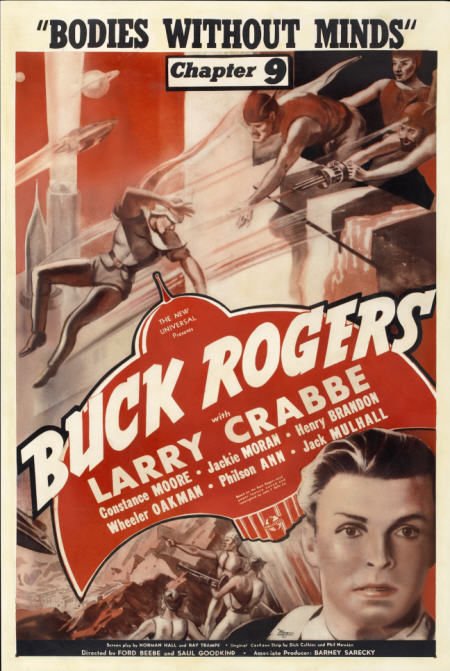
My earliest memories of the medium are of going to the Saturday morning shows at the long-vanished art-deco cinema that once stood on the seedier side of our town centre. It had a vast auditorium, that could sit something like two thousand people, which would be packed full of hyped-up kids, buzzing on the sugar from the bags of cheap sweets on sale in the foyer. We would see a few cartoons, an old serial like Buck Rogers or King of the Rocket Men, and one feature, usually something from The Children’s Film Foundation, which were usually pretty imaginative, or occasionally an old Hollywood action movie; I remember a showing of Kelly’s Heroes that inspired our playground games for weeks afterwards. This was all in the mid-70’s, not long before the rising popularity of Saturday morning kids’ TV more or less killed off the picture shows. I enjoyed staying in on a cold morning and watching the box as much as anybody else, but I did miss the social aspect of the cinema a bit.

In my early teens I would go with friends, or the occasional date, about once a month to see mainstream movies, and towards the end of high school I started to get into independent cinema. It was when I left home to go to University that my cinema addiction really kicked in though; I joined the campus film society, which screened five or six movies each week in term time, and I often skipped classes to catch matinee shows at the arthouse, so I must have been seen well over 500 films during my college years, from just about all genres. Once I started working I had to cut back a bit, but I still caught a film most weekends, and occasionally would go on little binges when I was on holiday.

Sometime over the last decade I seemed to lose the habit; now I’m in the cinema maybe ten times a year. This is partly because I’ll watch a DVD instead of going out on a Saturday, but I think it’s mainly because I have substituted internet addiction for my celluloid fix.

I do have some regrets about this; my imagination seemed to be highly stimulated when I was more immersed in film. I used to do a lot of writing when I was in college, but now this blog is about all I can manage; I haven’t penned any proper fiction for a long while. I think there is something about following a film narrative that particularly exercises the creative faculties, by demanding attention over a relatively long time. I guess reading does this too, but with a book I tend to concentrate in shorter bursts, so it doesn’t have quite the same effect, and when I’m surfing the net I’m rarely on one topic for more than a couple of minutes.

I’m going to try to make it to the cinema at least once a fortnight over the next few months; we’ll see if that revives my dormant Muse. I might even catch something at the drive in.

Upon the dismal shore of Acheron

While browsing at the AV Club the other day I came across a review of the film The Dungeon Masters, a documentary following the lives of three devoted D&D and LARP fans. It sounds fairly interesting, though the director’s main theme – “people in control of their fantasy lives aren’t in control of their real ones” – won’t win any prizes for originality.

More intriguing was a link I found in the comment section of the review, leading to this cautionary tale. Who knew that D&D could be so exciting? I played for years, and I never once got invited to join a coven of witches.

Looking around the Chick Publications site reminded me of when I was about 6 or 7. There was an old lady who stood outside the gate of our primary school at break time, handing out similar illustrated tracts. One story sticks in my mind to this day; a young boy has the temerity to question his pastor about the truth of the Bible, and the very next day he is hit by a speeding truck, sent to Hell and tortured by demons, all depicted in graphic detail. I guess she was sincere in her belief that it was necessary to put the fear of eternal damnation into the minds of young children in order to save them from evil doctrines like communism or evolution (not to mention Catholicism, Islam and, of course, homosexuality), but even at that tender age my reaction was to think that her religion was pretty messed up.

I sometimes wonder if this early experience was what put me off religion for life, but if memory serves (which it probably doesn’t) I was a confirmed unbeliever even before that. In fact I can’t remember a time when I ever had any sort of faith, which I’m not sure how to explain. I did grow up in a basically secular household, but my parents weren’t militant atheists or anything, and Christianity was part of the fabric of our community. I repeated the prayers at school assembly, went to church at Easter and Christmas and was generally exposed to the idea that being a Christian was the normal thing to do, but none of it ever clicked with me. In the years that have followed I have learned about many other religions and belief-systems, ancient and modern, but my interest has always been cultural rather than spiritual. I’ve never felt that there was any sort of void in me that yearned to be filled by religion, or that my lack of faith meant I was missing something. Perhaps I just don’t have the religious gene.

(I have been politically active most of my adult life, and pious types have often told me that I am sublimating my religious impulses in radicalism, that The Communist Manifesto is my bible, but I don’t think that’s the case at all. I don’t see politics as a moral issue, but more a technical question of how to efficiently organise society. I certainly don’t think that being a communist makes me a better person than anyone else, and I’m not expecting any eternal reward for my labours).

I don’t really have a point here; I’m just musing nostalgically. I’m definitely not suggesting that all Christians are hate-filled bigots; I’ve known plenty over the years and hardly any have been like Fred Phelps. Indeed one of the saving graces of the Christian faith is the fact that its adherents are mostly content to be fuzzy about the details of doctrine. Even the Pope thinks that non-believers can go to heaven, which, to my mind, seems hard to reconcile with John 14:6, but I guess that resolving such contradictions is what keeps theologians busy. (Personally, I’d probably pass on Paradise; I’ve always thought that the first circle of the Inferno sounded much more interesting). I imagine that the followers of other religions behave in a similar way; none of the Jews, Muslims, Hindus or Buddhists that I know are particularly devout, though I’d have to admit that my deadbeat friends may not be entirely representative examples of their respective faiths.

I used to be more actively anti-religious in my younger days, and I would argue with people about how clearly nonsensical their beliefs were, but with age I have mellowed into a position of liberal secularism; I don’t care what people think or do in their homes and places of worship (or where they build those places of worship), as long as they keep their dogma out of the schoolroom, and don’t try to tell me who I can or cannot marry.

I still think that, on balance, religion is a pernicious influence on society, but no amount of reasoned discourse is going to make it disappear as long as the material conditions that underpin it persist. Everyone knows Marx’s comment about religion being “the opium of the people”, but the full quote is more illuminating:

Religious distress is at the same time the expression of real distress and the protest against real distress. Religion is the sigh of the oppressed creature, the heart of a heartless world, just as it is the spirit of a spiritless situation. It is the opium of the people. The abolition of religion as the illusory happiness of the people is required for their real happiness. The demand to give up the illusion about its condition is the demand to give up a condition which needs illusions.

Karl Marx, Critique of Hegel’s Philosophy of Right

If we ever make it to a society that is free of inequality and injustice, the illusion of religion will no longer be necessary, and it will fade into history. We will look upon Christianity and other modern faiths in the same way we regard the pantheons of the Greeks and Romans; interesting cultural phenomena that have no direct significance in our everyday lives. Whether I’ll be around to see that day is another question, but I can always live in hope.