So long, farewell, auf weidersehen, goodbye

Well, it’s been a few days, and no government minister has come on to the TV to tell us it was all a mistake, and they’d miscounted or something, so I guess I’ll have to accept that Brexit is a thing, and it is going to happen.

I’m not alone in my reluctance to believe that a majority of the population have chosen to follow a course of action which, however one looks at it, seems imprudent to say the least; numerous Leave supporters apparently thought they were casting protest votes that wouldn’t actually change anything, and even the leaders of the campaign appear to be flabbergasted by its success, and to have no idea what to do next.

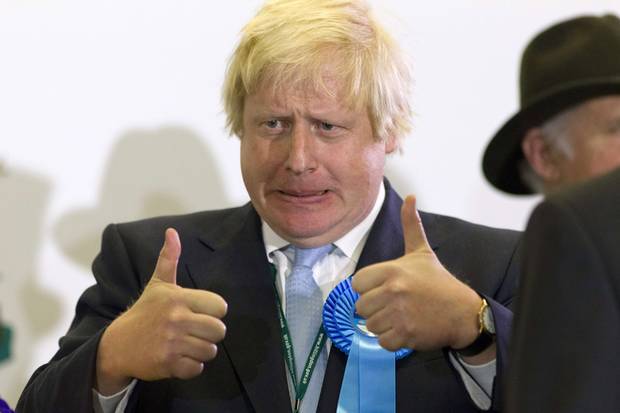
David Cameron has resigned, hardly surprising given that he had needlessly precipitated the biggest foreign policy blunder since the loss of the American colonies, leaving the ship of state rudderless just as we are about to hit the rocks. Boris Johnson, Cameron’s likely successor, doesn’t inspire much confidence, but, since the opposition have chosen this opportune moment to to descend into internecine warfare, it looks like we will have to rely on him to negotiate a good exit deal with our now thoroughly pissed-off neighbours, while simultaneously trying to stuff the fascist genie back into the bottle, which might be quite a challenge once the disaffected masses find out that the Leave campaign promises were just empty propaganda.

All in all the outlook is gloomy. The one ray of light, in this neck of the woods at least, is that there may be a second independence referendum, giving us a chance to stay attached to Europe, and gain a little breathing space to start rebuilding some sort of progressive movement. A lot of pieces will have to fall into place before we’ll see a happy ending though.

Separation anxiety

Last week wasn’t a great one for anybody who has some residual belief in the intrinsic goodness of humankind, what with homophobic mass murder and political assassination, set against a background of the cross-Atlantic crypto-fascism that underpins Trumpism and Brexit.

I’m still just about convinced that there is no way the US electorate will take leave of its collective senses and hand the keys of the republic to the Donald – there is a non-negligible chance that he won’t even make it on to the ballot – but domestically I’m much less optimistic that the Remain case will win out out once the votes are counted in the EU referendum this week.

The consequences of a Leave victory hardly bear thinking about; economic meltdown and the far-right triumphant just for starters, with worse to follow. I’m hoping that the looming reality of such a doomsday scenario will focus the minds of those on the left who are thinking of voting for an exit, or abstaining, and convince them that such a course of action is absurdly risky. I’m aware that there is a perfectly sound progressive case against the EU, but that’s a fight for another day; it’s clear that in the current political context nothing good will come from handing a victory to the most reactionary elements of British society.

It’s all an unsettling reminder of the way that one’s life can be upended by events almost completely outwith one’s control. I guess I’ll know by Friday whether my gut feeling that people are basically decent is accurate, or hopelessly naive.

Exit Flagger

In a development that seems at once unbelievable and inevitable, Donald Trump has emerged triumphant from the Republican nomination process. While this means that we will be denied the amusing spectacle of a contested convention (to the relief, no doubt, of the citizens of Cleveland), it does promise lots of entertainment over the next six months as Trump leads the GOP to a humiliating and perhaps fatal defeat.

In contrast, the election we are having here tomorrow has generated a campaign of insufferable dullness, as our politicians have largely avoided controversy in a rush to paint themselves as competent technocrats. Not for us anything like the exciting, if somewhat limited, campaign of Bernie Sanders; the left in these parts is so thoroughly marginalised that even centre-right social democrats can paint themselves as radicals. On the other hand, we haven’t given time to any fascist demagogues, so I guess our political culture has that going for it.

But any temptation we UK leftists may have to feel smug about the stupidity of the US electorate, or at least the Republican segment of it, for entertaining the notion of a President Trump, is likely to be squashed over the next few weeks, as we approach polling day in the Euro referendum. While the issue hasn’t quite caught fire with the public yet, all sorts of reactionaries have been crawling out of the woodwork, and it’s not beyond the realm of possibility that the vote could go in favour of Brexit, a result that would negate most of the social progress of the last half-century. While our transatlantic cousins will probably step back from the abyss by electing Hillary, we might end up jumping right in.

High times

Another 4/20 has rolled around, and I’m glad to say that it’s looking like the tide of marijuana legalisation is unstoppable, in the US at least. The dope business is booming in Colorado and Washington, and, more importantly, pot is becoming an uncontroversial part of everyday culture. It’s not hard to imagine that weed will be legal in most if not all of the country before President Clinton finishes her first term.

It’s not clear how much impact this will have on drug policy in Europe, but hopefully the successful US experience, not to mention the tax dollar bonanza, will nudge things in the right direction before too long. At the very least it’s given me another incentive to plan a long-overdue trip Stateside sometime soon…

Top Trump?

In the immediate aftermath of Super Tuesday it looked like the GOP establishment was facing three equally unappealing options; a) let Trump have the nomination and back him in the general election, b) let Trump have the nomination, but back a rival “Real Republican” candidate, or c) deny Trump the nomination through convention shenanigans, undoubtedly provoking him into an independent run. It’s difficult to imagine any of these scenarios ending unhappily for the Democrats.

Events since then have muddied the waters a little though. Cruz did well enough in the subsequent polls to strengthen his claim to be the leading “Stop Trump” candidate, and, unless Rubio and Kasich pull out something special in Florida and Ohio respectively, it might soon be a two horse race. Simultaneously, the chaos and violence lurking under the surface of the Trump campaign has been bubbling up enough to give his less ardent supporters some doubts about his Presidential caliber, and the long-predicted ebbing of his fortunes may finally start to materialise. It could be close enough come July that a brokered convention, which right now appears a bigger affront to democracy than even the GOP could stomach, might be more palatable.

Still, the eventual candidate, be he the unlikable Senator or the unlikable businessman, will be faced with the challenge of pivoting towards the middle ground where elections are won and lost, without alienating the Republican base. This task, which proved well beyond McCain and Romney, has become significantly harder in the last eight years as the wingnuts have taken over the grassroots of the party, so, even if outright civil war is avoided, a Republican win in November looks unlikely.

On the Democratic side, the maths still seems to favour Hillary, Bernie’s surprise victory in Michigan notwithstanding, so, barring some unforseen disaster, there should be a Clinton in the White House again before too long. I was in Times Square the night Bill was first elected – it might be time to plan another visit…

Contrasting fortunes

So, we’ve had four rounds of voting, a couple more debates, and Super Tuesday is almost upon us. Are things any clearer in the race for the White House?

On the Democratic side, it is looking as though Bernie Sanders’ wave of momentum has crashed upon the rocks of southern demographics, and it’s not clear how his campaign will recover. His narrow focus on economic issues may resonate with young white liberals, but the broader Democratic electorate seems more receptive to Hillary Clinton’s more nuanced message. This is a shame, because Bernie has the better platform, but he may have to be content with pulling Hillary a bit to the left. Hillary, even with her faults, is still a progressive and accomplished candidate, and there seems little doubt that the party will unite behind her if and when she secures the nomination.

As for the GOP, where does one start? The party establishment’s policy of pandering to wingnut Tea Partiers has come back to bite them on the ass, and it looks like they are going to be stuck with a candidate woefully unelectable, even by their own recent standards, who may drag the whole slate down to defeat.

The entire primary process has descended into embarrassing farce for the Republicans – while Bernie and Hillary debate their differences like serious, grown up politicians, the nation has watched Trump, Rubio and Cruz trade invective like overgrown toddlers. Little wonder that the GOP hierarchy are rumoured to have already written off the Presidency to focus on the Congressional contests.

Hanging over everything is the newly vacant seat on the Supreme Court, and the knowledge that the next President will have the chance to appoint a Justice who may swing the court for years to come. It will be interesting to see if the Republicans hold to their obstructionist line over the summer, or decide to try to make a deal with the current President rather than taking their chances with President Clinton.

Iowa revisited

Remarkably enough SLS has been around long enough to cover three US Presidential elections, so, on the eve of the Iowa caucuses, I feel obliged to issue some sort of forecast of the outcome.

Back in 2008 we were rooting for Hillary Clinton, not that our endorsement did her much good. This time round I have to say that, on policy, I’m leaning towards Bernie Sanders, who I think may win in Iowa and New Hampshire, though I can’t see past Clinton for the nomination.

On the Republican side it looks like Trump is going to make the early running, but I think Rubio will be the eventual candidate. The GOP race seems academic though, since I cannot imagine the Democrats losing the general election.

Whatever happens I’m hoping that the excitement of the caucuses and primaries will rekindle my enthusiasm for blogging, for a while at least.

Seriously though, don’t bomb Syria

As I write the debate in the House of Commons on the Syrian question is drawing to a close, and it looks like limited military action is going to be approved, though with a substantial bloc of opposition. To be fair, this outcome probably does represent the mood of the country; polls have shown a modest majority in support of bombing.

What’s interesting is that the doubters aren’t confined to usual left-leaning peaceniks; there are plenty of conservative voices questioning the wisdom of wading even further into a complex foreign conflict, with goals that are unclear and outcomes that are far from certain. Even on the left the opposition doesn’t stem entirely, or even mainly, from a pacifist outlook – pretty much everyone wants to see the back of ISIS – but rather from a conviction that the strategy proposed will only make things worse.

It would seem logical to wait until a better plan has been formulated, or at least to give less destructive options like diplomacy a bit more time to succeed. Unfortunately inaction isn’t an option our politicians feel comfortable embracing, which only reflects the anxiety prevalent in society at large; our inability to tolerate uncertainty and risk. Faced with a bad situation we want Something To Be Done, even if history tells us that it might be better to step back and let the belligerent parties sort things out themselves.

We in the West seem to think we have some special insight into conflict resolution, that we can engineer a solution that is beyond our erstwhile colonial subjects, but the evidence suggests that they would get along a lot better without our assistance, and the peace we bring is only the peace of the grave.

Don’t bomb Syria

It’s looking increasingly likely that British jets will soon be flying bombing sorties over Syria, a mission so senseless that even its proponents have largely avoided trying to make any coherent argument for it. We are invited to stand in solidarity with our French cousins, in the hope that our natural horror at the recent events in Paris will stop us asking awkward questions about why a strategy that so obviously failed in Iraq and Libya should be expected to work this time around.

It’s ironic that the almost unlimited access to information enjoyed by the digitally privileged of the developed world, which one might expect to arm citizens with the knowledge needed to stop this nonsense, appears rather to be paralyzing our critical faculties. The flood of text and images on various social media that invariably follows tragedies like Paris may feel intensely meaningful on a personal level, but, lacking wider context, it cannot guide a rational response. Instead it just seems to make us vulnerable to the fear-mongering of demagogues, of varying degrees of subtlety.

Perhaps I’m too pessimistic – there is plenty of opposition to this course of action, both online and in the real world, and our leaders’ drive towards a wider war may not yet be unstoppable, if we keep up the protests, and try to think about what is happening rather than just succumbing to a desire for instant reaction.

Underdogs have their day

No question about what was the big political story this weekend; Jeremy Corbyn’s triumph in the Labour leadership contest. That he would win hadn’t been in serious doubt for a while, but the margin of his victory was crushing, and has given him a clear mandate to reinvent the party along centre-left lines.

To some extent this is less surprising than it seems; in a European context the UK has been out of step over the last 20 years in having both main parties on the centre-right, and a leftward shift for Labour is really just a reversion to a longer-term status quo.

What is uncertain though is the effect that two decades of right-wing consensus has had on the outlook of the general electorate. The view among what can be broadly termed the political elite, which includes the newly-deposed Labour Party hierarchy, is that the ideas espoused by Corbyn and his allies, particularly on economic issues, may play well with existing Labour supporters, but leave the bulk of the population cold, rendering the party unelectable. The counter-argument is that there is a hidden majority in the country, currently alienated from mainstream politics, who have been waiting for someone like Corbyn to articulate a progressive agenda that they can support, and who will sweep a rejuvenated Labour to power. The last election produced some evidence for both positions; the SNP did well in Scotland by mobilising voters around a programme of limited social democracy, but the Conservatives did win overall with an unrepentant pro-austerity manifesto.

Time will tell I guess. The first electoral test for Corbyn’s Labour will be the Scottish Parliament poll next year, assuming they make it that far without splitting, but that campaign will be beset by all sorts of local issues, so it may be hard to draw many firm conclusions from the outcome. The local elections in England and Wales might be a better indicator of how far the Corbyn revolution can extend.

Meanwhile, across the Atlantic, there are signs that Bernie Sanders may be poised to pull off a similar upset. That seems like more of a long shot though, so I’m sticking with my prediction of Hillary Clinton for the nomination. Still, it’s looking more interesting than it did a few months ago. The real entertainment is in the Republican contest of course, but I can’t see that being more than a sideshow.